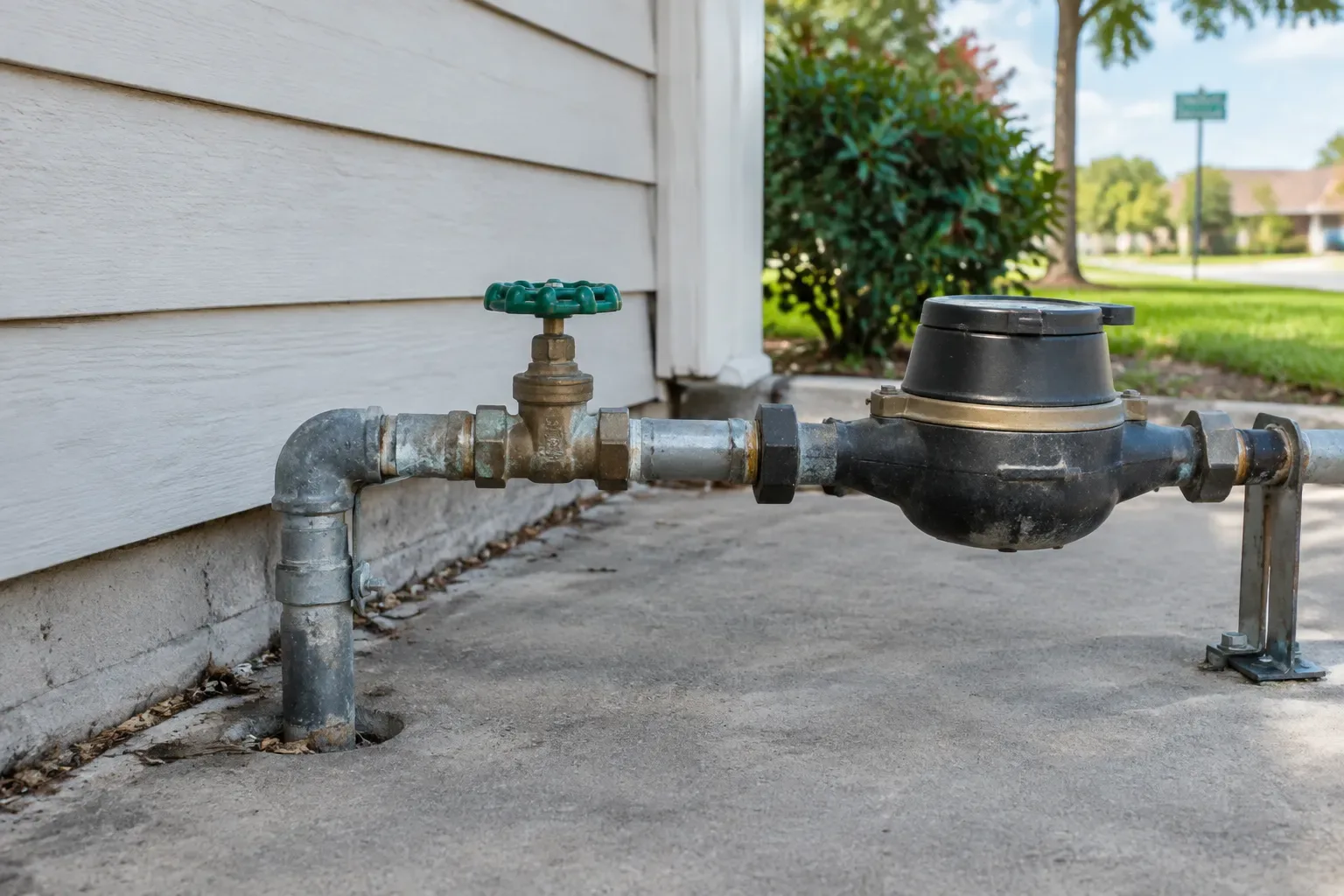
Should I Call a Plumber or Fix It Myself?
Some plumbing fixes are genuinely straightforward for a capable Houston homeowner. Others look simple and turn into a $3,000 problem by Tuesday. Here's how to tell the difference honestly.
You're standing in the bathroom at 7 p.m. on a Saturday. The faucet is dripping. Or the toilet is running. Or there's a damp patch under the kitchen sink that's been there for a week. You're weighing whether to pull up a YouTube video and handle it yourself, or whether to pick up the phone and call a plumber — knowing there's likely a weekend call-out fee waiting for you on the other end.
This guide gives you a genuinely honest answer — not one that's biased toward "always call a plumber" just because this is a plumbing company's blog. Some repairs are reasonable DIY jobs for a capable Houston homeowner with the right tools. Others look straightforward and turn into something that costs significantly more than a call-out fee to fix properly. And in Houston specifically — with slab foundations, hard water, aging pipe systems, and Texas licensing laws — the DIY calculus is different than in most other cities.
The Honest Answer — It Depends on Four Things
Whether to DIY or call a plumber in Houston comes down to four honest questions:
- How accessible is the problem? A dripping faucet you can see and reach is a different proposition from a leak inside a wall or under a concrete slab. Access determines both the difficulty and the risk of making things worse.
- How confident are you in the scope? DIY plumbing goes wrong most often when a homeowner correctly identifies the symptom but misses an underlying cause. A running toilet might be a $10 flapper — or it might be a float valve problem, a cracked fill tube, or a seal issue. Knowing the full scope before starting matters.
- What are the consequences of getting it wrong? A DIY faucet repair that goes sideways means a call-out fee to have a plumber fix it instead. A DIY slab repair that goes sideways means concrete damage, water damage, and potentially mold — on top of the original pipe repair. The consequence calibration is everything.
- Does this job require a permit in Houston? Certain plumbing work in Texas requires a permit and inspection regardless of who does it. If a job requires a permit and isn't permitted, you carry the liability — not the person who did the work.
Plumbing Fixes That Are Generally Safe to DIY in Houston
These are repairs where a capable Houston homeowner with basic tools, a good tutorial, and the patience to do it carefully can reasonably expect a good outcome:
- Replacing a toilet flapper — the most common running toilet fix, costs under $10 at any Houston hardware store, 10 minutes with no special tools
- Replacing a faucet aerator — the screen at the end of a faucet that collects mineral deposits from Houston's hard water; unscrew and replace
- Tightening a loose supply line connection — under a sink, behind a toilet, at the washing machine — visible, accessible, low consequence if you take it apart to look
- Replacing a showerhead — straightforward swap with thread tape and a wrench
- Plunging a clogged toilet or drain — the original DIY plumbing tool; effective for most surface-level clogs
- Replacing a toilet fill valve or float assembly — slightly more involved than the flapper but well within DIY range with the right kit
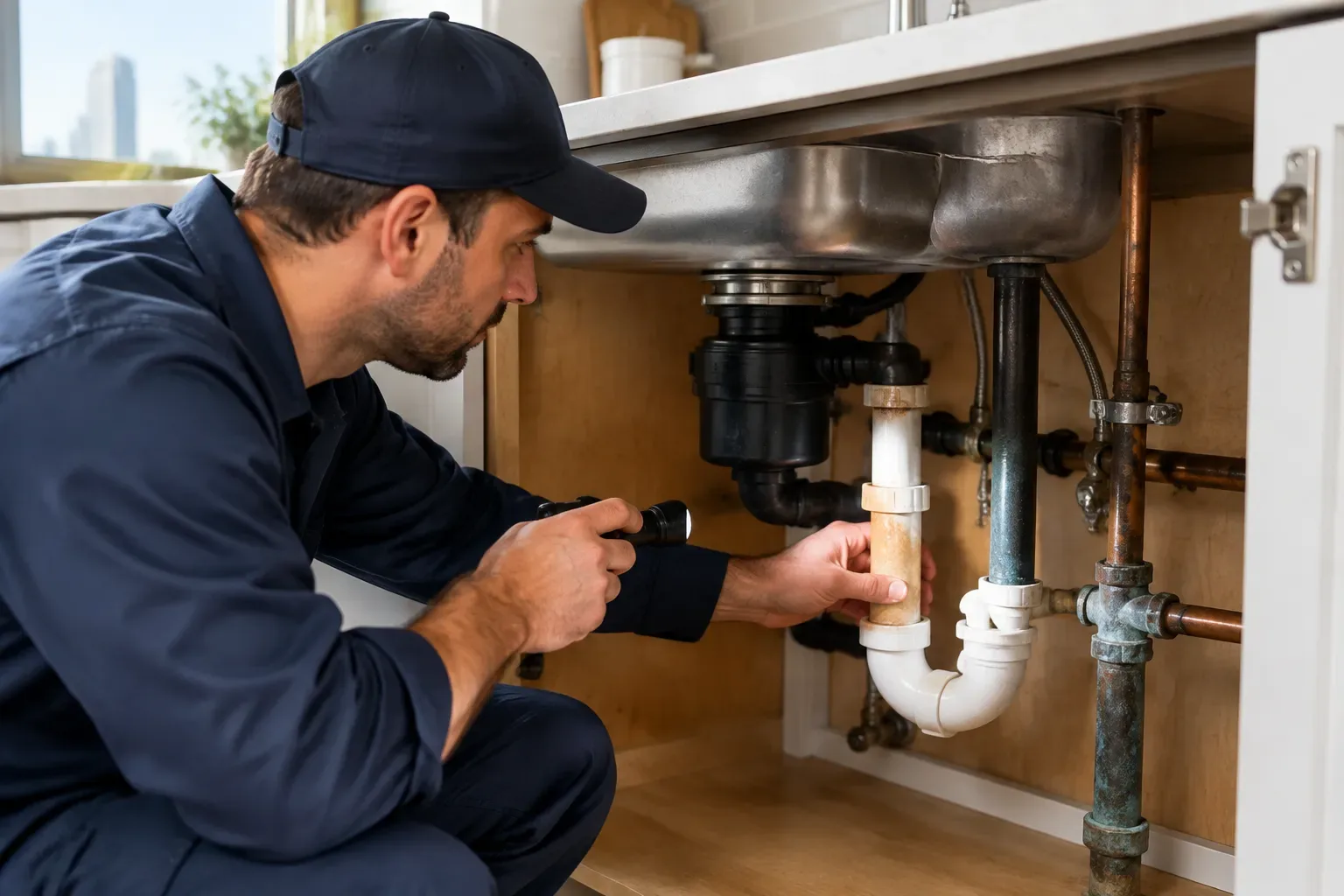
- Clearing a slow P-trap drain under a sink — remove the curved pipe, clear the blockage, reinstall
- Replacing a garbage disposal — straightforward for someone comfortable with basic electrical and plumbing connections on an accessible unit
- Installing a new toilet — setting a toilet on a new wax ring is a manageable DIY job if the flange is in good condition and accessible
- Any leak under a Houston slab foundation — requires professional detection equipment and concrete access; DIY is not viable
- Any pipe leak inside a wall or ceiling — requires knowing where to cut, how to access, and how to restore the wall correctly
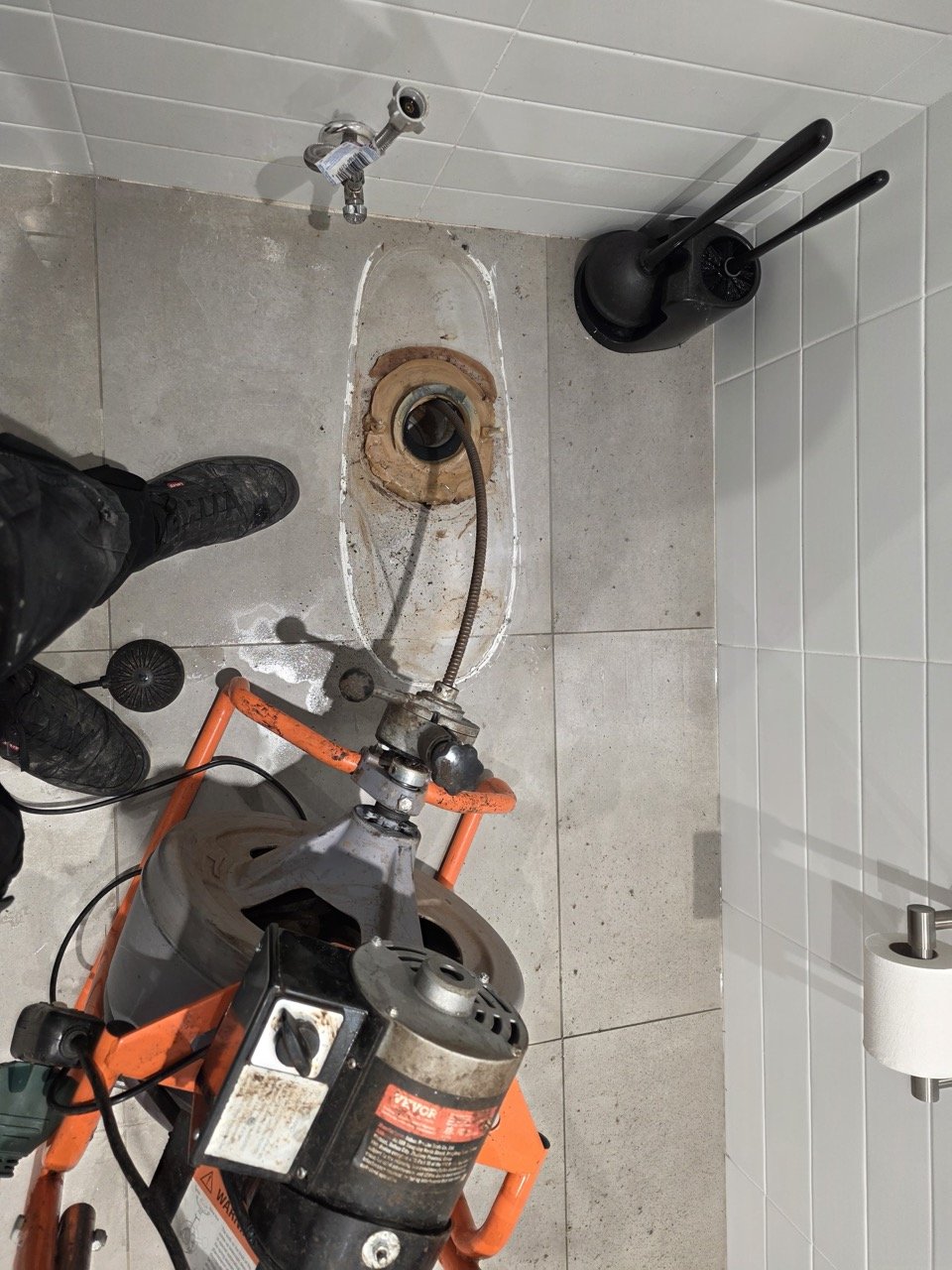
- Sewer line issues — root intrusion, collapsed sections, backups — requires camera inspection and professional equipment
- Water heater replacement — gas connections, venting, permits, and disposal all require expertise and often a license
- Main water line repair — touching the main supply line requires shutoff at the street and careful reconnection
- Any gas line repair or connection — never a DIY project under any circumstances
- Any work that requires a permit — inspected work must meet code; unpermitted work creates insurance and legal exposure
- Full repiping — whole-house supply line replacement requires planning, access, and materials expertise far beyond standard DIY
- Frozen or burst pipe repair after a Houston freeze event — scope is often larger than visible; professional assessment prevents reopening
Situations Where You Should Always Call a Plumber — No Exceptions
Regardless of your DIY confidence level, these situations in Houston require a licensed plumber:
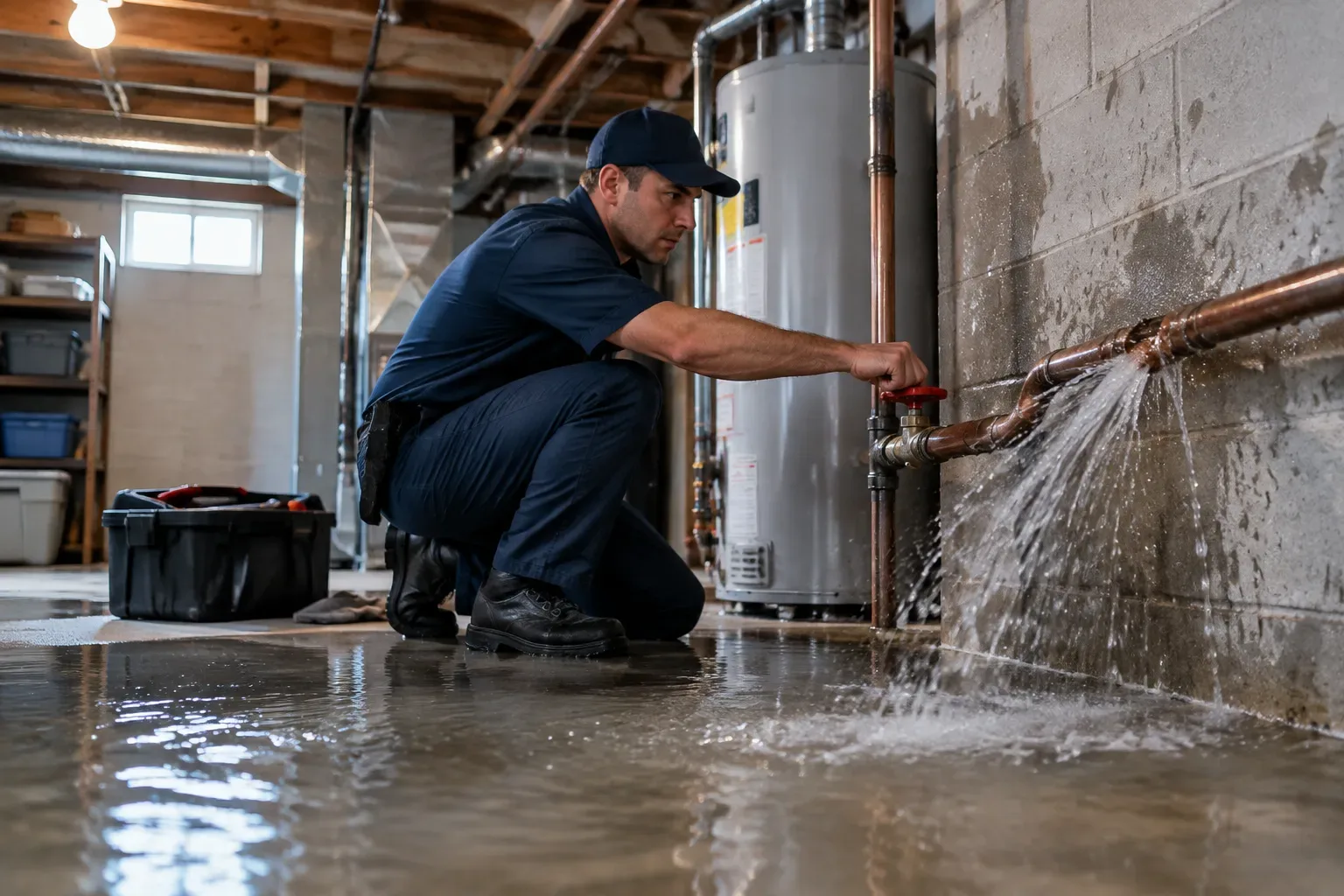
- Any active water flowing that you cannot stop — shut off the main supply and call immediately
- Sewage backing up into your home — health hazard, main line issue, not a DIY fix
- Any smell of gas near plumbing fixtures or appliances — leave the home and call both the gas company and a plumber from outside
- A warm or wet spot on your floor in a slab home — classic slab leak sign; requires professional detection before any action
- Multiple drains backing up simultaneously — main sewer line problem, not a drain-by-drain fix
- Water near an electrical panel, outlet, or appliance — combined water and electrical hazard
- Any plumbing work on a rental property in Texas — Texas law requires licensed plumbers for rental property plumbing work
The most costly DIY plumbing mistake in Houston is attempting to locate and access a pipe leak beneath the concrete slab without professional equipment. Homeowners who cut into the wrong section of slab based on where they think the leak is — rather than where electronic detection confirms it is — create additional concrete damage, additional restoration cost, and in some cases don't even find the pipe. Professional detection equipment locates the leak to within inches before any concrete is touched. This is not a step that can be skipped or improvised.
Real Houston Plumbing Scenarios — DIY or Call?
Here are the most common situations Houston homeowners face, with a direct answer:
Toilet That Keeps Running
Add food coloring to the tank. If it appears in the bowl, the flapper is leaking — replace it. A $10 flapper kit from any Houston hardware store takes 10 minutes. If the running continues after flapper replacement, the fill valve may need replacing — still a reasonable DIY job with the right kit.
Dripping Bathroom Faucet
Turn off the supply valves under the sink, disassemble the handle, and replace the cartridge or washers — the specific part depends on the faucet type. YouTube tutorials for your specific faucet model make this accessible for most homeowners. Hard water in Houston wears cartridges faster, so this is a recurring maintenance task in many homes.
Slow Kitchen Drain
Remove and clean the P-trap under the sink first — this clears most kitchen sink clogs. If the clog is deeper, a basic hand drain snake ($25–$40 at hardware stores) can clear most obstructions within 10–15 feet of the drain opening. If the clog returns within a month, the issue is likely deeper — see our guide on the 135 rule in plumbing.
Low Flow From a Single Faucet
Houston's hard water deposits calcium on faucet aerators — the small screen at the tip of the faucet — and reduces flow significantly over time. Unscrew the aerator, soak it in white vinegar for an hour, clean off the scale, and reinstall. This restores full flow in most cases and costs nothing.
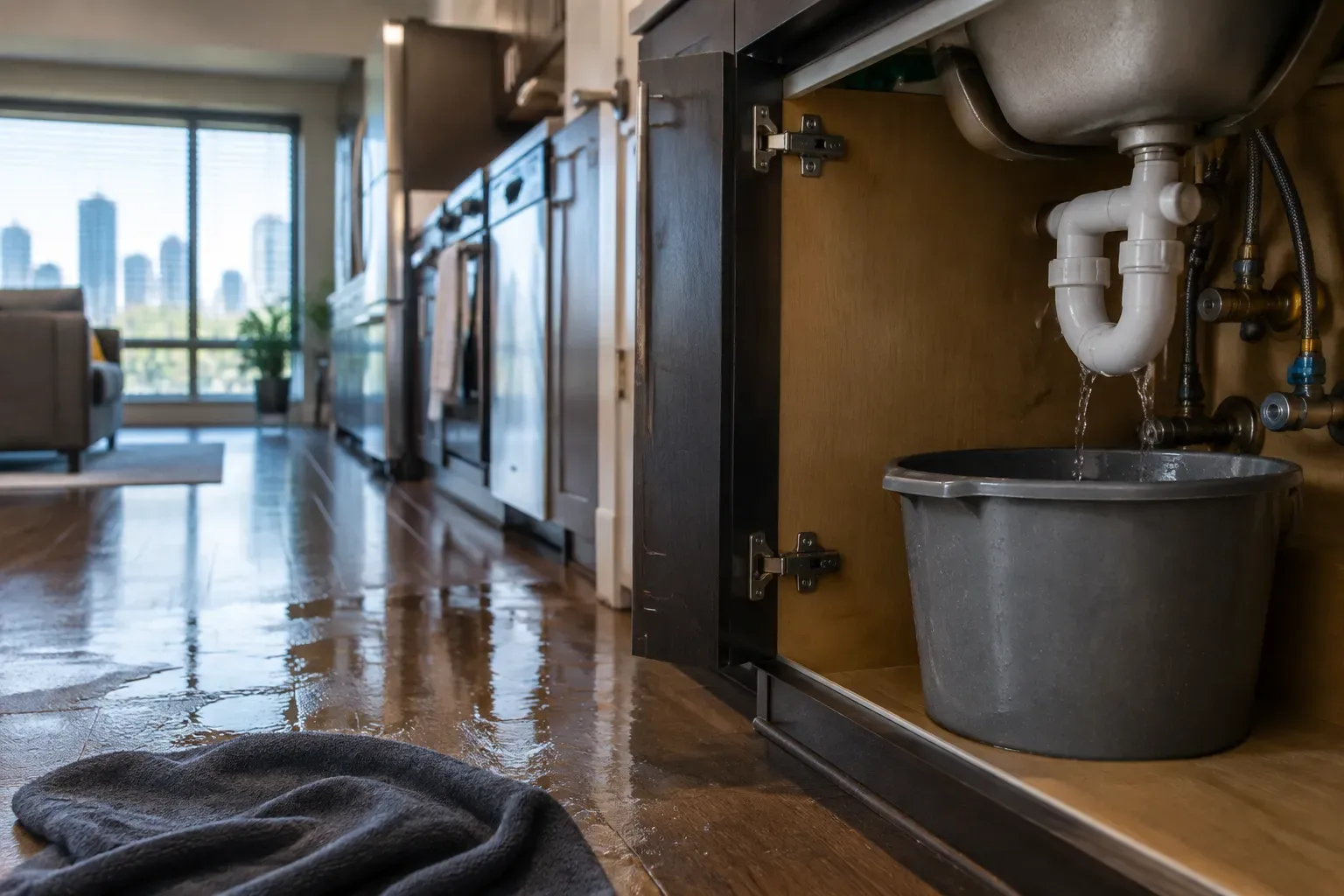
Damp Patch Under the Kitchen Sink Cabinet
First check the supply line connections and P-trap for obvious drips. If the source is visible and accessible, you can tighten or replace the fitting. If the moisture is coming from inside the cabinet wall, is appearing at floor level, or you can't identify the source — call a leak detection professional. A hidden leak left running in a Houston home creates mold within 24–48 hours.
Water Heater Not Producing Hot Water
Check the pilot light on a gas unit or the circuit breaker on an electric unit first — these are legitimate DIY checks. If neither resolves it, call a plumber. Water heater diagnostics involving gas valves, thermocouple replacement, or sediment flushing are within the capability of some experienced DIYers — but gas component work carries real risk if not done correctly. When in doubt, the call-out fee is cheaper than the consequences.
Warm Spot on the Tile Floor
A noticeably warm area on your floor — in a bathroom, hallway, or kitchen — in a Houston slab home is a classic slab leak sign. A hot water supply line beneath the slab is leaking, releasing heat through the concrete. Do not attempt to locate or access this yourself. Call our slab leak detection team — the longer it runs, the greater the foundation damage.
Sewage Backup in Shower or Tub
Raw sewage appearing in your bathtub or shower drain is a main sewer line backup — not a localized clog. Do not use any drains or flush any toilets until the main line is cleared. This is a health hazard that requires professional equipment to resolve safely. Call our sewer line team immediately.
What Texas Law Says About DIY Plumbing
Texas law has specific provisions about what unlicensed homeowners can and cannot do on their own plumbing — and it's important to understand these before starting any project:
What Homeowners Can Legally Do in Texas
Texas law allows a homeowner to perform plumbing repairs and improvements on their own primary residence — the home they live in — without a plumbing license, with specific limitations. This covers most of the DIY repairs listed in this guide: replacing faucets, toilets, supply lines, garbage disposals, and similar fixture work on an owner-occupied home.
What Requires a Licensed Plumber Regardless
- All plumbing work on rental properties — any property you don't occupy as your primary residence requires a licensed plumber for all work in Texas
- Permitted work — any job that requires a city permit must be performed or supervised by a licensed plumber, and the work must be inspected
- Gas line work — gas connections always require a licensed plumber or gas fitter in Texas
- Commercial properties — all commercial plumbing requires licensed professionals
In Houston, water heater replacements almost always require a permit — even when done by a licensed plumber. If you're considering replacing your own water heater as a DIY project, contact the City of Houston's permit office first to understand the specific requirements. Unpermitted water heater installations can create problems when you sell your home and may affect your insurance coverage for any related damage.
Why DIY Plumbing Is Riskier in Houston Than Most Cities
Slab Foundations Change the Risk Calculation
In most U.S. cities, a homeowner who DIY-repairs a pipe incorrectly and creates a new leak typically deals with a wet cabinet or a dripping fixture until they call a plumber. In a Houston slab home, an incorrectly repaired pipe that runs beneath the concrete — or a new leak created by a failed DIY repair in a pipe adjacent to the slab — releases water into the soil beneath the foundation with potentially serious structural consequences. The risk of a DIY error is higher here because the consequences can extend far beyond the original problem.
Hard Water Complicates Pipe and Fitting Work
Houston's hard water deposits mineral scale inside pipes, fittings, and valves that makes DIY disassembly harder than it looks. A shutoff valve that hasn't been turned in 10 years and is encrusted with mineral deposits can break under force rather than simply turning off the supply. A supply line fitting that appears to be finger-tight may be bonded to the valve stem with years of calcium deposits. Applying too much force to mineral-encrusted fittings is one of the most common ways a simple Houston DIY repair becomes a more significant problem.
Older Houston Homes Have Pipe Conditions That Aren't Visible
A DIY repair attempt on galvanized steel pipes in a Heights or Montrose home from the 1960s can reveal that the pipe wall is so corroded it cannot hold a new fitting — creating a failure at the repair site that requires professional access to resolve. Older pipe materials that have been in place for 50–60 years in Houston's hard water environment are more fragile than they appear, and a reasonable DIY repair can inadvertently create a new failure point that's worse than the original. If your home has older metal pipes, a professional assessment before any work is always the safer choice.
Not Sure Whether Your Houston Plumbing Problem Needs a Pro?
Call us and describe what you're seeing — we'll tell you honestly whether it's something you can handle yourself or whether it needs professional attention. No pressure, no dispatch fee just for the advice.
DIY Plumbing and Your Houston Homeowner's Insurance
This is the factor most Houston DIYers don't think about until it's too late. Your homeowner's insurance policy likely has provisions about how plumbing work must be performed — and DIY work that doesn't meet those provisions may not be covered when something goes wrong.
What Most Texas Homeowner's Policies Require
Most standard homeowner's insurance policies in Texas specify that water damage caused by plumbing failure is covered — but that coverage is typically conditioned on the work having been performed properly and in compliance with local building codes. Work that required a permit but wasn't permitted, or work that was performed in a way that violated code, can be excluded from a water damage claim even if the failure wasn't directly caused by the code violation.
The Practical Risk in Houston
In a Houston slab home, where a DIY pipe repair error can create a hidden leak that runs for weeks before detection, the insurance implications are significant. If your insurer can establish that the failure was related to unpermitted or improperly performed DIY work, the water damage claim — potentially tens of thousands of dollars in a slab leak scenario — may be denied in part or in full. Check your policy before starting any significant plumbing project, and consider whether the call-out fee for a licensed professional is genuinely more expensive than the coverage risk of doing it yourself. See our guide on can a small water leak cause major damage for the full picture of what's at stake.
Quick Decision Guide — Houston Plumbing DIY or Call?
| Plumbing Situation | Verdict | Why |
|---|---|---|
| Running toilet (flapper or fill valve) | DIY — Fine | Accessible, low consequence, $10–$25 part |
| Dripping faucet (cartridge/washer) | DIY — Fine | Accessible, well-documented, manageable risk |
| Slow or clogged drain (P-trap or snake) | DIY — Fine | Surface-level, accessible, low consequence |
| Faucet aerator cleaning (hard water) | DIY — Fine | 30-second job, no tools, no risk |
| Replacing a showerhead | DIY — Fine | Straightforward swap with thread tape |
| Installing a new toilet | DIY if experienced | Manageable if flange is accessible and in good condition |
| Replacing garbage disposal | DIY if comfortable | Basic electrical and plumbing — accessible unit required |
| Water heater replacement | Call a Plumber | Gas/electrical connections, venting, permit required in Houston |
| Pipe leak inside a wall | Call a Plumber | Access, scope assessment, and drywall restoration needed |
| Any under-slab work | Call a Plumber | Detection equipment, concrete access — not viable for DIY |
| Sewer line issues or backup | Call a Plumber | Camera inspection and professional equipment required |
| Gas line repair | Call a Plumber | Never DIY — safety and legal requirement |
| Burst pipe / active flooding | Call Immediately | Shut off main supply and call — every minute counts |
For what a Houston plumber will actually charge for jobs that go beyond DIY, see our Houston plumbing repair cost guide. For understanding how quickly a small undetected leak escalates in Houston, see can a small water leak cause major damage. For how to find a trustworthy Houston plumber when you do need one, see the best way to find a plumber in Houston.
Frequently Asked Questions — DIY vs. Professional Plumbing in Houston
Not Sure? Call Us First — No Obligation.
Describe what you're seeing and we'll give you an honest answer on whether it's a DIY job or whether you need us. If you need us, we'll give you a written estimate before anyone starts. Available 24/7 across all of Houston.
Sources: Texas State Board of Plumbing Examiners — Licensing Requirements | City of Houston — Permits and Inspections | Texas Department of Insurance — Homeowner Policy Information | One Plumbing Expert Houston — Leak Detection & Repair | Houston Plumbing Repair Cost Guide | Can a Small Water Leak Cause Major Damage?