How Can Brays Oaks Renters Respond to an After-Hours Leak Near Fondren?
A Brays Oaks renter facing a leak after hours should protect people first, stop the water only if it is safe and accessible, then report the issue through the property’s emergency maintenance process. A burst line, water spreading across floors, sewage, a sagging ceiling, or water near electricity needs immediate escalation, not a wait-until-morning approach.
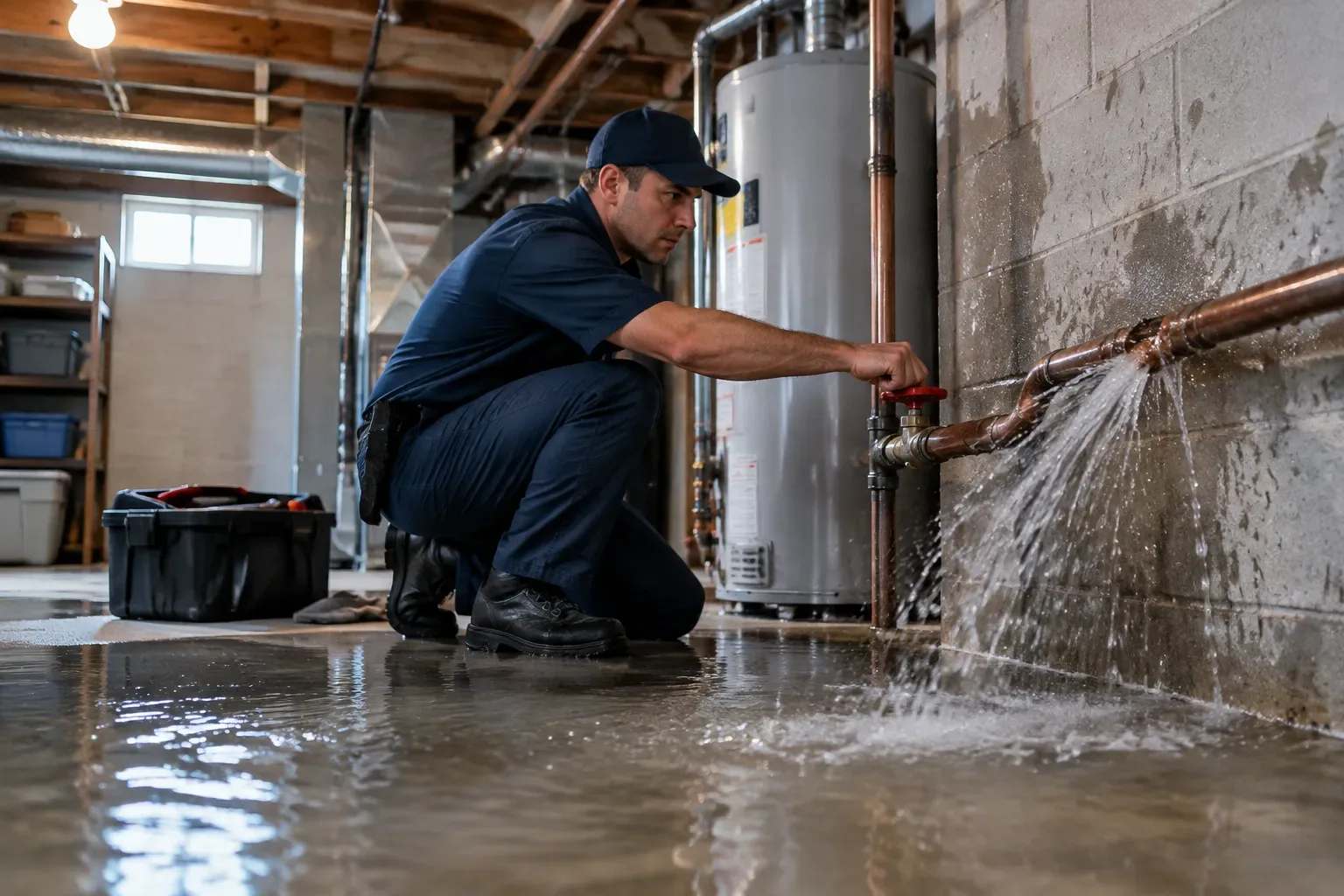
If management cannot be reached and the leak threatens safety or significant property damage, contact an emergency plumbing provider and clearly explain that you are a renter. One Plumbing Expert Houston provides 24/7 emergency plumbing services, but your lease and building procedures may determine who can approve non-emergency repair work.
Quick Answer
Move people, pets, and belongings away from the affected area. Do not step into standing water near outlets, appliances, panels, or other electrical equipment. If you can safely reach a fixture shutoff or your unit’s main shutoff, turn it off. Then call the apartment’s after-hours maintenance number or on-call manager, document the condition with time-stamped photos and video, and keep records of every contact attempt.
For a leak that is actively flowing, involves sewage, affects another unit, or creates an electrical or ceiling-collapse hazard, report it as an emergency. Do not remove ceiling material, open walls, use drain chemicals, or attempt pipe repairs yourself.
What makes an after-hours leak an emergency?
The amount of visible water matters, but so does where it is going. A small drip into a sink may be containable overnight. Water running from a supply line, ceiling, toilet base, or wall can quickly spread into floors, neighboring units, and electrical areas.
Active water flow or burst pipe
Water continues to run, spray, or pool after you try the accessible fixture shutoff. Report it immediately to emergency maintenance and seek emergency plumbing help if management cannot respond.
Ceiling leak or sagging drywall
A wet stain is an observable symptom, not proof of a roof or plumbing failure. Keep clear of the area because saturated drywall can weaken or fall, and report the location of the leak to management.
Sewage backup or overflowing toilet
Wastewater can contain contaminants and should not be handled as an ordinary water spill. Keep people and pets away, stop using connected fixtures, and request urgent maintenance.
Water near electrical equipment
Water around outlets, power strips, appliances, an electrical panel, or HVAC equipment creates a shock risk. Do not touch equipment while standing in water, and move to a dry area before reporting the emergency.
A bad smell, a slow drain, or a damp cabinet may not require an overnight repair if there is no active spread or safety risk. Still, report it promptly. A symptom does not identify the cause: a ceiling drip could involve plumbing, a roof opening, condensation, or storm-related intrusion, while a sewer odor could come from a drain, vent, or another issue that requires inspection.
For more guidance on deciding how urgently to act, see how to tell whether a plumbing problem needs emergency service.
What should a renter do in the first few minutes?
Start with safety and containment, not fault. You do not need to determine whether the building, a neighbor, a renter-owned appliance, or a pipe caused the water before making the emergency report.
- Keep everyone away from standing water, unstable ceilings, sewage, and electrical equipment. If there is an immediate danger, leave the affected space and seek appropriate emergency assistance.
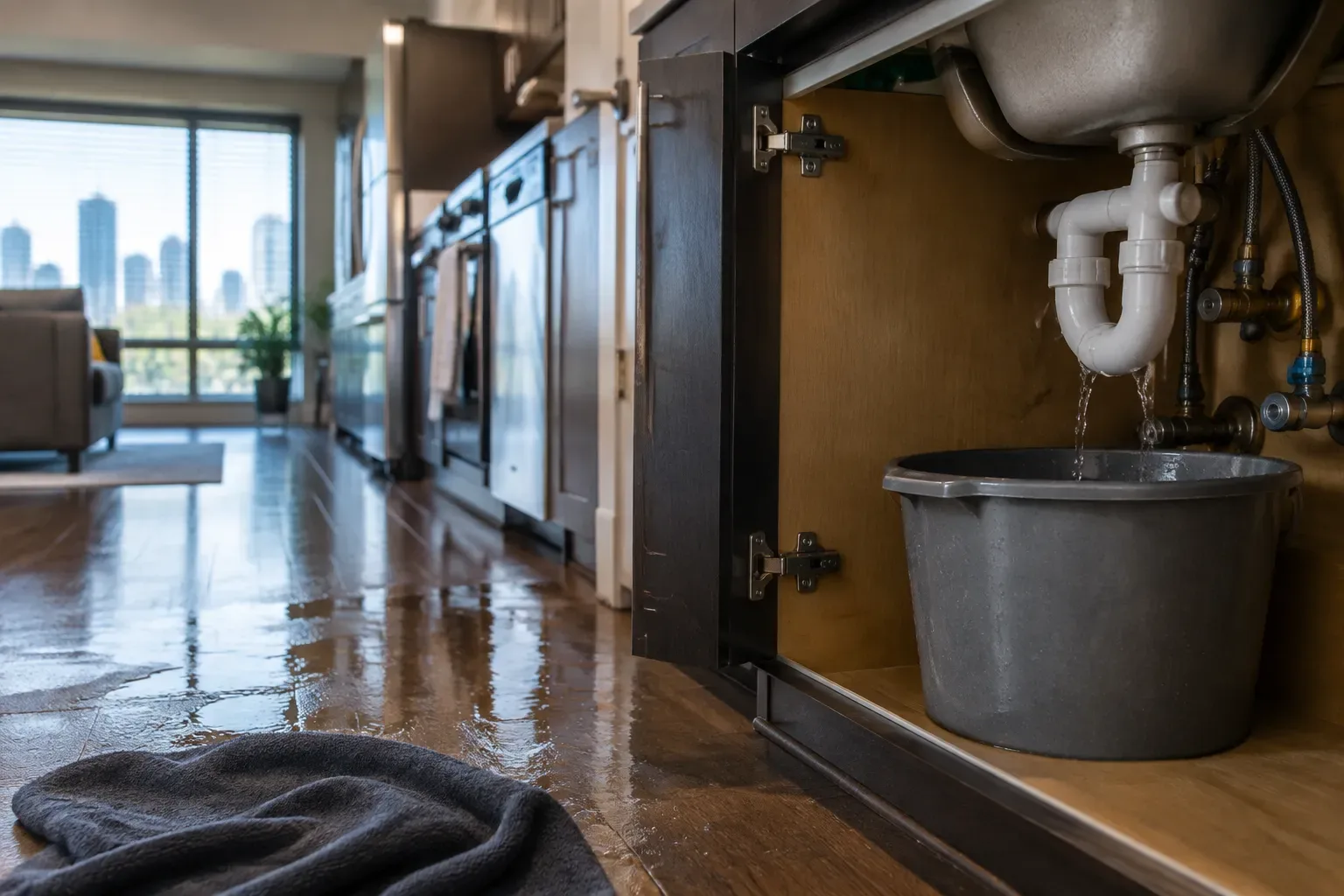
- Stop the water at the fixture valve, such as the valves under a sink or behind a toilet, only if the valve is easy to reach and the area is dry enough to approach safely.
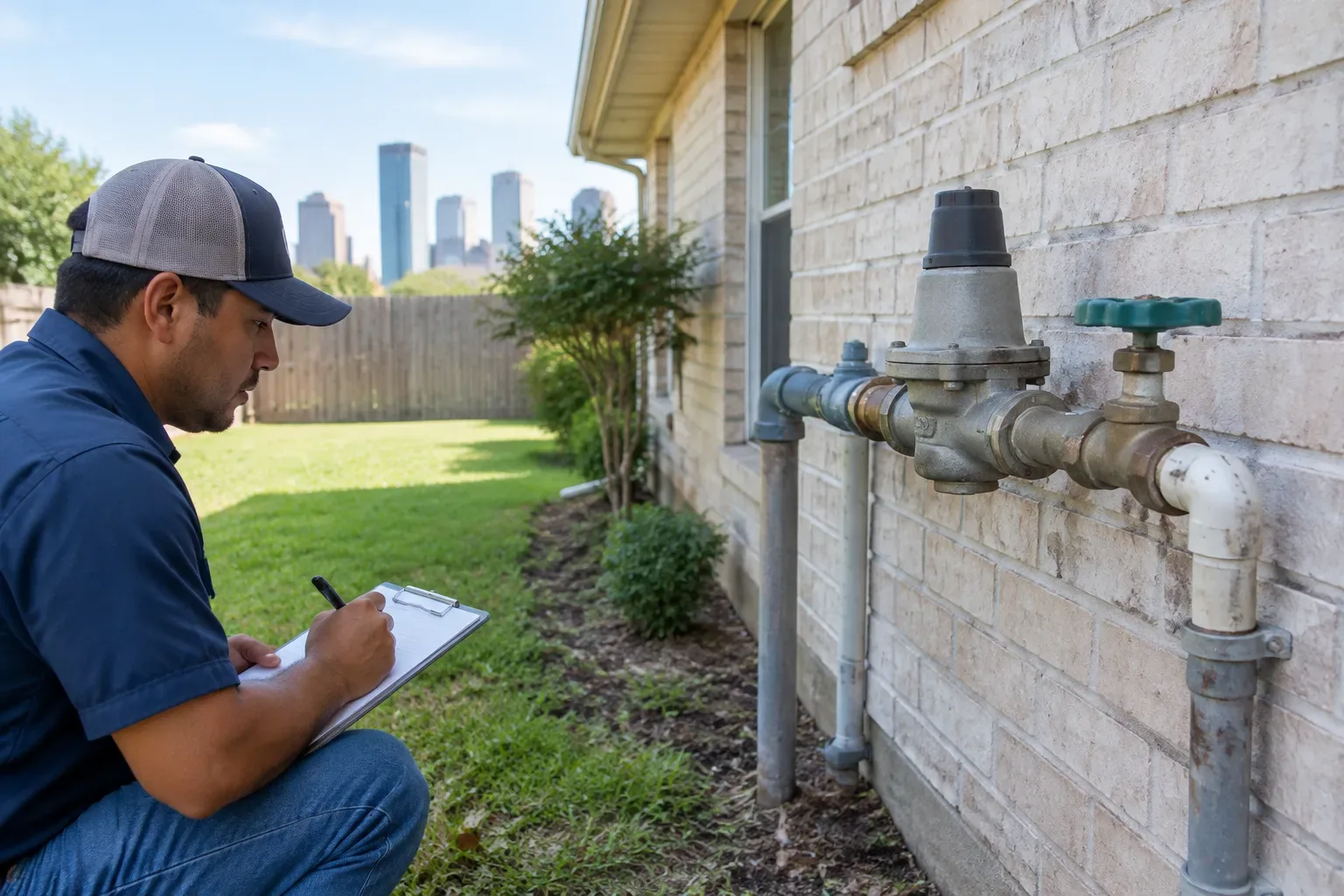
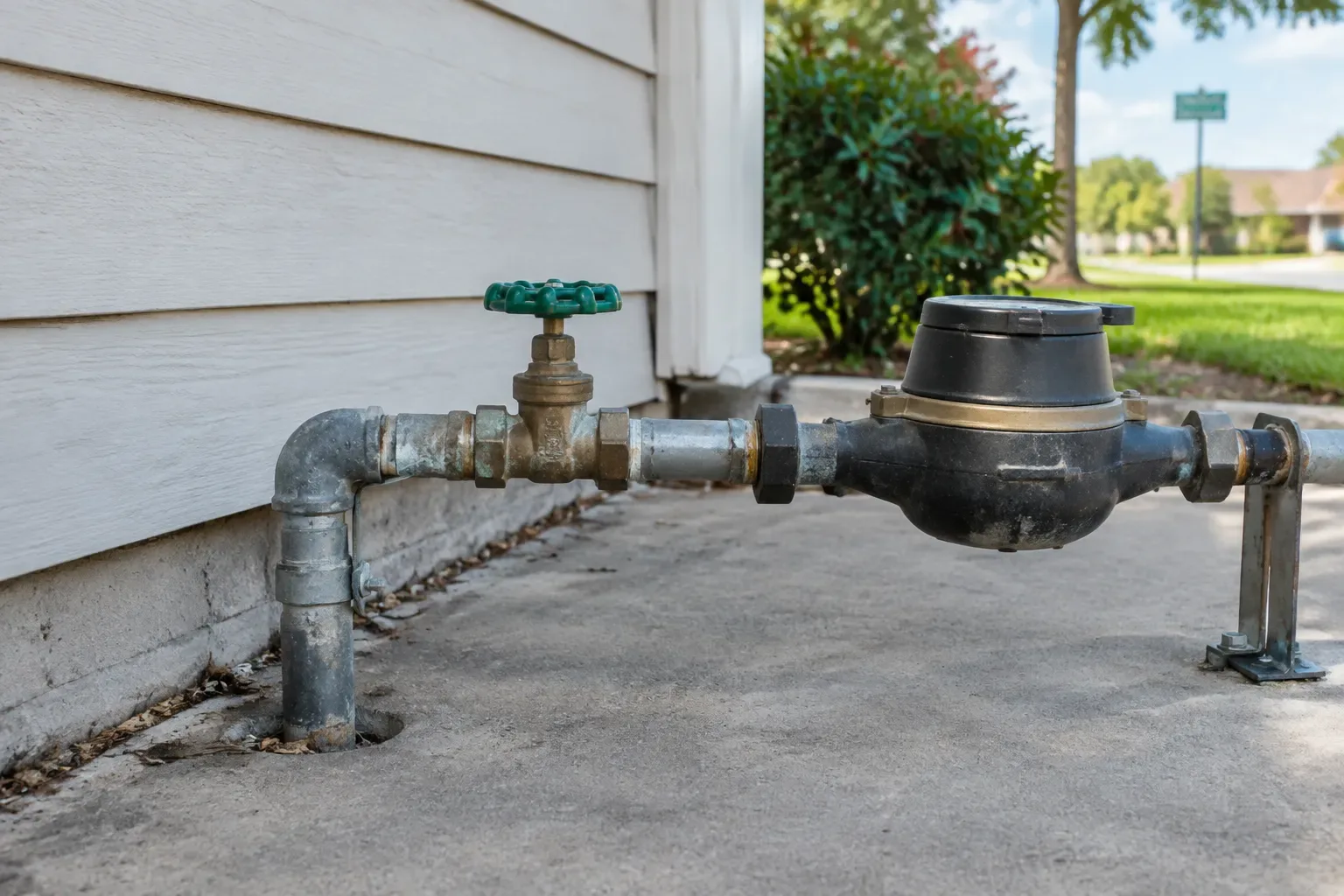
- If your unit has a clearly marked, accessible main shutoff, use it if a fixture valve does not stop the flow. Do not force a valve or access a restricted building area.
- Call the property’s emergency maintenance line, on-call manager, or the number specified in your lease. Leave a detailed voicemail if necessary, then send a text or email if those channels are provided.
- Take photos and video before moving items, then relocate undamaged belongings away from water if it is safe to do so.
- If the threat continues and management is unavailable, contact an emergency plumber, state that you are a tenant, and ask what authorization is needed before work beyond emergency stabilization begins.
A typical apartment fixture has local shutoff valves under the sink, behind the toilet, or beside a washing-machine connection. Not every rental has a renter-accessible main valve. If you cannot locate one without moving appliances, entering a utility closet, or handling unfamiliar equipment, stop and report that fact.
Who should renters call first after a nighttime leak?
For a leak inside a Brays Oaks rental near Fondren, the property’s emergency maintenance number or on-call manager is usually the first contact. That team may know where building shutoffs are located, whether another unit is involved, and whether the lease requires management approval before a contractor performs work.
Use an emergency plumber when the property contact cannot be reached and the condition presents a genuine risk, such as uncontrolled water, sewage, electrical exposure, or rapidly worsening damage. Emergency plumbing service may help stabilize a private plumbing problem, but a renter should not assume a contractor can authorize building-wide repairs or determine final payment responsibility.
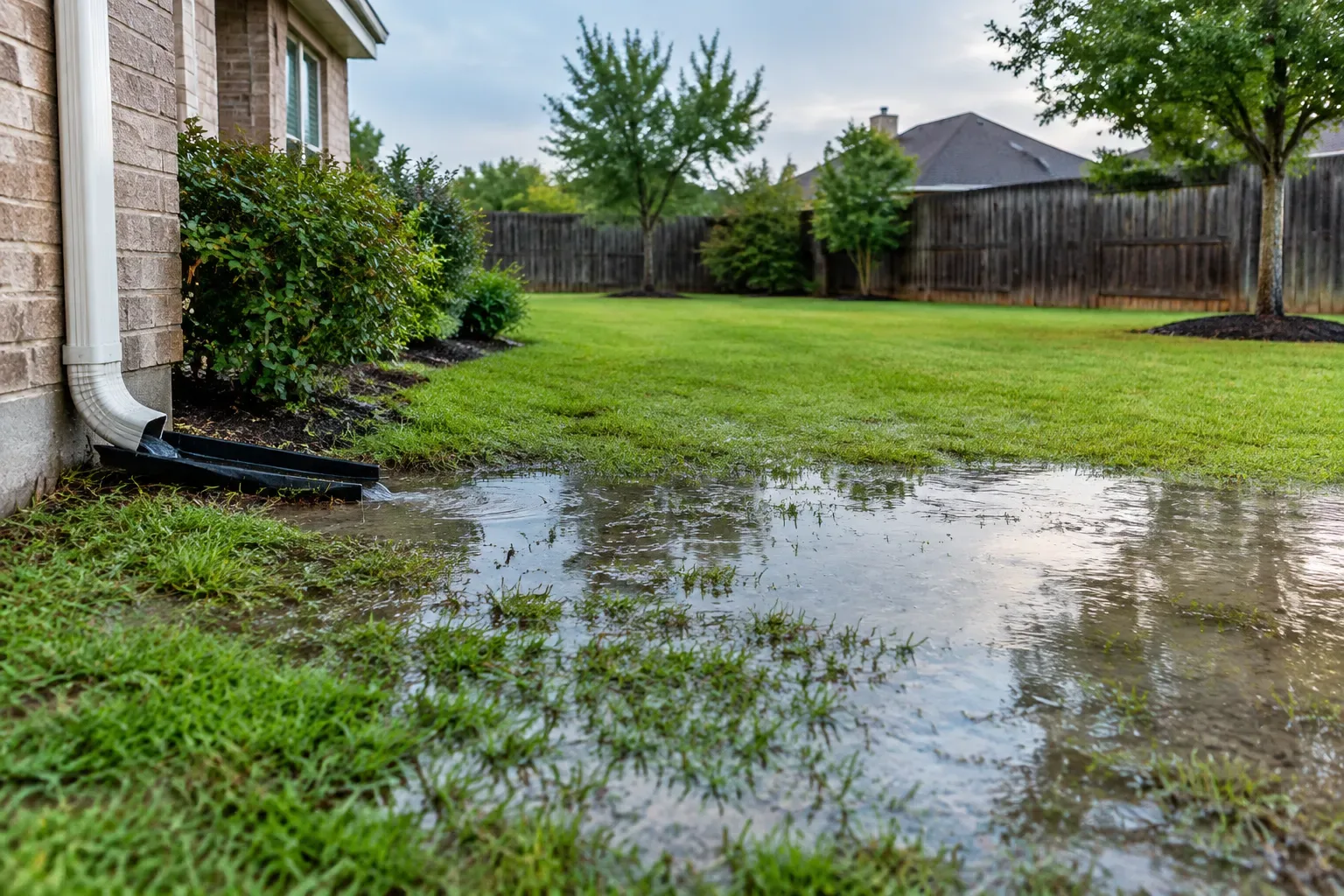
If the issue appears outside the building, such as a public water, sewer, or drainage concern rather than an interior rental leak, report the private property issue to management and consider Houston 311 for eligible city-service concerns. Do not assume that a city channel handles a leak inside your apartment, townhouse, duplex, or rental house.
What should you say to after-hours maintenance or a plumber?
Clear details help the person on call decide what to do next. Avoid guessing at the cause. Describe what you can see, hear, and safely observe.
Use this script:
Add whether sewage is present, whether the water is still flowing, and whether the issue began during heavy rain. Storm conditions can make the source harder to isolate and add slip and electrical hazards, so report any simultaneous drainage or exterior-water issue separately rather than assuming it is all one problem.
What evidence should a renter save after a plumbing leak?
Documentation protects your ability to explain what happened later. It also gives maintenance personnel useful information if the leak has slowed or stopped before they arrive.
Save the following:
- Time-stamped photos and video of the water source, wet surfaces, ceiling or wall changes, and affected belongings.
- Screenshots of calls, voicemail attempts, texts, emails, maintenance portal submissions, and work-order numbers.
- The names, titles, and stated instructions of every person you reach.
- Photos showing the shutoff position, if you safely used one, and any visible water meter reading if it is accessible and relevant.
- Receipts for reasonable emergency mitigation steps or damaged personal property records, if applicable.
Notify your renters insurance carrier promptly if personal belongings were damaged. Insurance questions, lease terms, the cause of the leak, and tenant conduct can all affect payment responsibility. The property manager should also explain how to report building damage.
Can a renter authorize emergency plumbing work?
Sometimes emergency stabilization is necessary before management responds, but authorization is not one-size-fits-all. Review your lease’s emergency-maintenance instructions and use the property’s designated contact method first. Some properties require management to dispatch or approve a contractor, particularly where work affects shared plumbing, walls, ceilings, or another unit.
Texas law includes landlord repair duties, tenant notice requirements, and limited remedies for certain conditions affecting health or safety under Texas Property Code Chapter 92. That does not mean every renter can hire a plumber, deduct the bill from rent, or expect automatic reimbursement. Keep records of your notice attempts, ask for written authorization where practical, and request a clear explanation of what work is authorized.
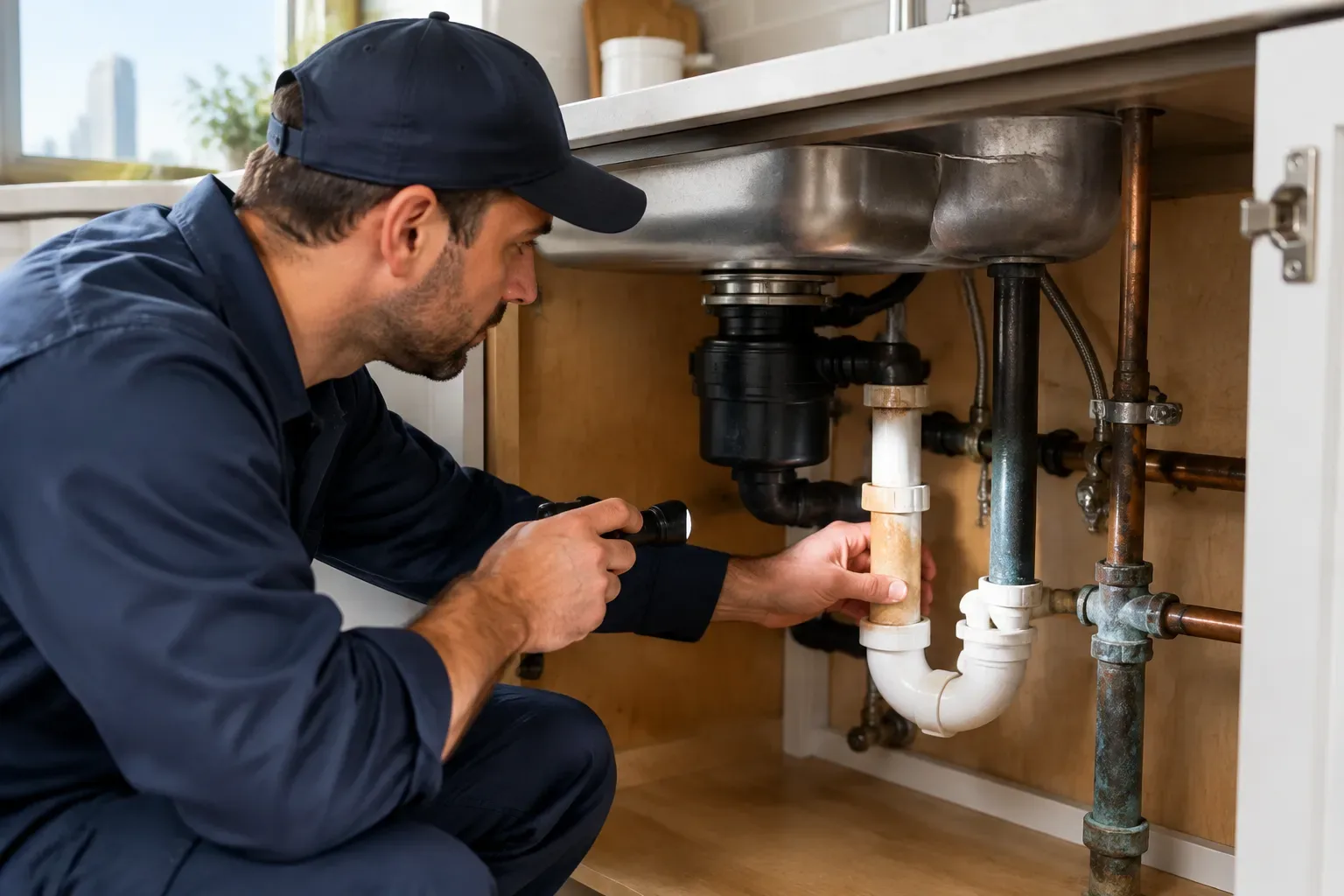
If a contractor is needed to locate a hidden source, professional leak detection and repair can involve tools such as electronic leak detection and pressure testing. Those methods help confirm a professional finding; a damp spot or a high water bill alone cannot prove which pipe or fixture is responsible.
What should renters avoid doing while waiting for help?
The most common mistake is turning a manageable leak into a larger hazard through DIY work. Avoid these actions:
- Do not touch switches, plugs, appliances, or panels while standing in water.
- Do not puncture, cut, or pull down a wet ceiling. Water may be trapped above it, and the ceiling may be unstable.
- Do not use chemical drain cleaner for an overflow or suspected sewer backup. It may not solve the obstruction and can create a chemical exposure risk for anyone working on the line.
- Do not repeatedly flush an overflowing toilet or run faucets into a backed-up drain.
- Do not run a washer, dishwasher, shower, or other connected fixture if wastewater is backing up.
- Do not make repairs behind walls, under floors, or inside water-heater connections.
A water heater leak deserves special caution because it can involve hot water, pressurized connections, and electrical or gas equipment. If the leak appears to originate there, report it as an urgent maintenance issue and use a qualified water heater repair and installation service only through the appropriate property authorization process.
What is the practical takeaway for Brays Oaks renters?
Treat an after-hours leak as a safety, reporting, and documentation problem before it becomes a repair-cost question. Shut off only what you can safely access, notify the property’s emergency contact right away, and preserve clear evidence. That sequence gives the best chance of limiting damage while keeping you within the rental property’s procedures.
Ready to discuss your project?
For a Brays Oaks rental leak that needs professional assessment after management has been notified, reach out to One Plumbing Expert Houston.
FAQ
Should I turn off the water in my apartment if there is a leak?
Yes, if you can safely reach a clearly identified fixture valve or a renter-accessible unit shutoff. Turn off the smallest valve that stops the flow, such as the valve beneath a sink or behind a toilet. Do not enter locked rooms, force stuck valves, or operate unfamiliar building equipment. If water is near electricity or the area is unsafe, leave it alone and report the hazard immediately.
What if my landlord or apartment manager does not answer at night?
Call the emergency maintenance number listed in your lease, resident portal, signage, or voicemail, and leave a detailed message. Follow with written notice through available text, email, or portal channels so there is a time-stamped record. If water is actively spreading, sewage is present, or safety is at risk, consider after-hours emergency plumbing help after explaining that you are a renter and management has not responded.
Can I call a plumber without my landlord’s permission in Texas?
You can contact a plumber for information or emergency assistance, but do not assume you can authorize repairs on the landlord’s behalf or that you will be reimbursed. Lease rules, the urgency, the needed work, notice attempts, and Texas legal requirements can matter. Ask the provider whether they can stabilize the emergency and what authorization they need before performing non-emergency or building-affecting work.
Is a leak from my ceiling always a plumbing problem?
No. A ceiling stain or drip is a symptom, not a confirmed cause. It could be linked to plumbing above the ceiling, a neighboring unit, roof or window intrusion, condensation, or storm-related water. Keep away from sagging drywall, document where the water appears, and tell management whether rain is occurring. A maintenance professional must inspect the source before deciding on the proper repair.
Who pays for water damage from a leak in a rental?
Responsibility can depend on the source of the leak, lease provisions, maintenance history, tenant actions, insurance coverage, and applicable law. Report the incident promptly instead of waiting to sort out fault. Building repairs may be handled differently from damage to your personal belongings. For financial questions to raise before approving work, review this guide on Houston plumbing repair costs and ask for written documentation.
What should I do if water is close to an outlet or appliance?
Do not touch the outlet, appliance, cord, switch, or power strip while you are standing in water. Keep others away from the area and report the electrical risk to emergency maintenance. If you can leave the area without crossing water, do so. A plumber may address the water source, but electrical safety or restoration can require the property manager to coordinate other qualified professionals.
Can I use a plunger or drain cleaner for an overflowing toilet?
A plunger may be reasonable only if the water is clean, contained, and not rising toward an overflow. Stop immediately if flushing worsens the condition or wastewater appears. Do not use chemical drain cleaner in an overflowing toilet or backup. It may not clear the blockage and can make later service more hazardous. Report a sewage backup or persistent overflow as urgent maintenance.
What if the leak started during heavy rain near Fondren?
Report both the interior leak and the weather timing to management, but do not decide that rain is the cause. Rain can coincide with roof intrusion, drainage problems, or plumbing issues that happen independently. Stay out of standing water near electrical equipment, document the conditions from a safe location, and report exterior flooding or public-infrastructure concerns through the appropriate channels, including Houston 311 where eligible.