How Long Do Pipes Last in Houston Homes?
The answer depends on what your pipes are made of, when your home was built, and what Houston's hard water, clay soil, and slab foundations have been doing to them since day one.
If you own a home in one of Houston's older neighborhoods — the Heights, Montrose, Garden Oaks, Meyerland, Sharpstown, or Bellaire — there's a decent chance you're living with the original pipes from when the house was built. Depending on when that was, those pipes are anywhere from 40 to 80 years old. And in a city with Houston's specific combination of hard water, expansive clay soil, and slab foundations, pipes age faster here than in most places in the country.
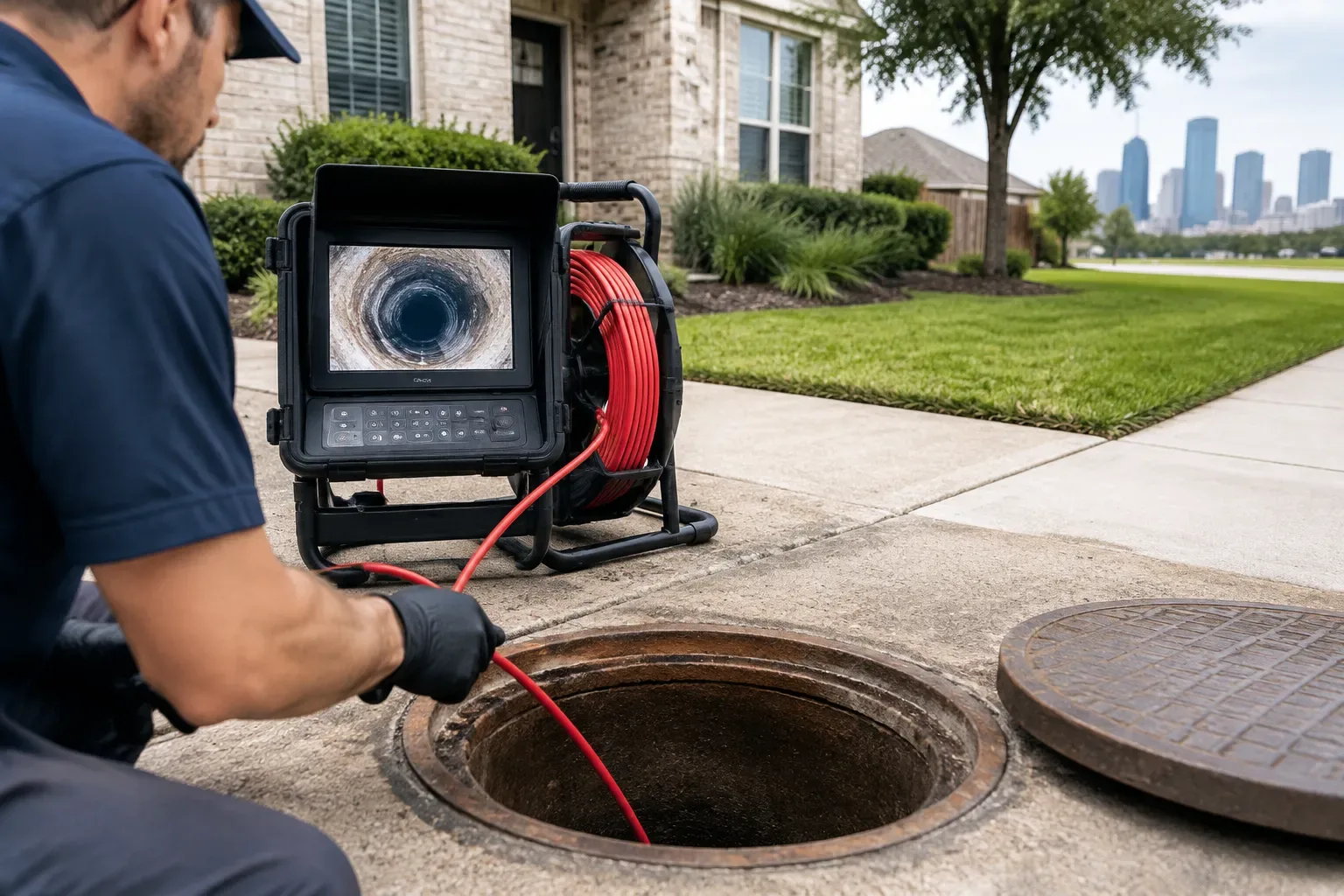
This guide tells you exactly how long each pipe type realistically lasts in Houston conditions, what the warning signs of failing pipes look like, and how to decide whether your home needs targeted repairs or a full repipe. If you're not sure what type of pipes you have or how old they are, a licensed Houston plumber can assess that in a single visit — and often a camera inspection of the drain lines tells the story clearly.
How Long Each Pipe Type Lasts in Houston
Different pipe materials age at very different rates — and Houston's environment affects each one differently. Here's what to expect from each type found in Houston homes:
Galvanized Steel Pipes
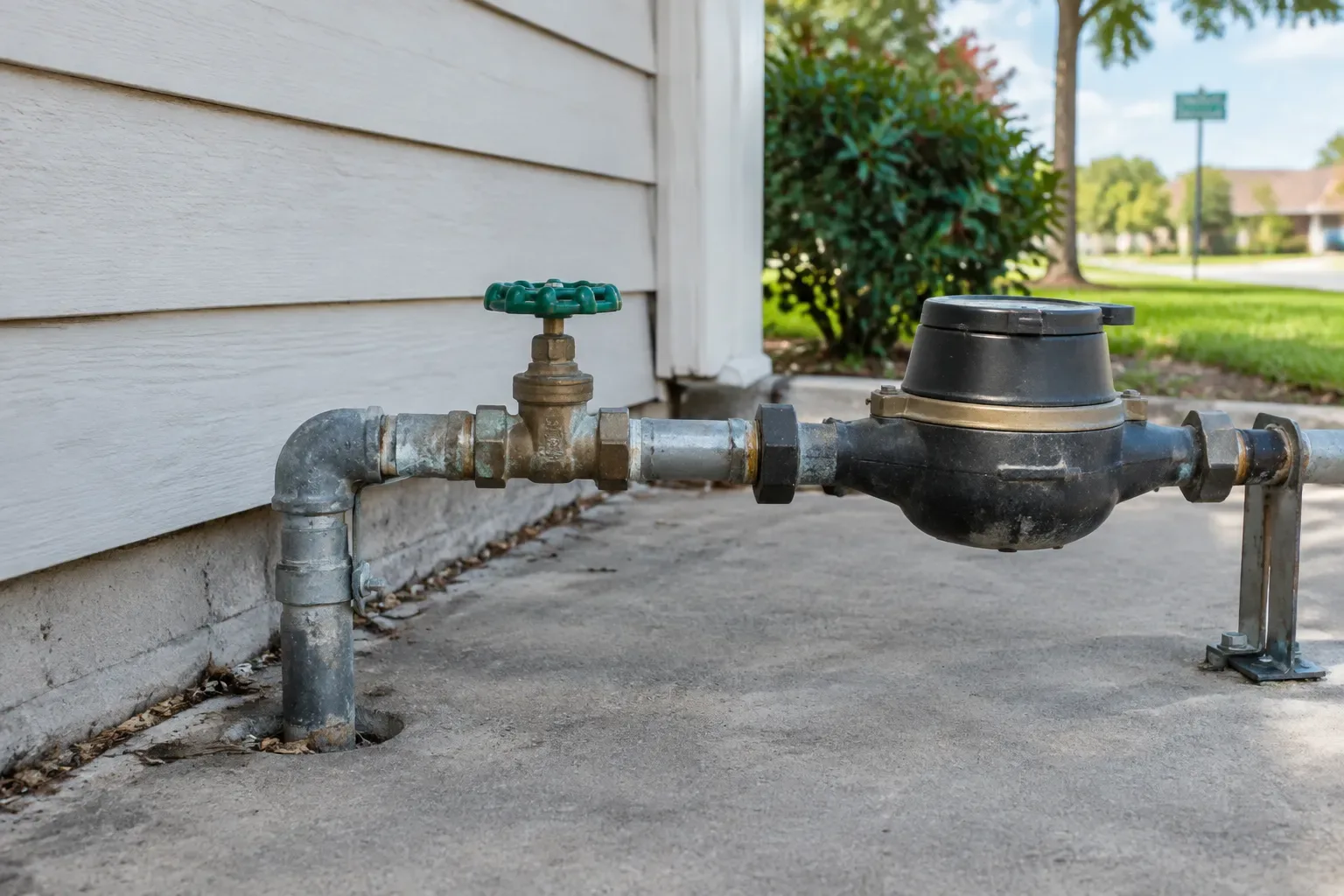
The most problematic pipe material in Houston's older housing stock. Galvanized steel pipes were standard in homes built before the mid-1970s. The zinc coating that protects the steel corrodes from the inside out over time — particularly in Houston's hard water, which deposits mineral scale that traps moisture against the pipe wall. Once the zinc layer is gone, the steel rusts rapidly. Most galvanized pipes in Houston homes older than 40 years are either failing or have already been replaced. Signs include low water pressure, rust-colored water, and repeated pinhole leaks at joints.
Cast Iron Drain Pipes
Cast iron was the standard drain pipe material in Houston homes built through the 1970s and into the early 1980s. It lasts significantly longer than galvanized steel supply lines — but many of those pipes are now 50–70 years old, which puts them squarely at the end of their practical lifespan. Cast iron corrodes from the inside, developing rough surfaces that trap waste and grease, then progresses to cracks, joint separations, and eventual collapse. A camera inspection is the definitive way to assess condition.
Copper Supply Pipes
Copper became the dominant supply pipe material from the 1970s through the early 2000s in Houston. Its national lifespan of 50–70 years is shortened somewhat in Houston because the city's moderately hard water is slightly acidic — a combination that accelerates pinhole corrosion in copper walls over time. Many Houston homes with original 1980s copper supply lines are now seeing their first wave of pinhole leaks. Once pinhole leaks begin appearing at multiple points in the system, a full repipe is typically more cost-effective than continued patch repairs.
PVC Drain Pipes
PVC became standard for drain lines in Houston homes built after approximately 1985. Unlike cast iron or galvanized steel, PVC does not corrode, rust, or scale with hard water minerals. Its primary vulnerabilities in Houston are UV degradation (only in exposed outdoor sections) and physical damage from soil movement beneath the slab. For interior drain lines, properly installed PVC should outlast the home itself with normal maintenance.
PEX Supply Pipes
Cross-linked polyethylene (PEX) tubing has become the preferred supply pipe material for Houston repipes and new construction since roughly 2005. It is flexible enough to accommodate Houston's soil movement without cracking, highly resistant to hard water scale, immune to the corrosion that affects both copper and galvanized steel, and significantly cheaper to install than copper. PEX's flexibility also made it more resistant to freeze damage during Winter Storm Uri — an important consideration for Houston homes. Practical lifespan in Houston conditions is excellent.
CPVC Supply Pipes
Chlorinated PVC (CPVC) was used for supply lines in many Houston homes built in the 1980s and 1990s as an alternative to copper. It handles hot water well and is resistant to hard water scale, but CPVC becomes increasingly brittle with age — particularly in Houston's temperature extremes. Older CPVC systems are prone to sudden cracking and failure at fittings. Houston homes with original CPVC supply lines from the 1980s and '90s should be monitored and budgeted for eventual replacement.
| Pipe Material | Typical Lifespan (Houston) | Common In | Status |
|---|---|---|---|
| Galvanized Steel (supply) | 20 – 50 years | Pre-1975 homes | Likely Past End of Life |
| Cast Iron (drain) | 50 – 75 years | Pre-1985 homes | At or Near End of Life |
| Copper (supply) | 50 – 70 years | 1970s – early 2000s | Monitor — Pinhole Leaks Starting |
| CPVC (supply) | 25 – 50 years | 1980s – 1990s | Watch for Brittleness |
| PVC (drain) | 50 – 100+ years | Post-1985 homes | Long Service Life Remaining |
| PEX (supply) | 50 – 100 years | Post-2005 homes and repipes | Excellent — Best Choice for Houston |
Why Houston Specifically Shortens Pipe Lifespan
Hard Water Deposits Scale and Accelerates Corrosion
Houston's water supply is classified as moderately hard — carrying elevated concentrations of calcium and magnesium minerals that deposit inside pipe walls as scale over time. For galvanized steel pipes, this scale traps moisture against the pipe wall and dramatically accelerates corrosion. For copper pipes, the slightly acidic chemistry of Houston's water slowly attacks the pipe wall from the inside, creating the pinhole leaks that many older Houston homeowners are now encountering in their 1980s copper supply systems. Hard water is the single biggest factor reducing pipe lifespan in Houston compared to softer-water cities.
Expansive Clay Soil Stresses Pipes Under the Slab
Houston's clay-heavy soil expands significantly when wet and contracts sharply when dry — sometimes shifting several inches in a single season. For supply and drain lines running beneath or through concrete slab foundations, this movement creates repeated stress cycles at pipe joints and fittings throughout the year. Over decades, this cyclic stress causes micro-cracks that progress to full joint failures, particularly in older rigid pipe materials like cast iron and galvanized steel. This is why Houston has a significantly higher rate of slab leaks than cities built on more stable soil types.
Slab Foundations Trap Moisture at Pipe Surfaces
In pier-and-beam homes, water from a failing pipe can drain away through the crawl space and may be noticed relatively quickly. In Houston slab homes, water from a failing under-slab pipe saturates the surrounding soil with nowhere to drain, keeping the pipe surrounded by moist, corrosive conditions continuously. This trapped moisture environment accelerates deterioration at the exterior of metal pipes at the same time that hard water is attacking from the interior.
A quick rule of thumb for Houston homeowners: if your home was built before 1975, assume galvanized steel supply lines and cast iron drains — both likely at or past end of life. Built 1975–2000, expect copper supply lines and either cast iron or PVC drains depending on the exact year. Built after 2000, likely PVC drains and copper or PEX supply — generally still within serviceable lifespan. When in doubt, a licensed Houston plumber can identify your pipe materials in a single inspection visit.
Pipe Age by Houston Neighborhood — What to Expect
Houston's neighborhoods span a wide range of construction eras — and the pipe materials and condition issues vary significantly by area. Here's a practical guide for homeowners in different parts of the city:
| Neighborhood / Area | Typical Build Era | Likely Pipe Materials | Primary Concerns |
|---|---|---|---|
| The Heights, Montrose, Midtown | 1920s – 1960s | Galvanized steel supply, cast iron drain | Both supply and drain lines at or past end of life — repipe strongly recommended |
| Garden Oaks, Oak Forest, Timbergrove | 1940s – 1970s | Galvanized steel or early copper, cast iron drain | Galvanized failing, cast iron deteriorating — camera inspection essential |
| Meyerland, Westbury, Braeburn, Sharpstown | 1950s – 1970s | Galvanized steel, cast iron drain | Flood exposure has accelerated soil movement and pipe stress — higher slab leak rate |
| Bellaire, West University, Southside Place | 1940s – 1980s | Mixed — galvanized, copper, and early PVC | Varies widely by block and renovation history — professional assessment needed |
| Memorial, Spring Branch, Tanglewood | 1960s – 1990s | Copper supply, cast iron or PVC drain | Copper pinhole leaks starting in older sections — monitor water pressure |
| Katy, Sugar Land, Pearland (older sections) | 1980s – 2000s | Copper or CPVC supply, PVC drain | CPVC brittleness in 1980s–90s builds — check fittings for hairline cracks |
| Cypress, Spring, The Woodlands, newer suburbs | 2000s – present | PEX supply, PVC drain | Generally good condition — hard water scale in water heaters main concern |
Warning Signs Your Houston Pipes Are Failing
Pipes rarely fail without warning. These are the signs that point to deteriorating pipe condition in a Houston home — any one of them warrants a professional assessment:
Rusty or Discolored Water
Brown, orange, or reddish water — particularly from the hot water side — indicates rust and corrosion inside galvanized steel supply lines. Once this appears, the pipe interior is extensively corroded and replacement is the appropriate response, not a filter.
Steadily Declining Water Pressure
Gradual reduction in water pressure throughout the house — not just at one fixture — points to mineral scale buildup narrowing the interior of supply pipes. This is especially common in older galvanized lines where decades of hard water scale have reduced the pipe's effective diameter by 50% or more.
Recurring Leaks at Multiple Locations
One pinhole leak in copper is a repair. Two or three pinhole leaks appearing within months of each other is a system-wide failure pattern — the entire pipe run has reached the end of its corrosion resistance and is failing progressively. Patching individual leaks becomes more expensive than repiping.
Frequent Drain Clogs and Backups
Cast iron drain pipes develop rough, corroded interiors that trap grease and waste far more readily than smooth PVC. If your Houston home's drains are slow, clog frequently despite cleaning, and have sewage odors — and the home is pre-1985 — deteriorating cast iron drain lines are a likely cause, not just surface buildup.
Unexplained High Water Bills
A water bill that keeps climbing without a clear usage explanation often indicates a leak somewhere in the supply system — particularly a slow slab leak in a Houston home. As covered in our guide on why water bills spike, aging supply pipes are one of the leading culprits behind unexplained usage increases.
Sewage Smell Without a Clear Source
A persistent sewage smell in a home where all P-traps have been checked often points to a cracked or collapsed cast iron drain line — particularly one beneath the slab. Cracked cast iron allows both sewer gas and slow seepage into the surrounding soil and, eventually, into the home's living space through foundation gaps.
Visible Corrosion on Exposed Pipes
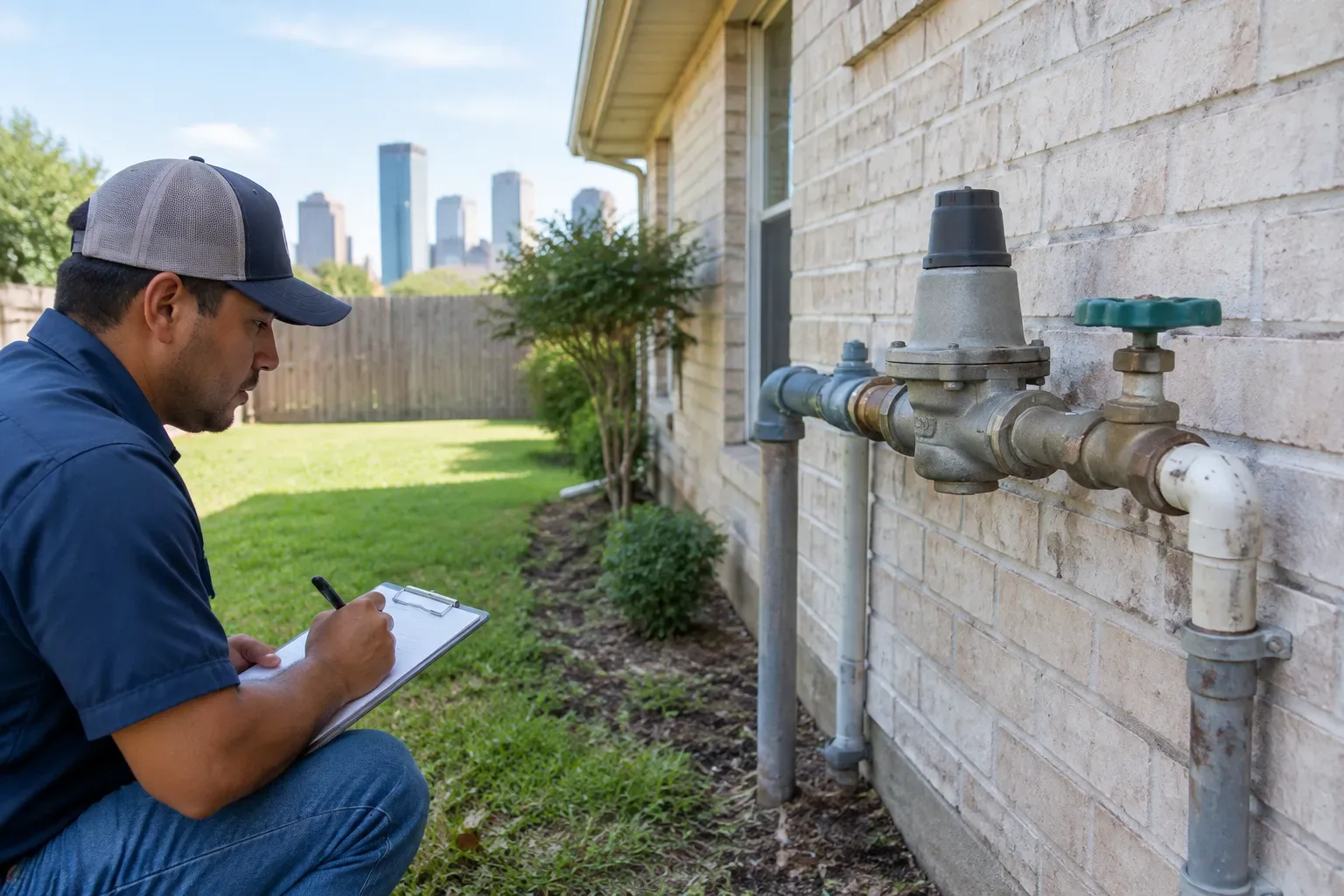
Check exposed pipes in your garage, under sinks, and around the water heater. Blue-green staining on copper (copper chloride deposits), orange rust on galvanized steel fittings, and white mineral scale around joints all indicate active corrosion that extends throughout the parts of the system you can't see.
Your Home Is 40+ Years Old With No Pipe History
If your Houston home was built before 1985 and you have no documentation of a repipe or major plumbing update, assume the original pipes are still in place. At 40+ years old, galvanized steel supply lines are almost certainly failing, and cast iron drain lines are approaching end of life. A plumbing assessment is strongly recommended before problems surface on their own.
Should You Repipe or Repair? How to Decide
This is the question most Houston homeowners face when plumbing problems start recurring in an older home. The answer depends on the pipe material, the pattern of failures, and the overall condition of the system:
Repair Makes Sense When
- The leak is isolated — a single joint, a single section, or a single fitting — with no other symptoms elsewhere in the system
- The pipe material is copper or PVC in generally good condition, and this is a first occurrence
- The home is less than 30 years old and was built with modern pipe materials
- A camera inspection confirms the drain system is in good structural condition with no widespread corrosion
Repiping Makes More Sense When
- You've had two or more pinhole leaks in different locations within the last two years
- Your supply lines are original galvanized steel and the home is over 40 years old
- Water pressure has been declining gradually throughout the house for years
- Water discoloration persists from the hot water side
- A camera inspection shows widespread interior corrosion in cast iron drain lines
- You're planning a significant renovation — repiping during a renovation dramatically reduces labor cost since walls and ceilings are already open
In a Houston slab home, continuing to patch an aging pipe system rather than repiping has a compounding cost. Every new pinhole leak requires concrete access if it's under the slab. Every leak that runs undetected adds water damage, mold risk, and foundation stress. A repipe that costs $6,000–$10,000 upfront often saves more than that over the following five years in avoided individual repairs, water damage remediation, and water waste on the bill. Our pipe installation and replacement team can give you an honest assessment and written estimate with no obligation.
Not Sure What Condition Your Houston Pipes Are In?
Our team inspects, assesses, and gives you a straight answer — camera inspection of drain lines, visual assessment of supply lines, and a written estimate if replacement is warranted. No pressure, no guesswork.
What Repiping Costs in Houston — And What Affects the Price
Repiping is one of the larger plumbing investments a Houston homeowner makes — but it's also one with a clear return in the form of eliminated repair calls, lower water bills, and improved water pressure and quality. Here's what affects the cost in the Houston market:
| Factor | How It Affects Houston Repipe Cost |
|---|---|
| Home size | More square footage = more linear feet of pipe = higher material and labor cost |
| Number of bathrooms | Each bathroom adds fixture connections and valve work to the scope |
| Pipe material chosen | PEX is significantly cheaper than copper per linear foot — most Houston repipes now use PEX |
| Slab vs. accessible runs | Under-slab lines require concrete cutting and restoration — adds $500–$2,000+ per section |
| Drain lines included or not | Full repipe (supply + drain) costs more but eliminates both failure systems at once |
| Wall access and restoration | Drywall cutting, repair, and repainting adds to the total project cost |
A typical Houston home repipe — supply lines only, 3-bedroom 2-bath slab home, using PEX — runs between $4,000 and $8,000 fully installed. Adding cast iron drain line replacement brings the total to $8,000 – $15,000 depending on the drain line scope. These are significant investments that are almost always less expensive than the cumulative cost of repeated individual repairs on a failing system over 5–10 years. See our full Houston plumbing cost guide for detailed pricing context.
If you're investigating recurring leaks alongside aging pipes, see our guide on can a small water leak cause major damage. For drain-specific issues in older homes, see why your house smells like sewage — often a sign of failing cast iron. And if you're experiencing a water bill spike in an older Houston home, see why your water bill is suddenly so high.
Frequently Asked Questions — Pipe Lifespan in Houston Homes
Concerned About Your Houston Home's Pipes?
We assess, inspect, and repipe Houston homes across all neighborhoods — from the Heights and Montrose to Katy, Pearland, and Sugar Land. Written estimates always, no obligation.
Sources: Texas State Board of Plumbing Examiners | City of Houston Water — Water Quality Reports | International Plumbing Code — Pipe Material Standards | One Plumbing Expert Houston — Pipe Installation & Replacement | Leak Detection & Repair Houston | Houston Plumbing Repair Cost Guide