What Is the 135 Rule in Plumbing?
It's a simple principle with big consequences when ignored — especially in Houston homes built on concrete slabs where fixing a wrong pipe angle means cutting through your foundation.
If you've looked up a plumbing term and landed on the "135 rule," you're probably either a detail-oriented homeowner trying to understand why your drains keep clogging, or you're planning some DIY pipe work and want to make sure you do it right. Either way — this is genuinely useful knowledge, and it's more relevant to Houston homes than people realize.
The 135 rule is one of the foundational principles of proper drain pipe installation. When it's followed, water and waste flow through your drain system the way they should — efficiently, continuously, and without buildup. When it's violated — which happens more often than it should in older Houston homes and in rushed DIY or contractor work — you end up with drain lines that clog chronically, smell, and eventually fail in ways that are expensive to fix.
What the 135 Rule Actually Means
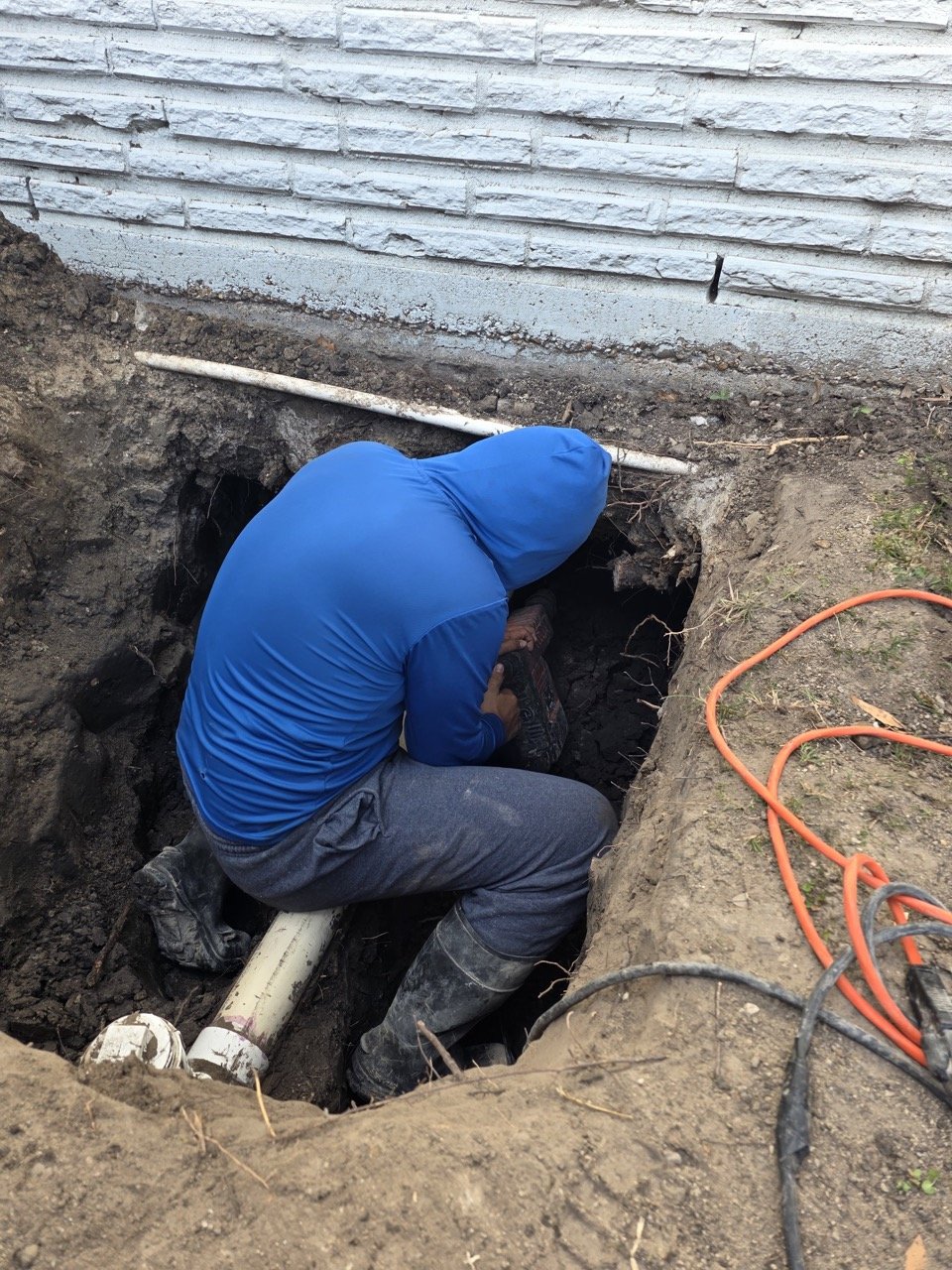
The 135 rule in plumbing states that a single direction change in a horizontal drain line should not exceed 135 degrees of fitting angle. In practical terms, this means you cannot use a sharp 90-degree elbow fitting to change the direction of a horizontal drain pipe. Instead, you use two 45-degree fittings back to back — which together create the same 90-degree change in direction, but do so gradually over two sweeping bends rather than one abrupt corner.
Here's why the math works the way it does: a straight pipe runs at 180 degrees. A 90-degree elbow reduces that to 90 degrees — a sharp right-angle turn. Two 45-degree fittings make the same turn but with a total fitting angle of 135 degrees — a much gentler sweep. The rule is that no single fitting or combination of fittings in a horizontal run should create a change of more than 135 degrees without a cleanout access point between sections.
A single 90° elbow on a horizontal drain line. Water velocity drops sharply, solids fall out of suspension, clogs form at the fitting repeatedly.
Two 45° fittings creating a sweeping 90° direction change. Water maintains velocity and carries solids cleanly through the bend without settling.
A straight pipe section — no turn at all. Always ideal when possible, but layout constraints require direction changes, which must follow the 135 rule.
Think of it this way: a sharp corner on a highway causes accidents because vehicles can't maintain speed. A gradual curve allows traffic to flow smoothly. A 90-degree elbow in a drain pipe is the plumbing equivalent of a sharp corner — waste and water hit it, slow down, and pile up. Two 45-degree fittings are the gradual curve that keeps everything moving.
Why Pipe Angle Matters — The Physics of Drain Flow
Gravity-fed drain systems depend entirely on maintaining the right combination of pipe slope, pipe diameter, and smooth direction changes to keep waste moving from your fixtures all the way to the city sewer or septic system. When any of these factors is off, the physics break down in predictable ways.
Flow Velocity and Solids Suspension
Waste flows through drain pipes in a mixture of water and solid particles. The water needs to move fast enough to keep solid particles suspended and carried along with it. A sharp elbow causes water to lose velocity suddenly at the corner — solids drop out of suspension right at the bend and begin accumulating. Over weeks and months, this creates a partial blockage that gradually worsens.
Turbulence and Backpressure
Sharp turns in a pipe create turbulence — swirling, chaotic water movement that slows overall flow and creates negative pressure zones where debris collects. Two 45-degree fittings allow water to navigate the turn while maintaining laminar flow — smooth, directional movement that carries waste efficiently to the main line.
Grease and Soft Deposits
Kitchen drain lines carry dissolved grease that cools and solidifies as it moves through the pipe. A sharp 90-degree elbow gives warm grease a surface to collect on right at the corner — combined with the velocity drop, this creates a grease trap effect at the fitting itself. A sweeping 45-degree combination reduces this adhesion point significantly.
Cleanout Access and Maintenance
When a drain does clog, the location and type of fittings determine how easy it is to clear. A snake or hydro-jet can navigate two 45-degree bends far more easily than a sharp 90-degree elbow — which can actually stop a drain snake completely or damage it. Correct pipe angles make future maintenance faster, easier, and less expensive.
The Other Half: Correct Drain Pipe Slope
The 135 rule governs direction changes in drain pipes. The related principle that governs straight runs is proper slope — and both must be correct for a drain system to work as it should. In Texas, the standard drain pipe slope required by the International Plumbing Code (IPC) — which Houston follows — is:
| Pipe Diameter | Required Slope | What That Looks Like |
|---|---|---|
| 1½" – 3" pipes | ¼" drop per foot | 10 feet of pipe drops 2.5 inches |
| 4" pipes and above | ⅛" drop per foot (minimum) | 10 feet of pipe drops 1.25 inches |
| Too little slope | Under ⅛" per foot | Water too slow — solids settle and clog |
| Too much slope | Over ½" per foot | Water too fast — outruns solids, leaves them behind |
The "too much slope" problem surprises many homeowners. It seems like steeper would always mean faster drainage — and it does drain water faster. But the problem is that water and solids separate when the slope is too steep. The water races ahead and the solids are left sitting in the pipe behind it. Over time, these stranded solids dry, harden, and create a blockage that no amount of water flow will dislodge on its own.
For most residential drain pipes in Houston homes, the sweet spot is between ¼ inch and ⅜ inch of drop per foot. This keeps water moving fast enough to carry solids but not so fast that it abandons them. A licensed Houston plumber will verify slope with a level during any drain pipe installation or repair.
What Happens When the 135 Rule Is Violated
Improper pipe angles and incorrect slope don't always announce themselves immediately. The consequences tend to develop gradually — which is exactly why they get misdiagnosed and improperly treated for months or years before someone gets to the root cause. Here's the typical progression:
- First few months: Drains run slightly slower than they should. Easily attributed to minor buildup — homeowners add drain cleaner and see temporary improvement, reinforcing the wrong diagnosis.
- Six to twelve months: Clogs become recurring. The same drain needs clearing every few weeks. Hydro-jetting clears it completely — but it comes back within a month. The underlying pipe geometry is trapping waste at the same location every time.
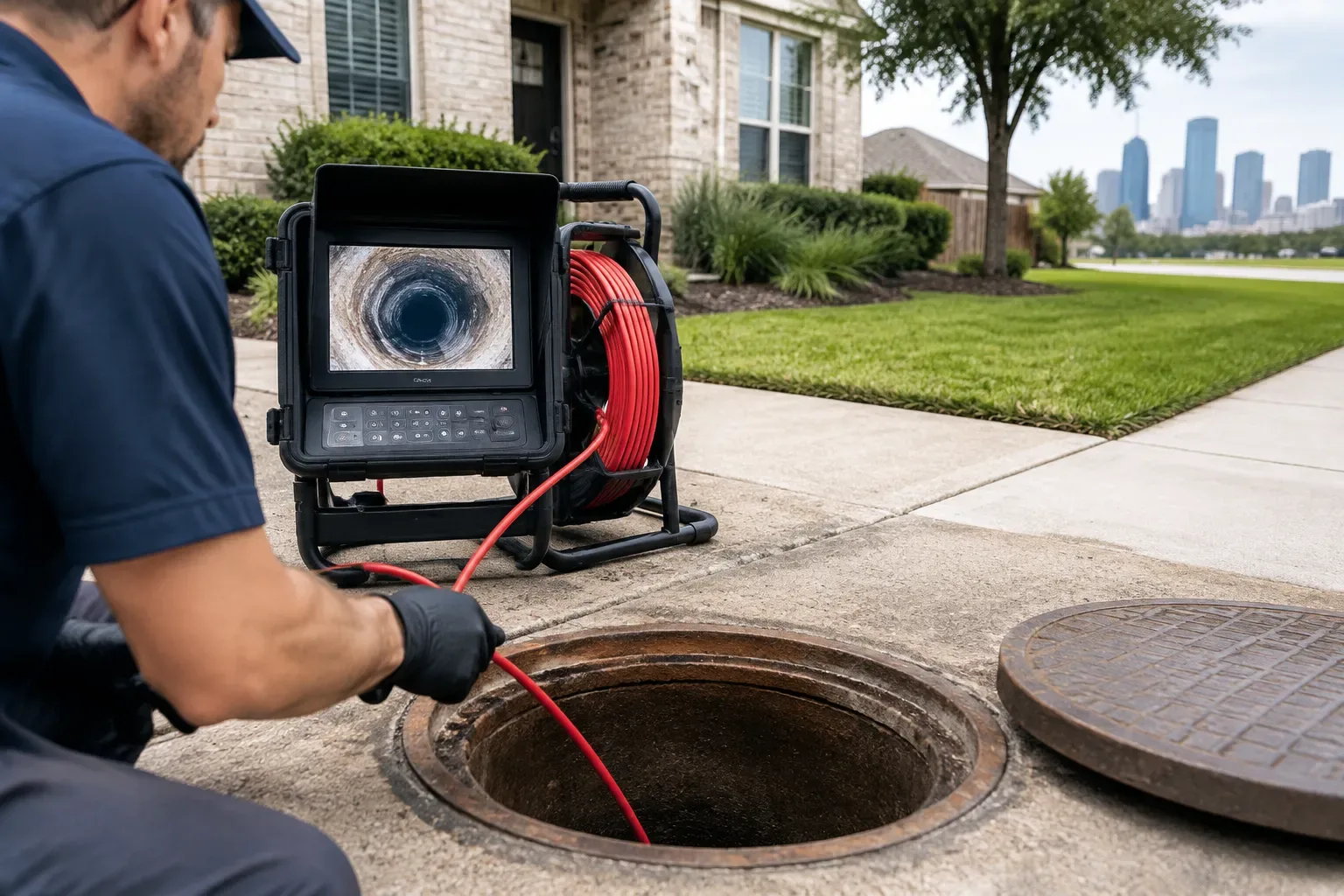
- One to three years: Partial blockages harden into near-complete obstructions. Sewage smell begins to develop. Multiple drains slow simultaneously as the main line restricts. A camera inspection finally reveals the true cause — a sharp elbow, incorrect slope, or both.
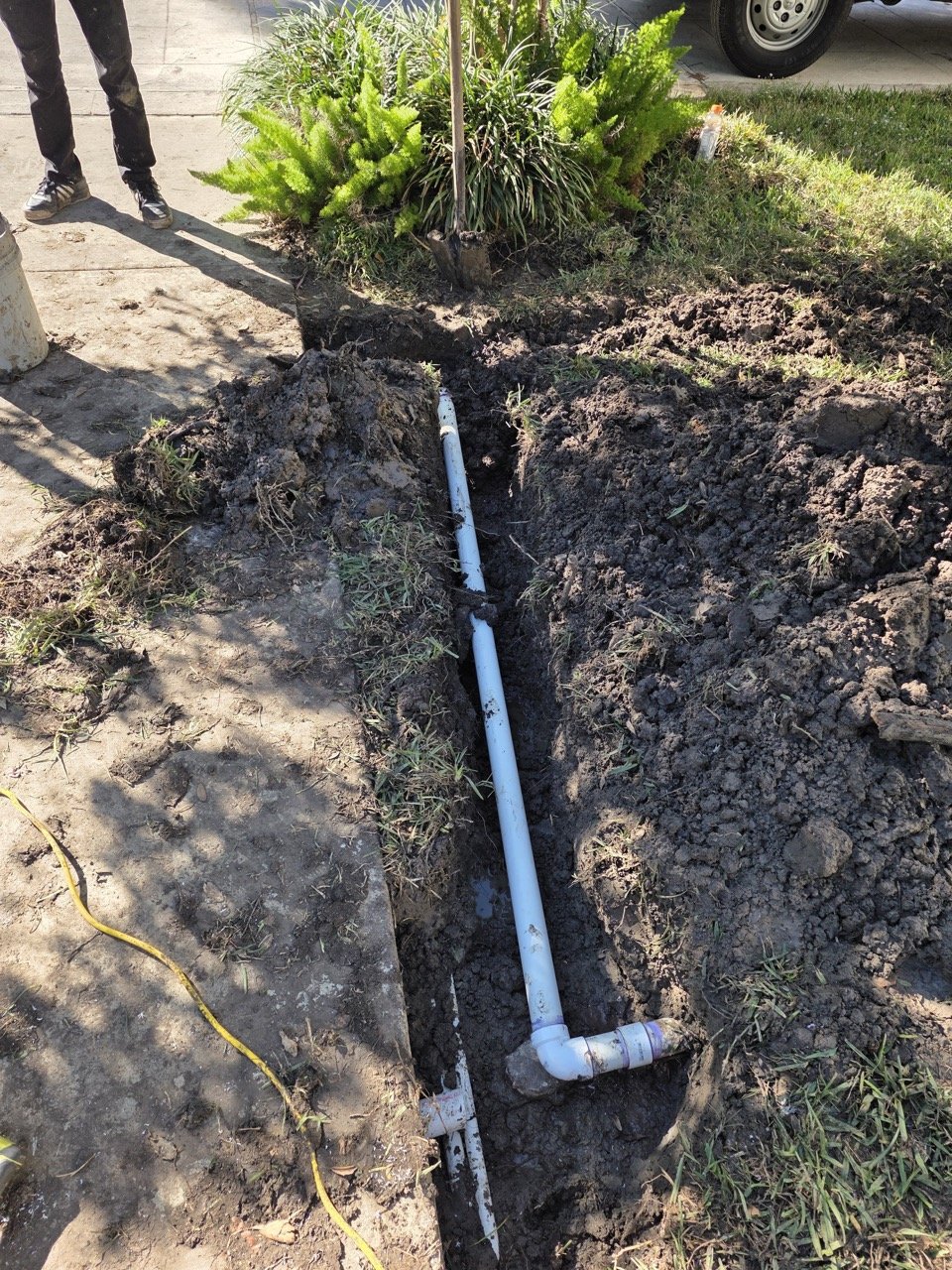
- In Houston slab homes specifically: If the problem is in a drain line embedded under the concrete foundation, correction requires concrete cutting, pipe repositioning, and slab restoration. A problem that would cost $300–$600 to fix in an accessible crawl space can cost $2,000–$6,000 in a Houston slab home simply due to access.
Chemical drain cleaners create the illusion of fixing a pipe angle problem by partially dissolving the clog — but they cannot correct the underlying geometry that created the clog in the first place. If you've used drain cleaner on the same drain more than twice in a year, you almost certainly have a slope or angle problem that needs professional diagnosis, not more chemicals. See our guide on whether drain cleaner is bad for your pipes for the full picture.
Why This Matters More in Houston Than Most Cities
Slab Foundations Make Pipe Access Extremely Costly
In most U.S. cities with pier-and-beam or crawl space foundations, a plumber who discovers an improperly sloped or angled drain pipe can access it relatively easily from underneath the home. In Houston — where virtually every home in neighborhoods from Katy and Pearland to the Heights and Bellaire sits on a concrete slab — that same pipe is either embedded in the slab or running through the soil directly beneath it. Correcting a pipe angle problem in a Houston slab home means jackhammering through concrete, rerouting the pipe, and restoring the slab. This makes the original installation quality far more consequential here than it is almost anywhere else in the country.
Houston's Clay Soil Shifts Drain Lines Over Time
Houston sits on some of the most expansive clay soil in the United States. This soil swells dramatically when wet and shrinks just as dramatically when dry — sometimes by several inches over the course of a season. Over years, this movement shifts the drain pipes embedded in or beneath the slab, gradually altering the slope that was correct when the pipes were installed. A drain line that was properly sloped when the house was built in 1985 may have shifted enough by 2026 to create pockets of flat or even reverse slope — places where water sits rather than flows. This is a uniquely Houston problem and one of the reasons recurring drain issues in older Houston homes can be so persistent.
Rushed New Construction Skips the Details
Houston's rapid residential development — particularly in suburban areas like Cypress, Katy, Richmond, and Conroe — has produced large volumes of homes built quickly under cost and schedule pressure. Drain pipe slope and fitting selection are easy corners to cut during framing and rough-in; the mistakes are invisible once the slab is poured. Homeowners in newer Houston subdivisions who experience recurring drain problems from year one of occupancy are frequently dealing with improper slope or angle decisions made during construction that were sealed under concrete before anyone noticed.
Recurring Drain Problems in Your Houston Home?
If the same drain keeps clogging despite cleaning, the issue is likely a pipe angle or slope problem — not surface buildup. Our team diagnoses the root cause with camera inspection and fixes it right the first time.
Signs Your Houston Home Has an Improper Pipe Angle or Slope Problem
These symptoms don't automatically mean a pipe angle problem — but when several appear together, or when they keep recurring despite cleaning, a slope or angle issue is very likely the underlying cause:
- The same drain clogs repeatedly — cleared by snaking or hydro-jetting, but returns within weeks or months every time
- Drain runs slowly even right after cleaning — no full blockage, just persistent sluggishness that cleaning only partially resolves
- Gurgling sounds from drains — air being displaced by slow-moving water in a pipe that isn't sloped correctly
- Multiple drains run slowly simultaneously — suggests a main line issue, possibly including a slope problem in the primary drain run
- Sewage smell from floor drains — standing water in a flat or reversed-slope pipe section creates a breeding ground for bacterial odor
- Drain cleaner works temporarily but the clog always returns — chemicals dissolve the accumulation but the geometry that caused it is unchanged
- Camera inspection shows pooling or standing water — the clearest confirmation of a flat or negative slope section in the line
- New home less than 5 years old with chronic drain problems — strongly suggests an installation error from construction that was covered by the slab before inspection
When You Can Fix It Yourself vs. When You Need a Plumber
DIY Is Reasonable For — Accessible Drain Connections Above the Slab
If you can see the drain pipes — under a sink, behind a washing machine, in an exposed utility area — and the fitting is accessible, a competent DIYer can replace a sharp 90-degree elbow with two 45-degree fittings. The fittings cost a few dollars at any Houston hardware store, and the job requires basic pipe tools. Make sure you verify the replacement maintains the correct ¼-inch-per-foot slope and that you use the correct fitting type for your pipe material — PVC, ABS, or copper each require different fittings and methods.
Call a Licensed Houston Plumber For — Anything Under or Through the Slab
Any drain pipe that runs beneath your Houston slab foundation is not a DIY project. Locating the exact section with the slope or angle problem requires a sewer camera inspection. Accessing it requires cutting through concrete with professional equipment. And restoring the slab correctly after the repair requires the right materials and technique to maintain structural integrity. Attempting this without professional experience and tools in Houston almost always results in an incomplete repair, a failed slab restoration, or both.
Call a Licensed Houston Plumber For — Recurring Clogs With No Clear Cause
If you've cleaned the same drain multiple times and it keeps coming back, and you can't see an obvious cause in the accessible portion of the pipe, a camera inspection is the right next step. Our team can run a camera through the full length of your drain line, identify exactly where slope or angle problems exist, and give you a clear written diagnosis and repair quote before any work begins. See our drain cleaning services for more on how we approach persistent drain issues in Houston homes.
If recurring clogs are your main symptom, also see our guide on why your house smells like sewage — improper slope often contributes to sewage odors from standing water in flat pipe sections. For full repair cost information, see our Houston plumbing repair cost guide.
Frequently Asked Questions — The 135 Rule in Plumbing
Drain Problems That Keep Coming Back?
Recurring clogs in Houston homes are rarely just surface buildup — they're usually a pipe slope or angle issue waiting to be found. Our camera inspection diagnoses the exact cause, and we give you a full written estimate before any repair starts.
Sources: International Plumbing Code (IPC) — Drain Pipe Slope and Fitting Requirements | Texas State Board of Plumbing Examiners | City of Houston Public Works | One Plumbing Expert Houston — Drain Cleaning | Pipe Installation & Replacement Houston | Houston Plumbing Repair Cost Guide