Why Does the Main Shutoff Fail Near W Bellfort in Brays Oaks?
A main water shutoff usually fails because its internal parts have seized, corroded, worn out, or been stressed over time. A valve that has not been operated for years can become hard to turn, while a valve that leaks or spins may have a damaged stem, packing area, or internal mechanism. The exact cause cannot be confirmed from the symptom alone.
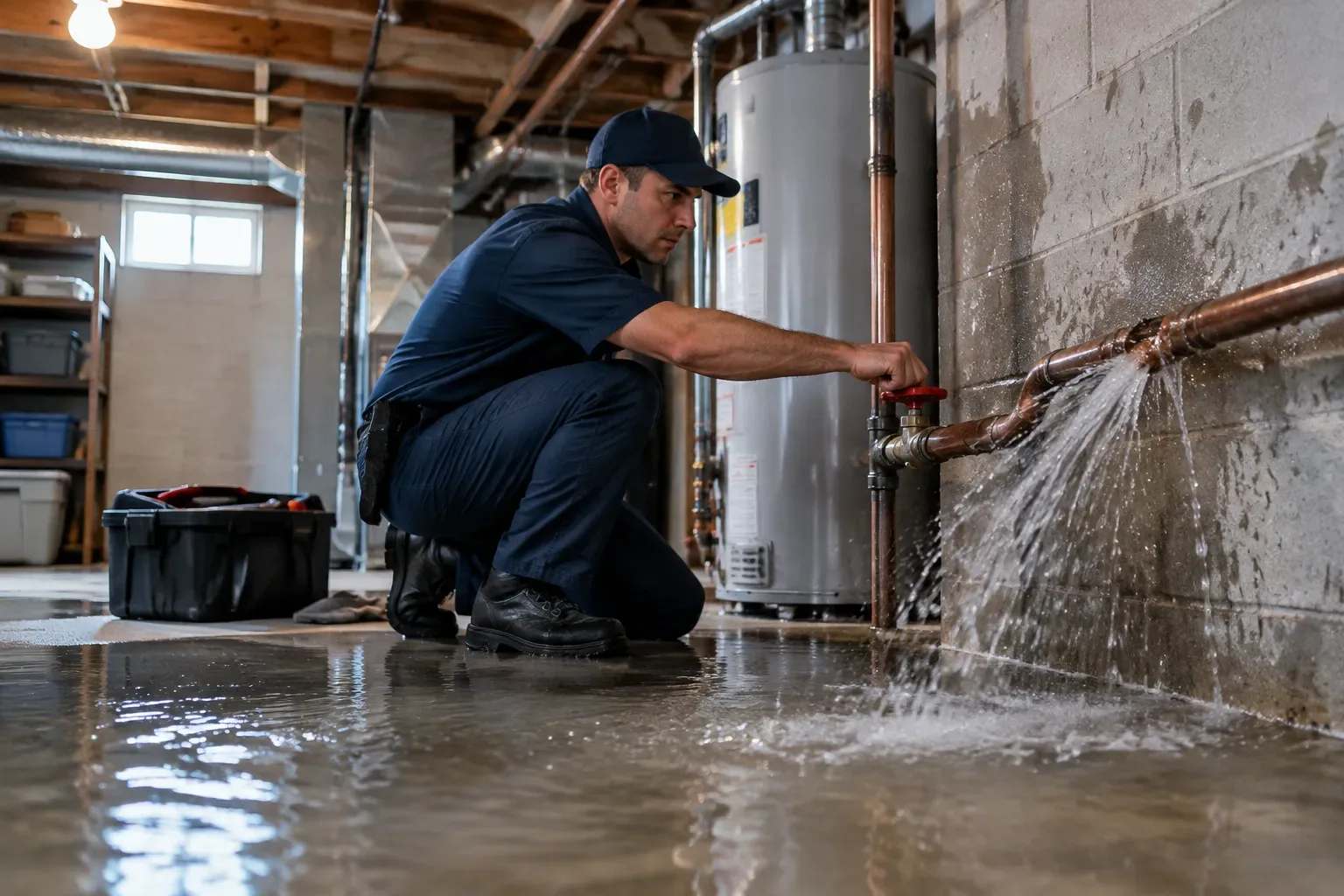
For properties near W Bellfort in Brays Oaks, first determine whether the problem is the private house-side valve or a valve at the meter assembly. Those can have different owners, access rules, and safe operating procedures. If water is actively escaping and the house valve will not close, treat it as a water-damage problem rather than a routine maintenance task.
Quick Answer
A main shutoff can fail because of corrosion, mineral buildup, an aging gate-valve mechanism, a damaged valve stem, or movement in the connected pipe. Do not force a stuck valve with a pipe wrench, cheater bar, or torch. If it moves only partway, leaks around the stem, spins freely, or makes the pipe move, stop and arrange an inspection.
One Plumbing Expert Houston provides residential and commercial plumbing services in the Houston area, including Brays Oaks. The practical next step is to identify whether there is an active leak, locate any fixture-level shutoffs, and have the valve and its connections assessed before attempting a repair.
Is the problem at the house shutoff or the water meter?
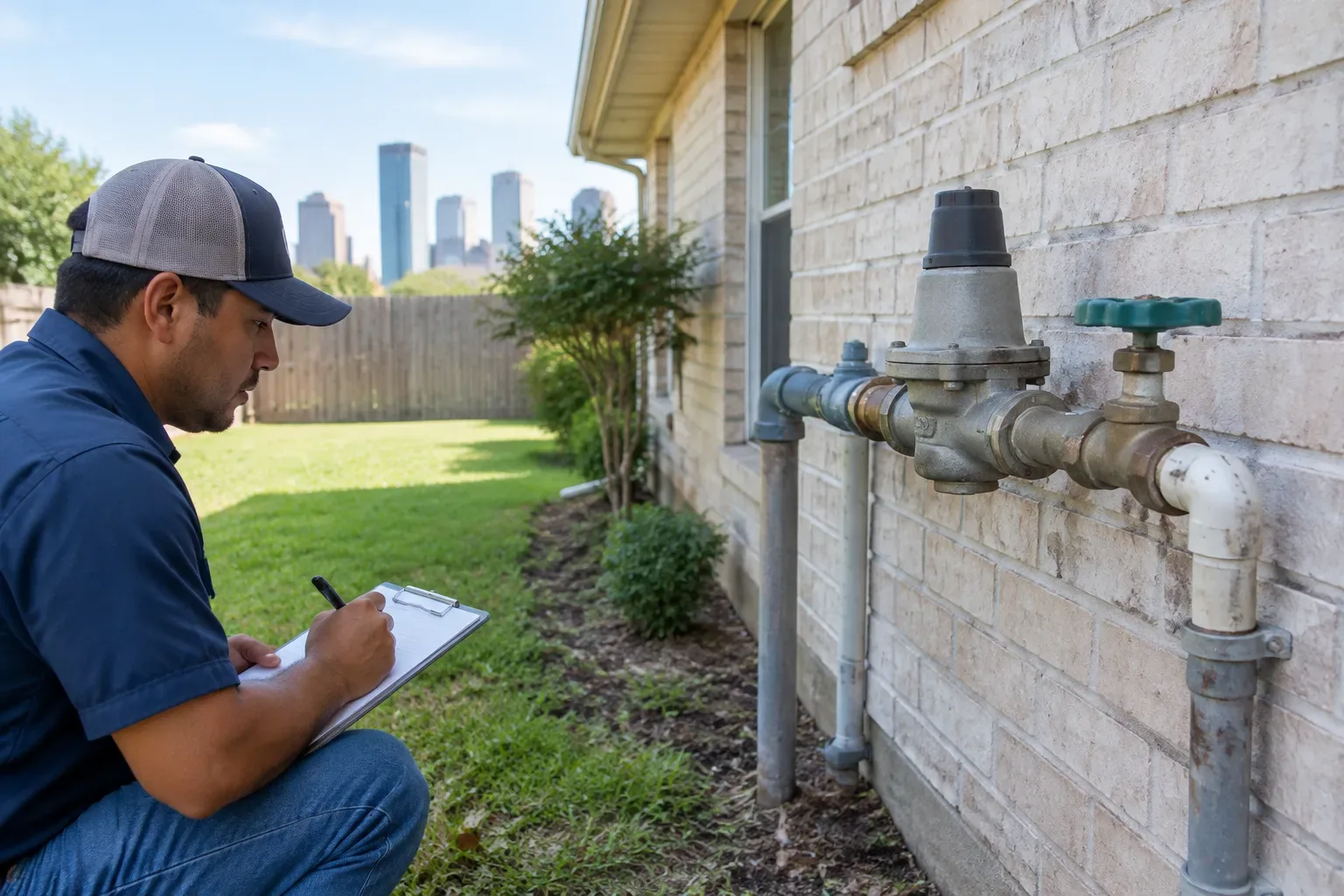
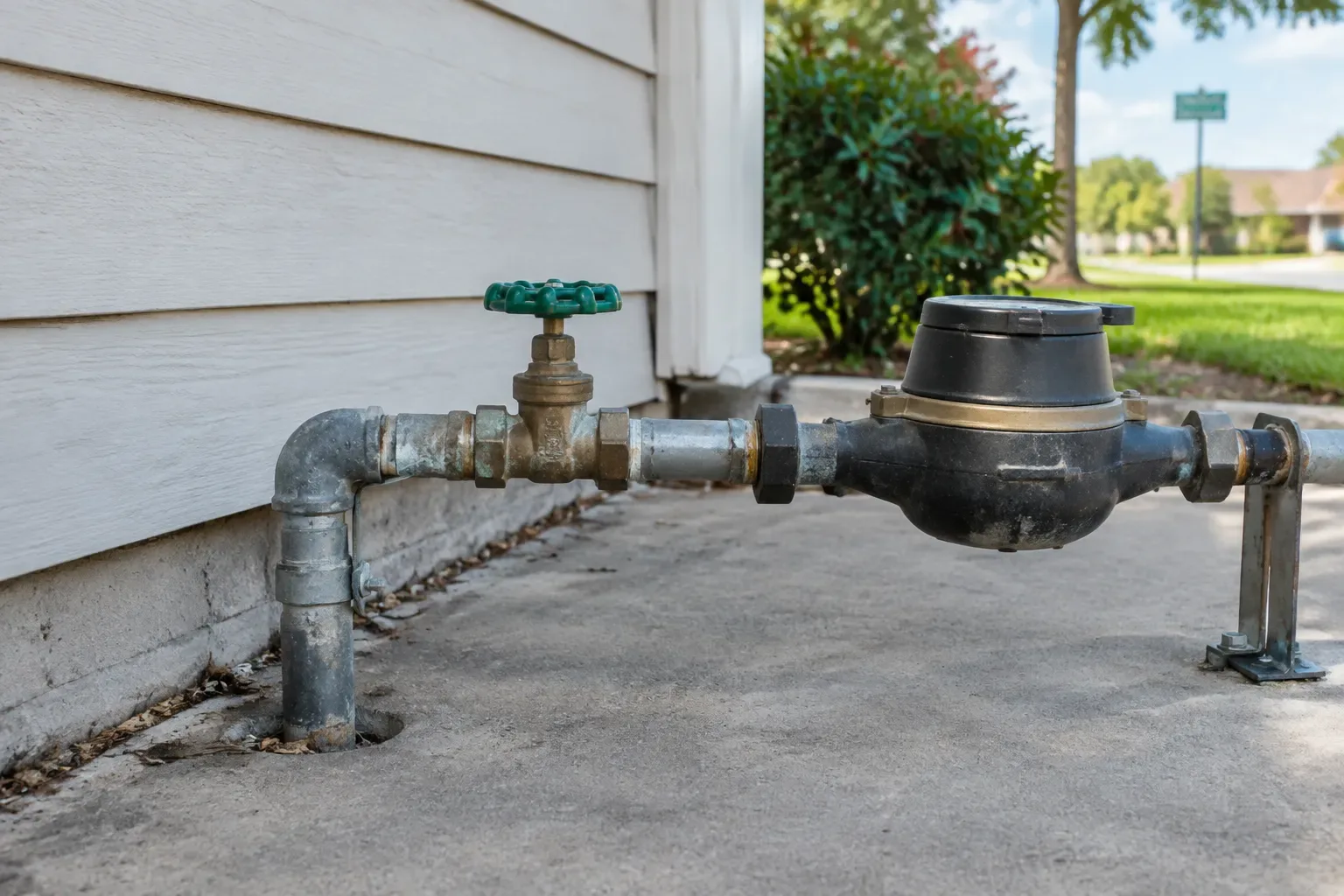
The first distinction matters. A house-side main shutoff is generally part of the building plumbing system and is often located where the water service enters the structure, near an exterior wall, garage, utility area, or mechanical space. A meter-side valve or curb stop is part of the meter assembly or water-service connection and may be controlled by the utility.
Do not assume a valve inside or beside a meter box is yours to operate or replace. The exact property address, valve location, and meter configuration need to be checked before anyone determines responsibility. A plumber can inspect the accessible house-side components and identify when utility coordination may be needed.
What does a failed main shutoff look like?
The symptom tells you what is happening, but it does not prove why. These are common warning signs:
- The handle will not turn, even with normal hand pressure.
- The valve turns but water continues flowing at fixtures.
- Water appears around the handle or stem when the valve is moved.
- The handle spins without changing water flow.
- The pipe or fitting shifts when you try to operate the valve.
- Water pressure drops unexpectedly, which could be a valve issue but could also point to a supply leak, utility-side condition, or another plumbing problem.
A leaking packing area, for example, is a possible cause of water around the stem. An inspection is needed to determine whether tightening, repair, replacement, or a connected-pipe repair is appropriate.
Which type of shutoff may be installed?
Different valve designs fail differently. Older or previously altered plumbing systems may contain more than one generation of valves and piping, so the design should be identified at the property rather than guessed from the neighborhood.
Gate valve
A round handle raises or lowers an internal gate. These valves can seize after long periods without use, and a handle that turns does not always mean the gate is closing fully.
Ball valve
A lever handle rotates a drilled ball inside the valve. It typically moves through a quarter turn, but corrosion, damage, or a failing connection can still make operation unsafe.
House-side main shutoff
This is the private valve intended to isolate water entering the building. Its placement, pipe material, and access determine how a repair can be performed.
Meter-side or curb valve
This valve may be at or near the water meter and can be utility-controlled. Avoid treating it as interchangeable with the private house shutoff.
Why do shutoff valves get stuck or start leaking?
Time is often part of the problem, but it is not the only factor. A valve that stays in one position for years can develop buildup around moving parts. Corrosion can affect exposed components, especially where moisture or soil contact is present around exterior valve boxes and fittings. Houston's warm, humid, and periodically wet conditions can contribute to corrosion or difficult access, though they do not establish the cause of any one failure.
Other possible causes include a stripped internal mechanism, worn stem packing, a valve that was installed under stress, or deterioration at a nearby threaded, soldered, or transition fitting. The material of the service pipe also matters. Galvanized steel, copper, and plastic piping require different handling, and applying too much torque can damage the pipe rather than free the valve.
What should you do if the main valve will not shut off?
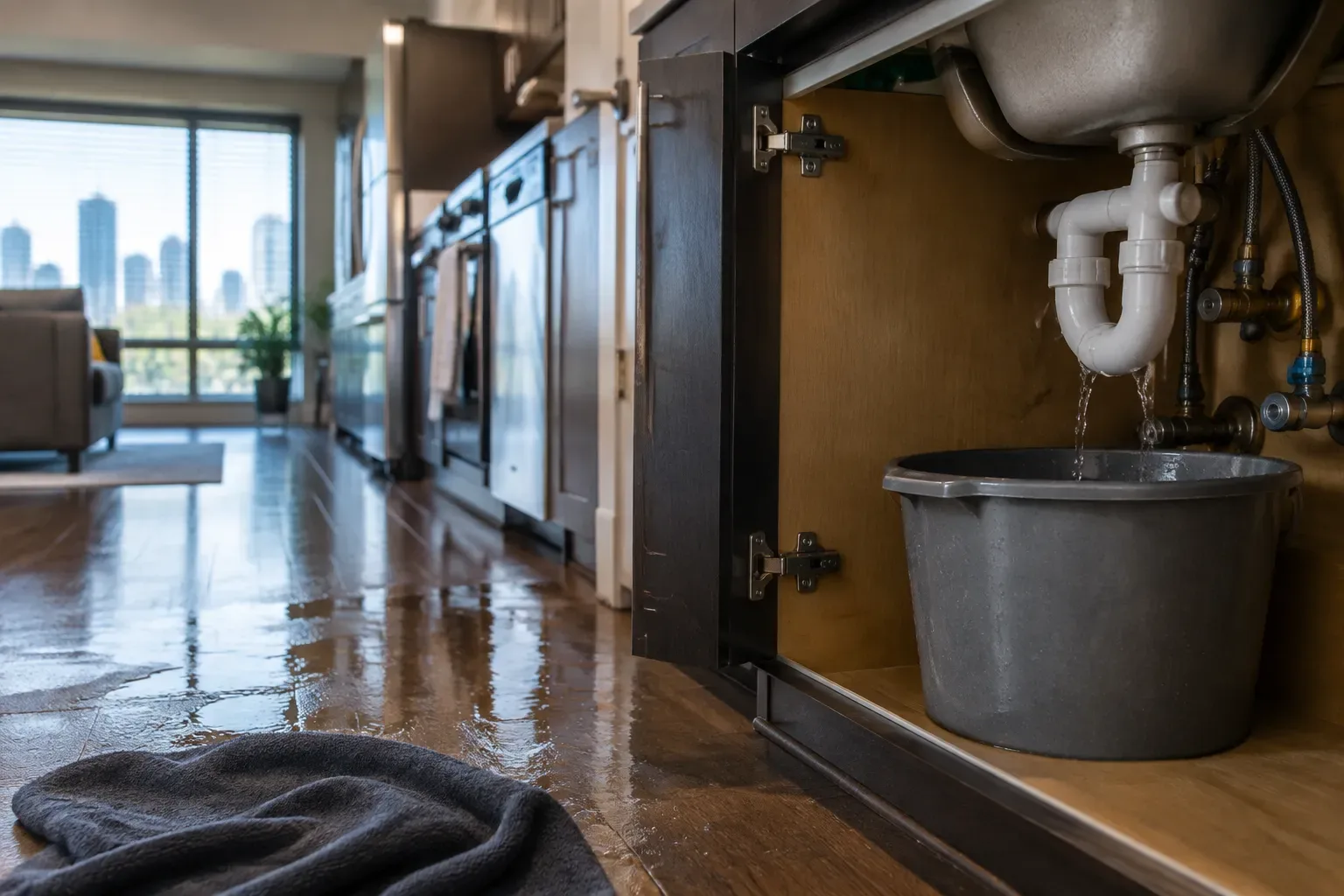
Protect people and property first. If water is near outlets, appliances, power strips, or electrical equipment, keep clear of the area and avoid handling electrical devices. Do not repeatedly twist a damaged valve in hopes that it will suddenly close.
- Check whether water is actively escaping and move valuables away from the affected area if it is safe to do so.
- Look for fixture-level shutoffs under sinks, behind toilets, and at appliances. Closing a local valve can limit damage from a single fixture.
- Identify the house-side main valve and the meter-box area without forcing either one. Take clear photos of the valve, connections, and any visible water.
- Stop immediately if the handle leaks, spins, moves only partly, or causes the connected pipe to shift.
- Seek emergency plumbing help if water cannot be isolated, or arrange a non-emergency inspection for a dry but unreliable valve.
A failed shutoff becomes more urgent when there is an uncontrolled supply-line leak, flooding, or an inability to protect electrical equipment. For a dry valve that is merely difficult to operate, schedule service before a future leak leaves you without a usable isolation point. The EPA also recommends addressing household leaks and water-loss issues promptly through its WaterSense guidance.
Why forcing the valve is the most common mistake
Pliers may seem harmless, but a stuck main valve can transfer force into a weakened stem, fitting, or service pipe. A pipe wrench or added leverage can break the handle, shear the stem, crack a fitting, or create an active leak where there was only a stiff valve before.
Heat is not a safe shortcut either. A torch near piping, insulation, wall cavities, meter components, or other materials creates avoidable hazards. If the valve needs more than light hand pressure, the safer alternative is inspection and controlled isolation before repair.
For work beyond safe observation or a simple fixture-level shutoff, use a properly qualified professional. Plumbing licensing in Texas is regulated by the Texas State Board of Plumbing Examiners.
What will a plumber inspect before recommending repair or replacement?
A useful assessment starts with the whole isolation setup, not just the handle. The technician should identify the valve type, determine whether it is on the private side of the service, assess the accessible pipe material, and look for stress, corrosion, leakage, or poor access around the connections.
They may also check whether another isolation point is available, whether the meter-side equipment must remain untouched, and whether the incoming service line appears to be contributing to the issue. If water loss or a hidden supply leak is suspected, leak detection and repair can help determine whether the shutoff is the only problem.
Replacement does not automatically mean replacing the entire water line. A valve replacement can be practical when the connected pipe is sound and accessible. If the pipe is corroded, damaged, too short to reconnect safely, or moving with the valve, a broader repair may be needed. In that situation, review the scope of pipe installation and replacement rather than assuming the largest repair is necessary.
How can you prepare for a shutoff-valve service visit?
A few details can reduce diagnosis time and help the plumber plan the right isolation method:
- Photos showing the valve, nearby pipe, meter box if applicable, and visible moisture.
- Whether water is actively leaking, and from which area.
- Whether turning the valve changes water flow at any fixture.
- The approximate age of the building, if known, plus known plumbing repairs or modifications.
- The location of any accessible fixture or appliance shutoffs.
- Whether the water meter or service-line area is difficult to access.
This information does not diagnose the problem, but it helps separate a stuck private valve from a possible meter-side, service-line, or hidden-leak issue.
When should you repair a stiff valve instead of waiting?
Repair it before you need it. A main shutoff is an emergency control, so a dry but seized valve is still a meaningful risk. Waiting until a burst supply line, failed appliance hose, or fixture leak occurs can turn a contained plumbing issue into a larger water-damage event.
A reliable valve also gives a repair professional a safer way to isolate the building during future work. If you are already dealing with a small leak, see why delaying it can matter in this guide on how a small water leak can cause major damage.
The key takeaway is simple: do not test a questionable main shutoff aggressively during an emergency. Identify available local shutoffs, protect the area, and get the valve assessed while the situation is still manageable.
Ready to discuss your project?
If your Brays Oaks main shutoff is stiff, leaking, or unreliable, request an inspection before a future leak leaves you unable to isolate the water.
FAQ
Why won't my main water shutoff valve turn?
A main valve may be stuck from corrosion, mineral buildup, a seized internal mechanism, or years of sitting in one position. The handle itself may also be damaged. Do not assume that more force will solve it, because excessive torque can damage the stem or connected pipe. If light hand pressure does not move it, stop and arrange an inspection rather than using a wrench or extension bar.
Which way do I turn the main water shutoff valve?
Many traditional round-handle valves close clockwise, while a ball valve with a lever typically closes with a quarter turn so the handle sits perpendicular to the pipe. Valve orientation can vary, and a damaged valve may not respond normally. If there is resistance, leakage, or uncertainty about whether the valve is house-side or meter-side, do not force it just to test the direction.
Can I use pliers on a stuck main water valve?
It is not a good idea. Pliers can deform the handle or apply uneven force to the stem. A pipe wrench, cheater bar, or similar tool increases the chance of breaking the valve or stressing older connected piping. A valve that is difficult to turn may need controlled isolation and replacement, not more leverage. For a broader decision guide, read when to call a plumber or fix it yourself.
Why does the shutoff valve leak when I turn it?
Water around the handle often points to a problem at the packing area or stem, but a professional needs to confirm the source. The leak could also be at a nearby connection that moved when the valve was operated. Stop turning the valve if water appears or increases. A small drip may still become more serious if the valve is repeatedly cycled or if the affected pipe is weakened.
Is a stuck main shutoff valve an emergency?
Not always. A dry valve that is stiff but not needed immediately is a repair priority, but it may not require emergency response. It becomes urgent when water is actively escaping and you cannot isolate the building, especially near electrical equipment or areas vulnerable to rapid damage. Review these signs that emergency plumbing service may be needed if you are deciding how quickly to seek help.
Can a plumber replace the main shutoff without replacing the whole water line?
Often, yes, if the connected pipe is sound, accessible, and can be safely isolated. The final scope depends on valve location, pipe material, connection condition, available shutoffs, and whether any part of the service line is damaged. If the valve is next to deteriorated piping or a stressed fitting, replacing a short section of pipe may be safer than installing a new valve onto a compromised connection.
Is the valve by my water meter mine to repair?
Do not assume so. Some meter-side and curb-side valves may be utility-controlled, while the private house-side shutoff is generally part of the building plumbing system. Location alone does not settle responsibility. A plumber can identify the accessible private-side equipment and explain when the situation may require contacting the water utility instead of attempting to operate or replace meter-related components.
Could low water pressure mean my main shutoff is failing?
Possibly, but low pressure does not prove a shutoff problem. A partly closed valve is one explanation, while a supply leak, fixture restriction, water-heater issue, utility-side condition, or another plumbing fault could also affect pressure. A proper diagnosis checks water flow, valve position, visible leakage, and the relevant plumbing components before recommending repair. If pressure changes only at hot-water fixtures, the water heater side may also need evaluation through water heater repair and installation.