What Should You Do After a Pipe Bursts Near Fondren in Brays Oaks?
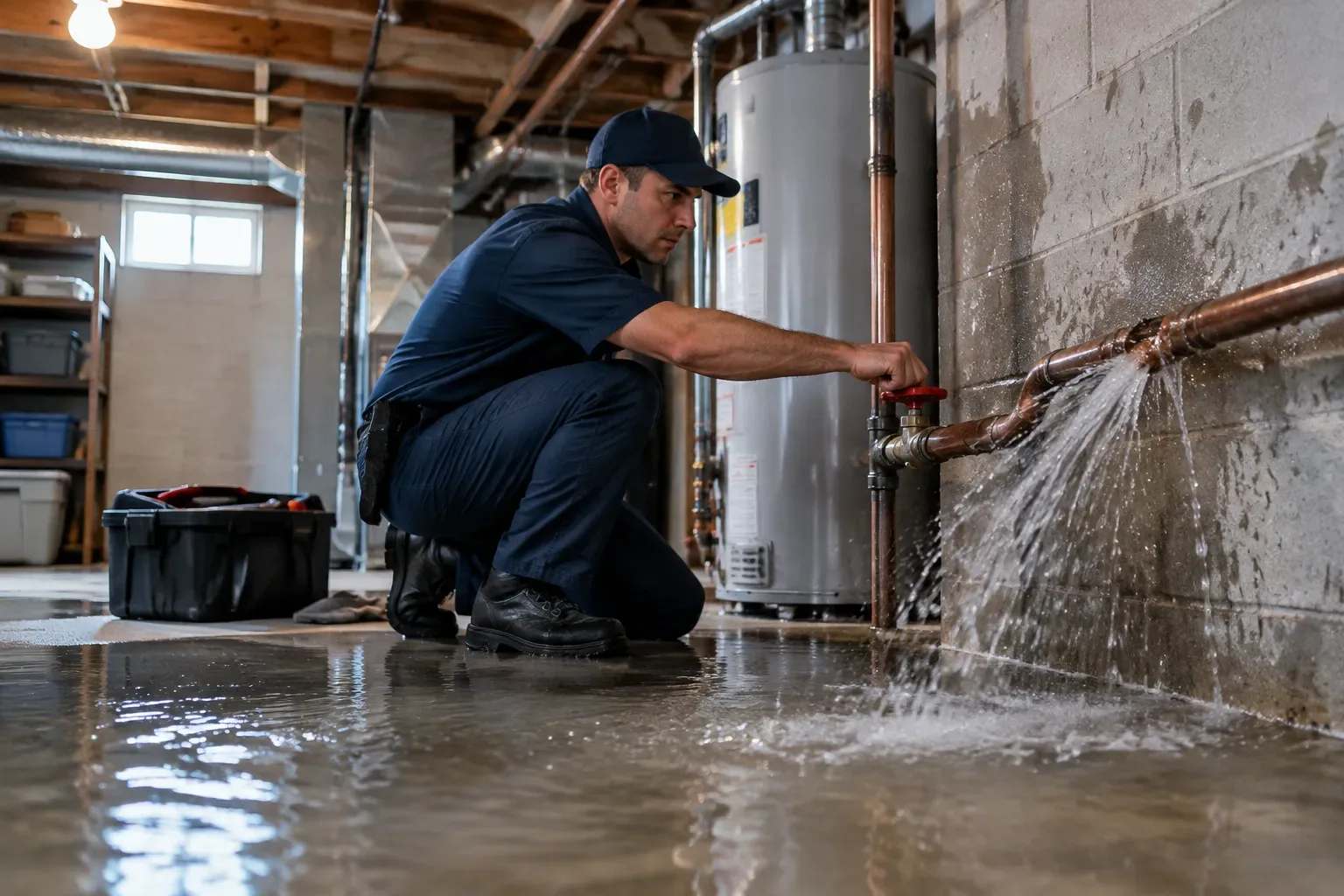
First, protect people and stop the water. If you can reach the home’s main shutoff without entering standing water or touching electrical equipment, close it. Keep everyone away from water near outlets, appliances, panels, or wiring, then contact an emergency plumber. After the flow is controlled, move safe-to-reach belongings, document the damage, and begin drying.
A burst pipe near Fondren in Brays Oaks is an emergency when water is actively flowing, the source cannot be isolated, or water has reached electrical areas. One Plumbing Expert Houston provides plumbing services in Brays Oaks and across Houston, including 24/7 emergency plumbing as described on its site.
Quick Answer
Shut off the water at the accessible main valve, avoid electrical hazards, and call for help if the break is hidden, flooding continues, or water is near electricity. Once it is safe, open a faucet to relieve remaining pressure, protect belongings, photograph the source and damage, and arrange proper drying after the pipe repair.
Do not force a seized valve, enter water near electrical equipment, or rely on tape, putty, or a clamp as a permanent repair on a pressurized line.
What should you do first after a pipe bursts?
The order matters because cleanup cannot stop an active leak. Work through these steps only to the extent they can be done safely.
- Move people and pets away from the affected area, especially where water may contact electricity or where a ceiling is bulging.
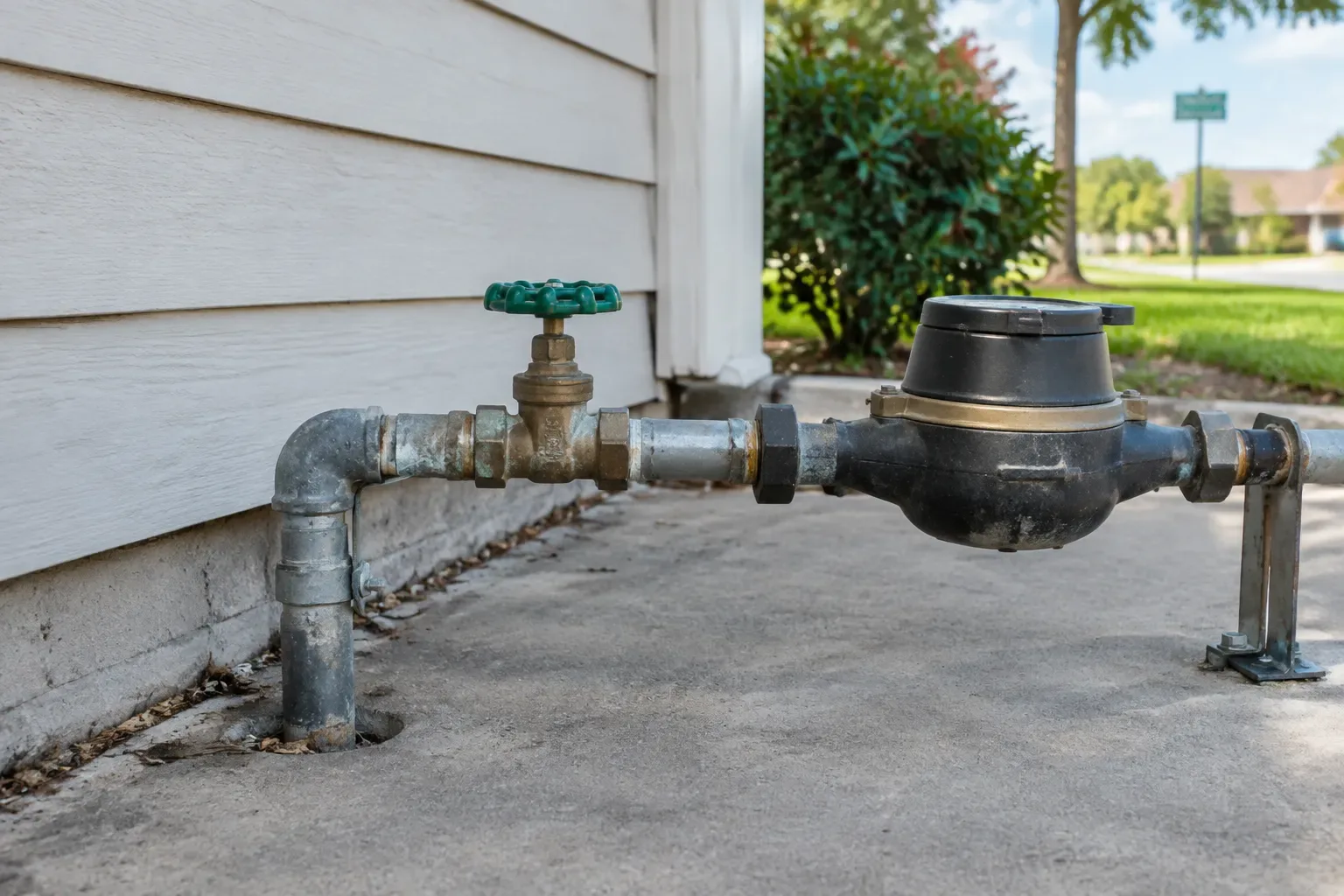
- Shut off the home’s main water supply if the valve is safely accessible. Use the home-side shutoff rather than trying to operate a street-side or meter-side valve.
- If the leak appears to involve a water heater supply line, turn off the water supply to that appliance only if you can do so safely. A water heater repair and installation professional can assess the equipment and its connections.
- Open a cold-water faucet after shutting off the supply, if the area is safe, to release residual pressure and drain accessible lines.
- Call for emergency plumbing help if water is still flowing, the break is inaccessible, or the source is uncertain.
- Move rugs, furniture, electronics, and loose belongings away from the water path when you can do so without risk.
- Photograph the break, affected rooms, belongings, and visible water damage before major cleanup, then record when you discovered the issue and shut off the water.
If the main valve will not close, cannot be found, or seems unsafe to access, do not force it. Contact a plumber or the applicable water utility for direction.
When is a burst pipe an emergency?
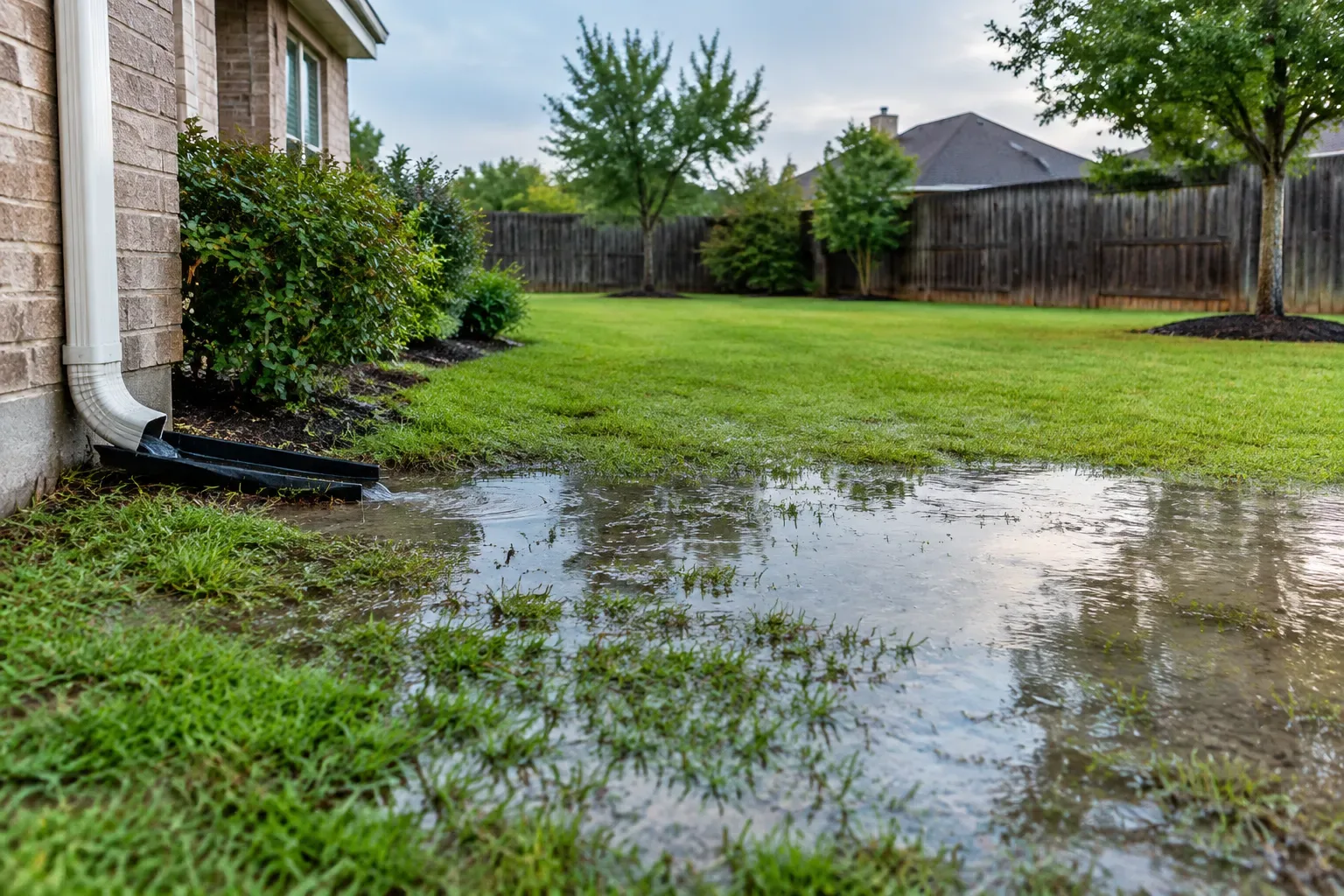
A fast-moving leak is enough reason to treat the situation as urgent. The same is true when water is entering a wall, coming through a ceiling, pooling near electrical equipment, or appearing from an unknown location.
A small drip after a shutoff may be residual water draining from the line. It does not necessarily confirm that the break is minor. A professional finding is needed to identify the failed component, the pipe material, and whether a pressure or connection problem contributed to the failure.
The EPA advises prompt leak repair to help prevent water waste and property damage. In this setting, stopping the source is the immediate priority.
Is the pipe visible, hidden in a wall, or under the slab?
The water you can see is a symptom. The actual break may be at that point, farther along the line, or concealed behind a finished surface. Different situations call for different next steps.
Visible supply-line break
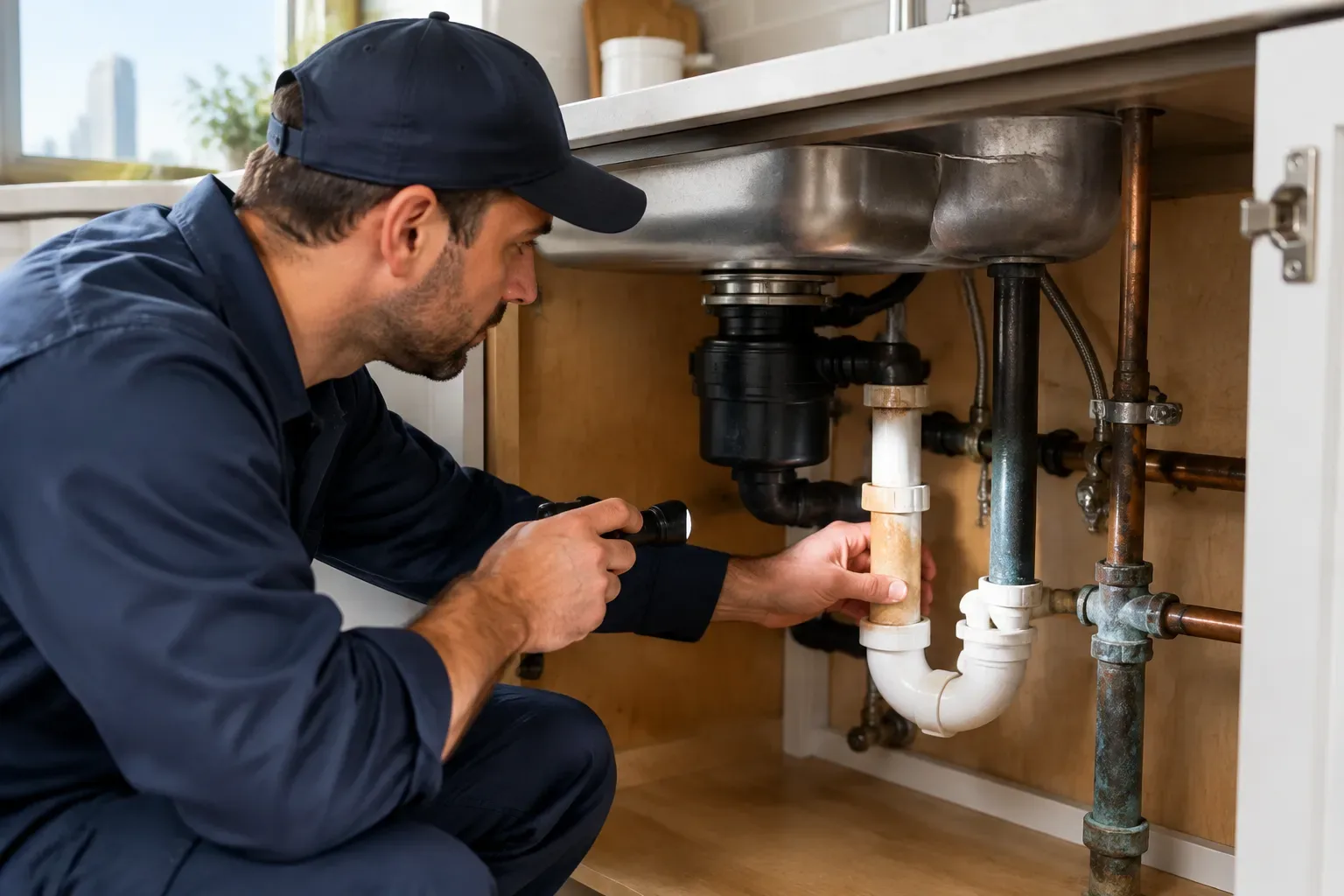
A split pipe or failed fitting under a sink, near a fixture, or in an exposed utility area may allow the affected branch to be isolated. The repair still needs a secure, pressure-rated solution rather than a temporary patch.
Wall or ceiling leak
Staining, dripping from a ceiling, damp drywall, or a bulging surface can indicate a leak inside a concealed line. Stay clear of sagging ceilings and leave exploratory openings to qualified professionals.
Suspected slab or concealed-floor leak
Warm or wet flooring, unexplained water use, or water appearing away from an obvious source can point to a concealed plumbing issue. The symptom alone does not prove a slab leak, and opening flooring or concrete without diagnosis can create unnecessary damage.
For a hidden source, leak detection and repair can help locate the issue with methods such as electronic leak detection and pressure testing before broader repairs are planned.
How can you limit water damage before help arrives?
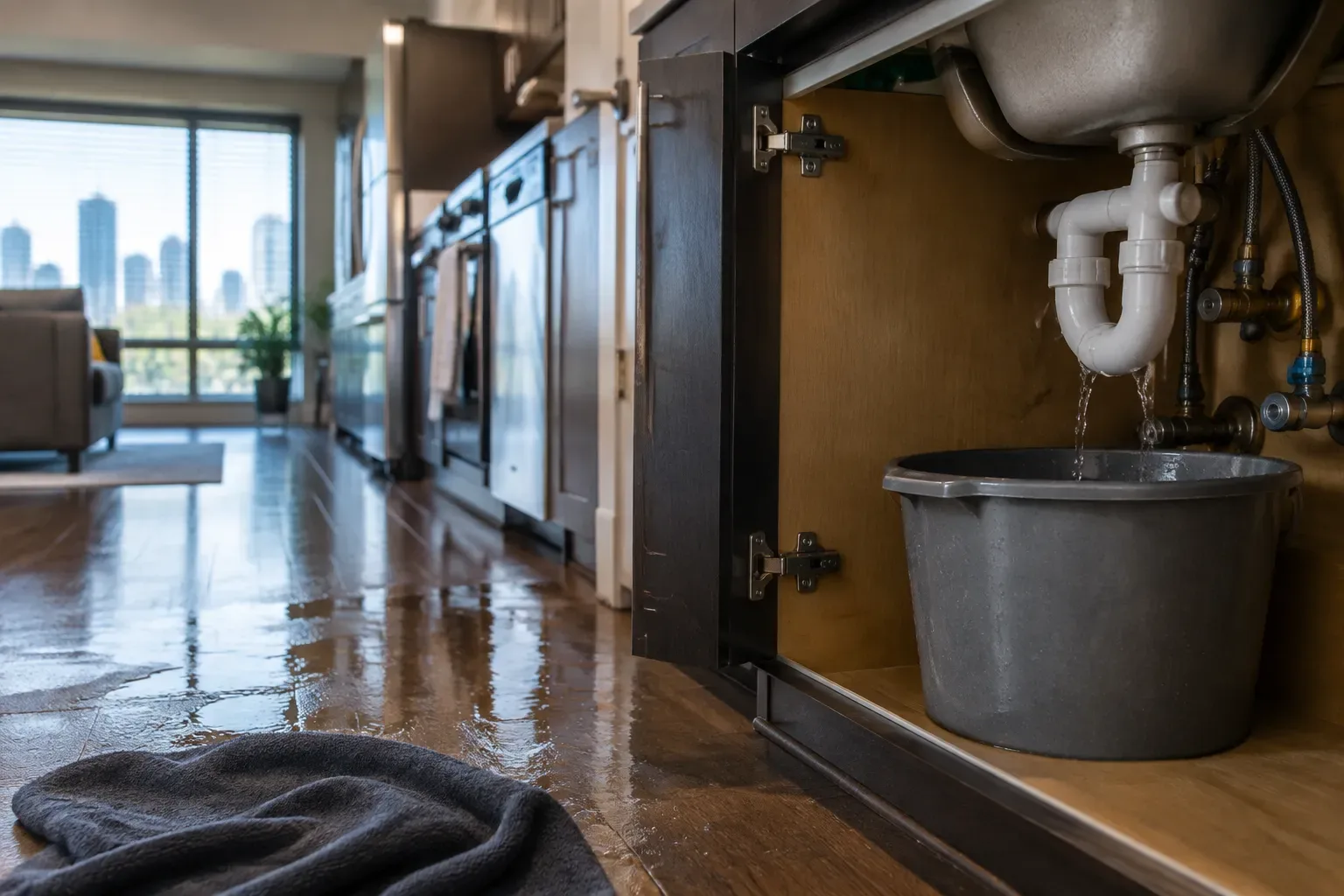
After the supply is off and electrical conditions are safe, focus on containing and removing water. Use towels, buckets, and safe collection containers for immediate control. Lift or move small belongings from the floor, and place foil or plastic barriers under furniture legs only if doing so does not spread water or create a slip hazard.
Do not use a household vacuum, fans, heaters, or other electrical devices in standing water unless the setup is demonstrably safe. Wet drywall, insulation, flooring, cabinetry, and other porous materials may need professional assessment. The IICRC S500 standard addresses professional water-damage restoration and structural drying practices after the source has been controlled.
Houston’s warm, humid conditions make prompt drying especially important. Leaving moisture in porous materials can lead to secondary damage and microbial growth. That is why pipe repair and water-damage mitigation are related but separate jobs: repairing the line stops new water, while drying addresses moisture already in the building materials.
What should you photograph and write down for insurance?
Take clear photos and video of the visible source, wet rooms, damaged belongings, water level or spread, and the main shutoff position when safe. Capture broad room views as well as close-ups. Keep notes of the discovery time, when the water was shut off, and the names of professionals or utilities you contacted.
Avoid throwing away damaged items until you have documented them and checked with your insurer about its process. Insurance coverage is policy-specific and can depend on the cause of the loss, exclusions, maintenance history, and resulting damage. A plumber can document plumbing findings, but cannot determine claim coverage.
Why might a pipe burst in Houston?
A burst can result from freezing, corrosion, a failed fitting, excessive pressure, physical damage, or deterioration in the pipe itself. One symptom does not prove which cause applies. During occasional hard-freeze events, exposed or inadequately protected piping can freeze; because water expands as it freezes, a split may release water when the ice thaws or pressure changes.
Do not assume moisture around a pipe after cold weather is only condensation. Shut off the water if there is a suspected split and have the line inspected. If a repair reveals widespread deterioration or recurring failures, replacement of a section or a larger run may be more sensible than repeatedly patching isolated breaks. A plumber can explain the repair and pipe replacement options after finding the failed area.
What should you tell the emergency plumber?
A concise description helps the plumber prepare for the situation. Be ready to share:
- The property location and whether it is residential or commercial
- Whether water is still flowing and whether the main shutoff is closed
- Where you see water, such as under a sink, inside a wall, from a ceiling, or through flooring
- Whether water is near outlets, appliances, panels, or wiring
- Whether the water is clean supply water or may involve a drain or sewer line
- Any recent freeze exposure, plumbing work, water-pressure changes, or recurring leaks
Ask what failed, whether related components should be checked, and what repair options are appropriate. A one-time failed fitting may need a focused repair. Repeated breaks, hidden moisture, or deteriorated pipe material may call for a broader inspection instead.
What is the practical takeaway after a pipe bursts?
Do not spend the first minutes trying to make a permanent repair. Shut off the accessible water supply, keep clear of electrical risks, document what you can safely see, and get the source diagnosed. Fast damage control protects the building, while a proper plumbing repair helps reduce the chance that the same weakness is left behind.
For a burst pipe near Fondren in Brays Oaks, One Plumbing Expert Houston can assess the plumbing issue and explain the next repair step.
Ready to discuss your project?
Need help assessing a burst pipe near Fondren in Brays Oaks? Reach out to discuss the shutoff status and visible damage.
FAQ
Should I turn off electricity if a pipe bursts?
Do not approach an electrical panel or operate switches if you must stand in water or if the panel itself is wet. Keep people away from the affected area and seek qualified electrical guidance where water has contacted wiring, outlets, appliances, or the panel. Turning off the water is usually the first safe action, but electrical risk can change what is safe to do next.
Where is the main water shutoff in a Houston home?
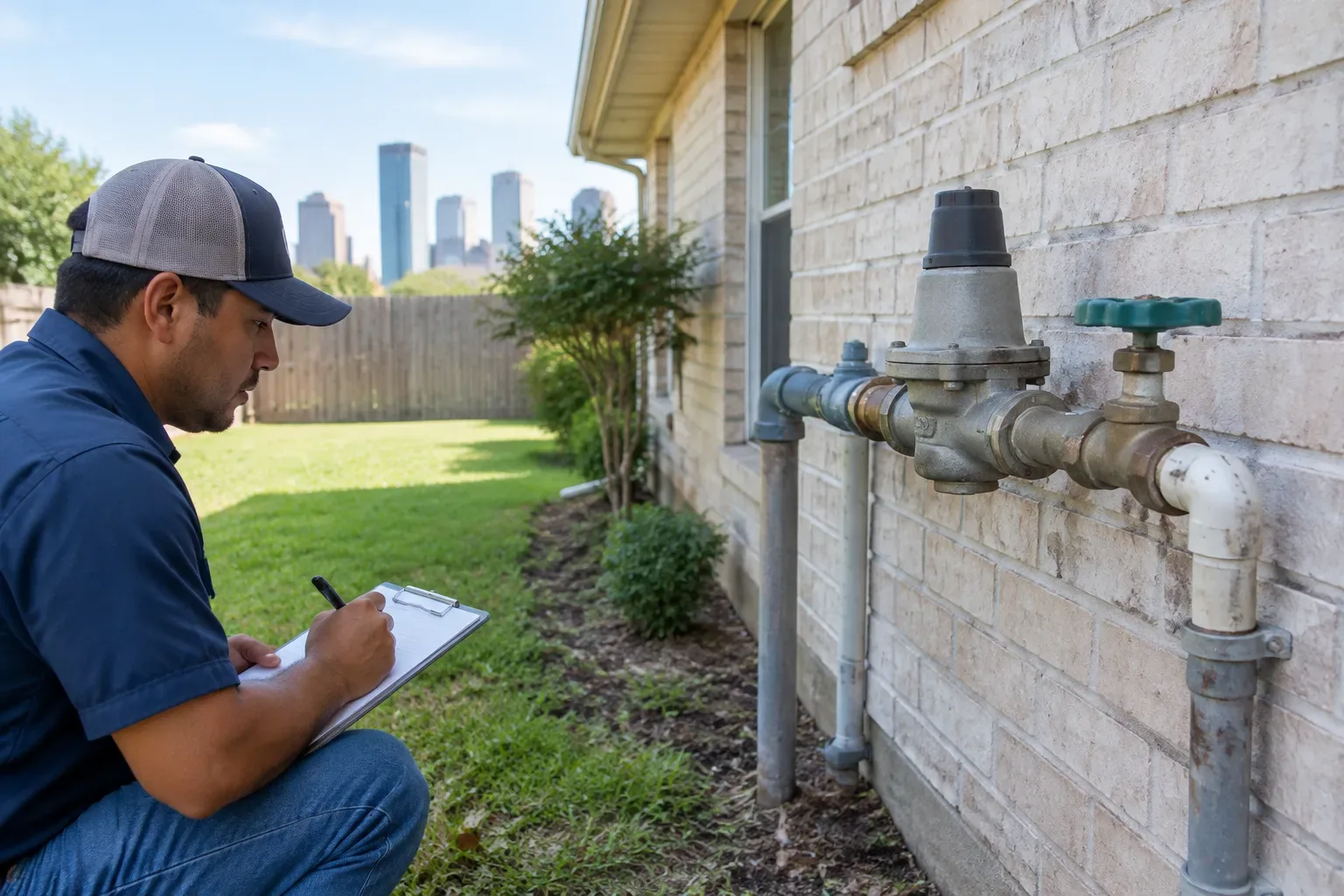
The shutoff location varies by property. It may be near where the service line enters the building, close to a water heater, in a utility area, or outdoors. Look for a valve on the home’s plumbing side that you can reach safely. Do not assume the meter-side valve is yours to operate, and do not force a stuck valve.
Can I patch a burst pipe myself until a plumber arrives?
A bucket, towel, or temporary collection method can limit water spread after the supply is off. Tape, sealant, and many clamp-style fixes are not reliable permanent repairs for a pressurized line. A visible break may look straightforward, but the failed pipe or fitting can have related damage. For guidance on the safe boundary between DIY work and professional repair, see Should I Call a Plumber or Fix It Myself?.
Do I need an emergency plumber for water leaking through the ceiling?
Usually, yes. Water through a ceiling can come from a plumbing line, an upstairs fixture, a drain issue, or a non-plumbing source. A sagging or bulging ceiling can also fall without warning. Shut off water if you can safely identify the appropriate valve, keep clear of the area, and arrange emergency assessment rather than cutting into the ceiling yourself.
How do I know whether the leak caused hidden damage?
Visible water marks, soft drywall, swelling flooring, a musty odor, or damp cabinetry can all be symptoms of moisture exposure, but none identifies the full extent alone. Hidden water can travel along framing or under finishes. Read Can a Small Water Leak Cause Major Damage? for signs that a seemingly limited leak deserves closer attention.
Should I open faucets after turning off the water?
If the area is dry and safe to access, opening a cold-water faucet after the main supply is shut off can relieve residual pressure and allow some water to drain from accessible lines. Do not enter a wet or electrically hazardous area to do this. If you are unsure which valves to use, leave the plumbing alone and wait for the plumber.
What if my water shutoff valve will not turn?
Do not use excessive force or tools that could break the valve or pipe. If it will not move, water continues to flow, or you cannot safely reach it, contact an emergency plumber or the applicable water utility. This is one of the situations covered in How Do I Know If I Need Emergency Plumbing Service?, especially when active water flow threatens rooms or electrical areas.
Will homeowners insurance cover a burst pipe?
There is no universal answer. Coverage can vary based on the cause of the break, your policy terms, exclusions, maintenance requirements, and the type of resulting damage. Document the incident before extensive cleanup when safe, take reasonable steps to prevent further damage, and contact your insurer for claim-specific instructions. Keep invoices and written plumbing findings for your records.