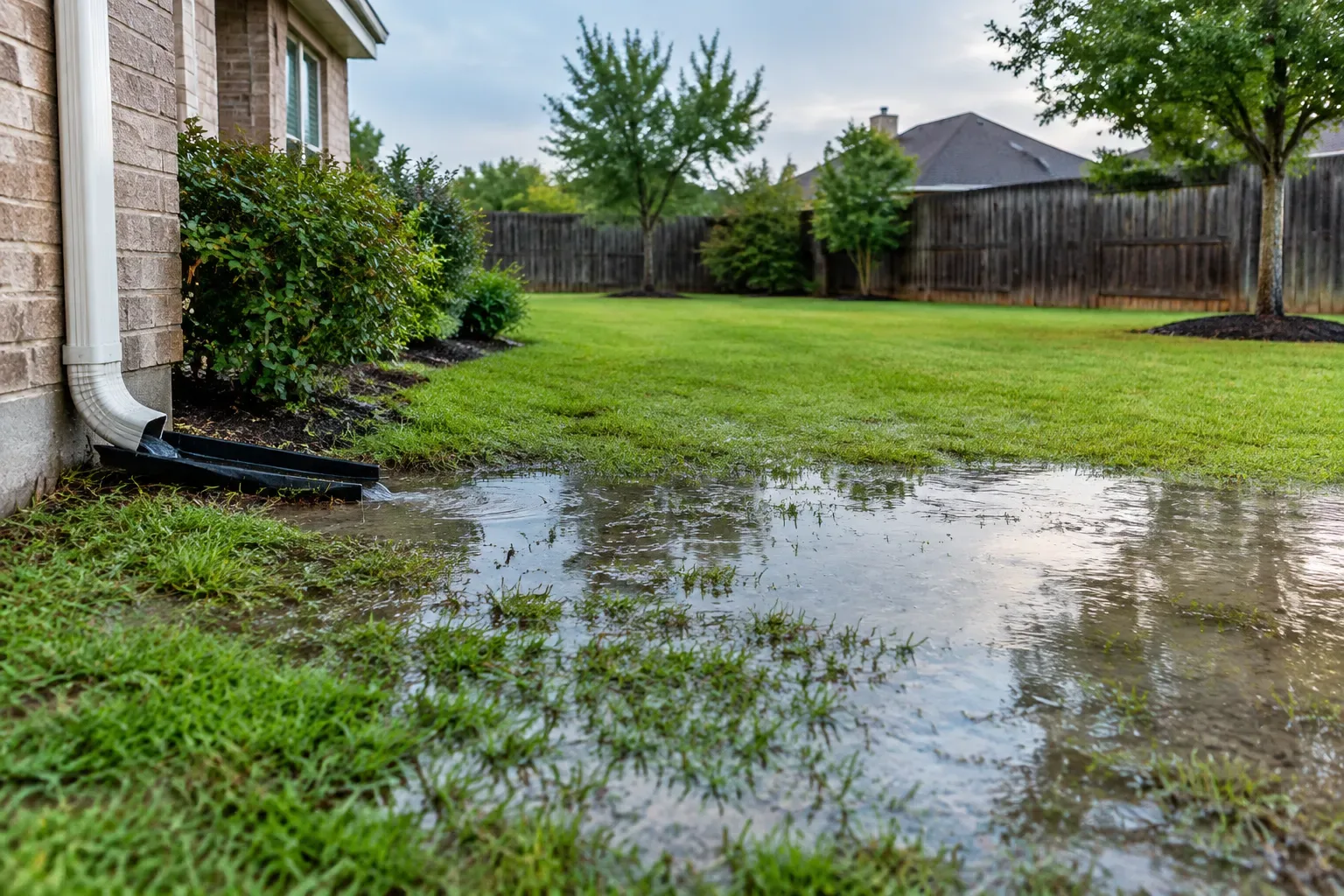
Why Does the Yard Stay Wet Near Willowbend in Westbury?
A yard that stays wet near Willowbend in Westbury may be holding rainwater because of flat grading, a low spot, irrigation runoff, or a downspout. It can also point to an underground plumbing issue, such as a leaking water-service line or damaged private sewer lateral. A persistent wet patch during dry weather deserves closer attention, especially if it comes with odor, soft ground, slow drains, or fixture backups.
The wet surface alone cannot identify the source. Water can move through soil and emerge away from the actual pipe problem, so a professional inspection is more reliable than assuming the wet area sits directly over a sewer break. One Plumbing Expert Houston provides plumbing diagnostics for property owners who need to narrow down an unexplained outdoor wet spot.
Quick Answer
If the yard remains damp for several dry days, first rule out sprinklers, hose connections, roof drainage, condensate discharge, and a natural low area. Then watch for plumbing-related clues: a water bill that rises unexpectedly, persistent soft soil, sewage odor, cloudy water, bubbling, slow interior drains, gurgling, or backups.
A sewer leak, water-line leak, irrigation failure, and ordinary stormwater ponding can look similar from the surface. The practical next step is to document the pattern and arrange leak detection or a sewer camera inspection if the area does not dry normally or sewage-related symptoms appear.
What can make one part of a yard stay wet?
Houston rain can saturate shallow soil and leave water pooled after a storm. Because much of the area has limited natural slope, runoff may collect in a low section instead of moving away quickly. That pattern is inconvenient, but it does not by itself prove a plumbing leak.
The more concerning pattern is a wet spot that returns without rain, persists through dry weather, or changes after indoor water use. These common possibilities have different clues and next steps:
| Possible source | What you may notice | What makes it more likely | Best next step |
|---|---|---|---|
| Stormwater or poor drainage | Broad puddling after rain, often in a low area | The spot gradually improves as surrounding soil dries | Check grading, downspouts, and runoff paths |
| Irrigation leak | Wet ground near sprinkler heads or valve boxes | The area worsens during or soon after a watering cycle | Turn off irrigation temporarily and observe |
| Water-service-line leak | Clear water, consistently soft soil, possibly higher water use | Moisture continues during dry weather without sewer odor | Arrange underground leak detection and repair |
| Sewer lateral leak | Soft soil, odor, gray water, drain symptoms, or unusually lush growth in a narrow path | Slow drains, gurgling, or backups occur inside the building | Request sewer-line diagnosis and camera inspection |
| Natural low spot or groundwater | Dampness varies with weather and drainage conditions | No plumbing symptoms appear and the area follows rainfall patterns | Compare conditions after several dry days |
Clear water is not automatically harmless. A potable-water leak can keep soil wet without producing a sewage smell. On the other hand, a sewer defect may not smell strongly if it is deep underground, diluted by groundwater, or outside normal airflow.
Which symptoms suggest a sewer-line problem rather than drainage?
A wet lawn is an observable symptom, not a diagnosis. A failed sewer pipe is only one possible cause. The combination of outdoor and indoor clues matters more than grass color or moisture by itself.
Signs that justify prompt plumbing evaluation include:
- A wet patch that remains after several rain-free days.
- Foul or sewage-like odor near the soil, drains, or exterior cleanout.
- Gray, cloudy, or discolored water at the surface.
- Slow drains in more than one fixture, toilet bubbling, gurgling, or recurring backups.
- A localized soft spot, depression, or sinkhole-like change in the ground.
- A narrow strip of unusually vigorous vegetation that follows a likely pipe route.
Houston's expansive clay soils can swell or shrink as moisture changes. Persistent leakage can contribute to soft ground or localized soil movement, while roots and soil movement can also stress buried piping. Those are useful clues, not confirmation of a failed line.
How can you check the wet area safely before scheduling service?
A few careful observations can help distinguish a drainage concern from an active leak. Avoid probing the soil, opening sewer components, or using chemical drain cleaner to solve an outdoor moisture issue.
- Photograph the wet area and note its size, location, odor, water color, and whether the ground feels unusually soft.
- Record recent rainfall and wait through several dry days, if conditions allow, to see whether the area remains wet.
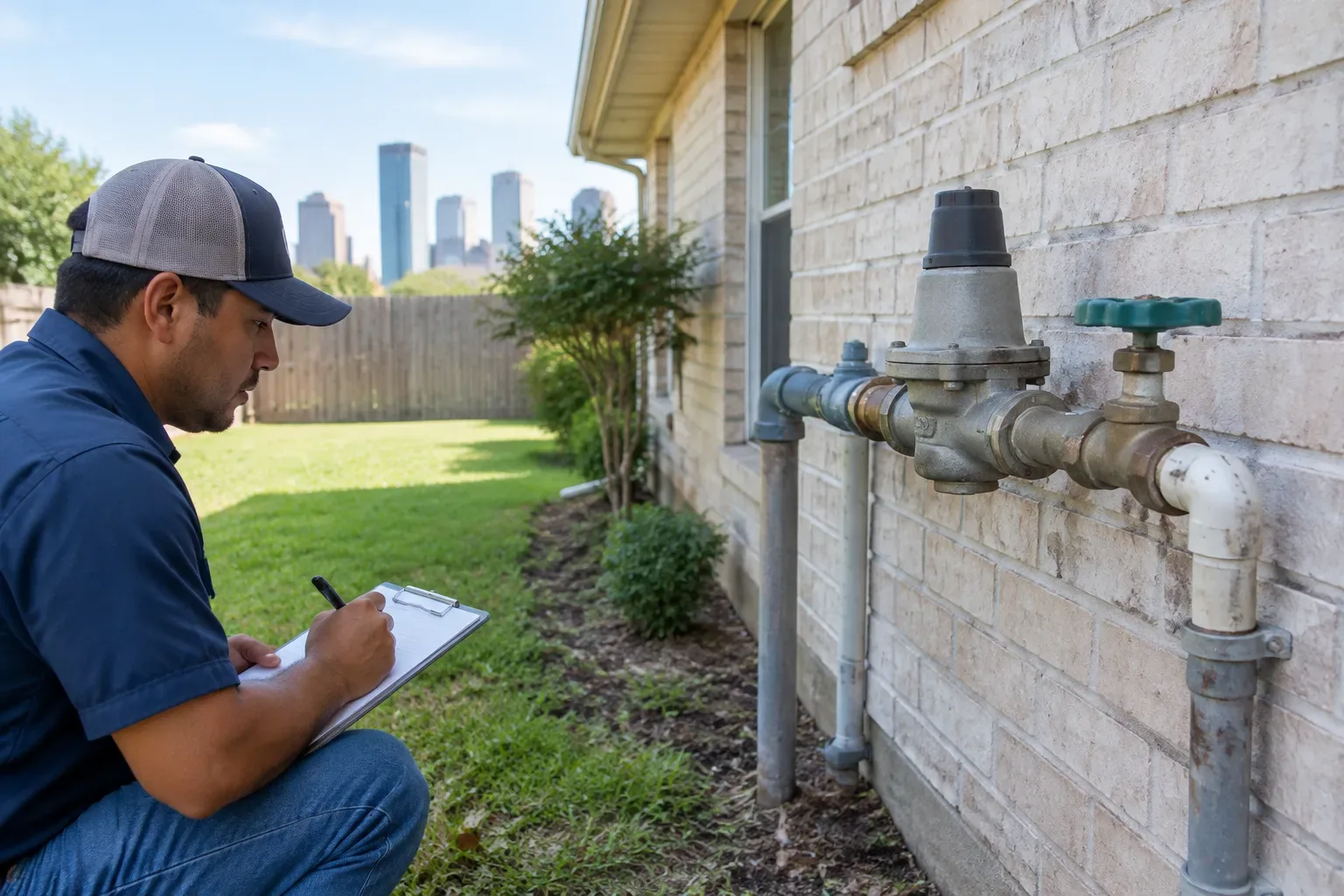
- Turn off irrigation for a normal watering cycle and check sprinkler heads, valves, hose bibs, pool equipment, and roof downspouts for discharge nearby.
- Note any indoor symptoms, including slow drains, gurgling, toilet bubbling, backups, or a sudden change in water use.
- If the wet spot persists or sewage is possible, schedule professional testing instead of digging or repeatedly treating drains yourself.
Before any excavation, use the national 811 utility-locate service to request marking of buried utilities. A wet patch can be near electrical, gas, communications, water, or sewer infrastructure, and surface clues do not show every buried line.
What can a plumber confirm that surface checks cannot?
A professional finding requires testing. Depending on the symptoms and pipe access, a plumber may use pressure testing, electronic leak detection where applicable, tracer methods, or a sewer camera. Each method answers a different question.
A camera inspection looks inside an accessible sewer line and can reveal breaks, root intrusion, offset joints, blockages, or collapsed pipe sections. It does not guarantee that the wet surface is directly above the defect, because water can travel through soil before it becomes visible. Pressure testing and leak-detection tools may help identify a water-line issue that produces no drain symptoms at all.
For suspected wastewater exposure, caution is appropriate because municipal wastewater systems can experience releases and overflows that require proper attention, as described by the U.S. Environmental Protection Agency's wastewater guidance. The responsible party may be different if the concern involves private plumbing, a private sewer lateral, or public infrastructure. Confirm the boundary with the relevant utility before authorizing excavation.
If testing shows a damaged buried pipe, the appropriate repair may range from a localized repair to a larger replacement. The right scope depends on the confirmed condition, location, pipe material, access, and extent of damage. It is not automatically a full pipe replacement.
When should you treat a wet yard as an urgent plumbing issue?
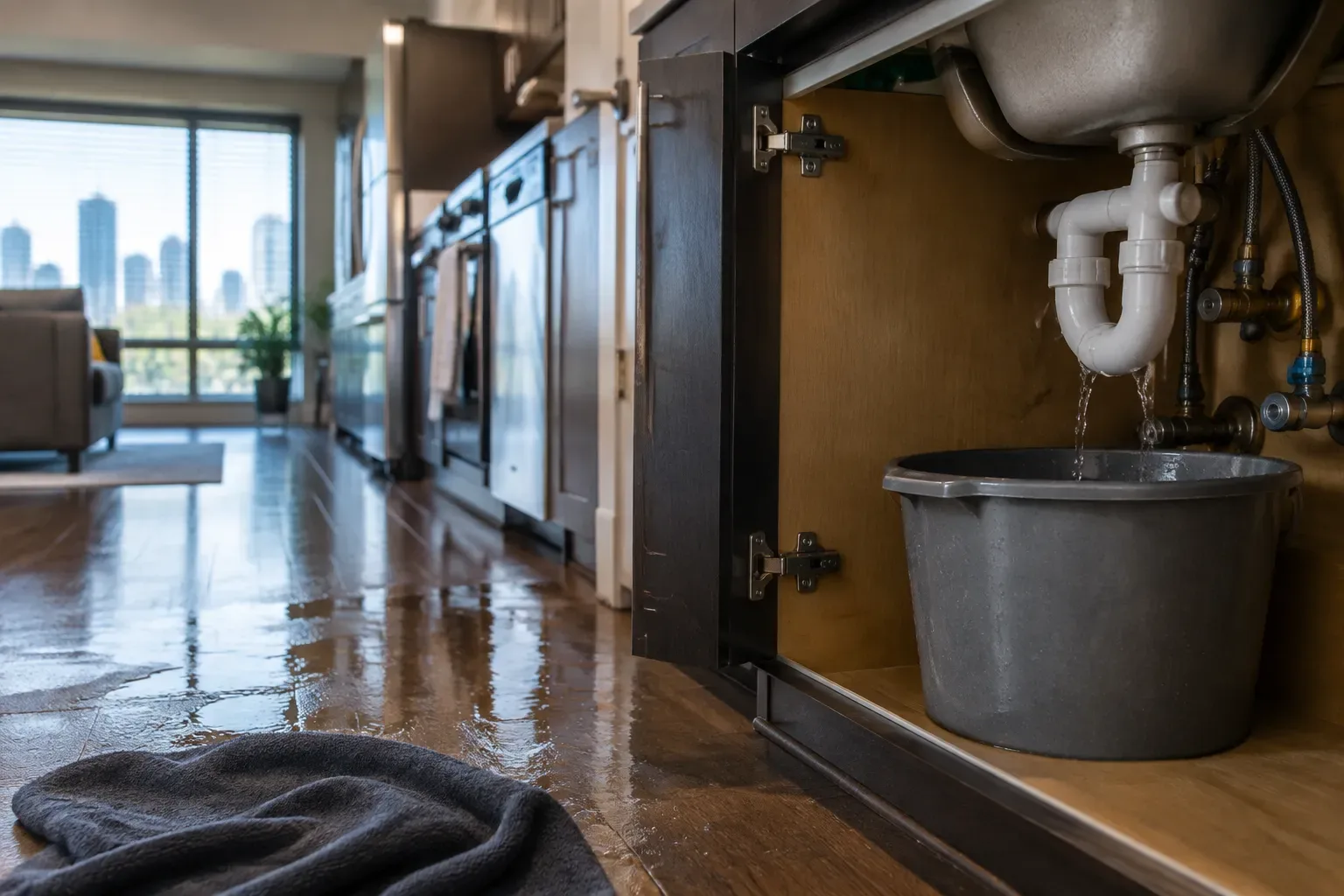
Move faster when there is active wastewater at the surface, a strong sewage odor, indoor backup, rapidly spreading wet ground, or a depression that creates a trip hazard. These conditions can worsen quickly and may involve sanitation or property-damage concerns.
For active backups or suspected sewage exposure, emergency plumbing service is a more appropriate path than waiting to see if the spot dries. If the issue is confined to ordinary rainwater ponding and no plumbing symptoms are present, drainage improvements or landscape grading may be the more realistic solution instead.
The common mistake is assuming every wet patch is a sewer leak, or dismissing every wet patch as rain. Both can delay the right fix. Observe the pattern, rule out simple sources, and use testing when evidence points to an underground plumbing problem.
What should you document for a leak-detection visit?
Useful information shortens the diagnostic process. Share photos from dry and wet days, dates of recent rain, the approximate location of sprinklers and downspouts, and any changes in water use. Include details about which fixtures drain slowly, whether toilets gurgle, and whether the wet spot changes after laundry, showers, or irrigation cycles.
A small leak can become a larger property issue when moisture continues unnoticed. For more context on that risk, see how a small water leak can cause major damage. The best takeaway is simple: treat a recurring dry-weather wet spot as something to investigate, not something to cover with soil or ignore.
Ready to discuss your project?
If a wet spot near Willowbend persists through dry weather, request a plumbing inspection to identify whether drainage, irrigation, or an underground line is responsible.
FAQ
Why is my yard still wet when it has not rained?
A wet spot during dry weather can come from irrigation, a leaking water-service line, roof or HVAC condensate discharge, a drainage low point that is slow to dry, or a sewer-line issue. Check whether the area changes when irrigation is off and whether indoor drains are also acting up. If there is no obvious surface source, professional testing can identify whether underground plumbing is involved.
Can a sewer line leak make grass greener?
It can sometimes contribute to unusually lush growth, but greener grass does not prove a sewer leak. Fertilizer, shade, irrigation coverage, soil differences, and natural drainage can produce the same result. More meaningful clues include persistent moisture in dry weather, odor, soft soil, recurring drain problems, or camera findings inside the line.
Does a sewer leak always smell like sewage outside?
No. An underground leak may be deep, diluted, or located where odor does not travel toward the house. A lack of odor should not rule out a sewer problem if there are repeated backups, gurgling fixtures, or a wet area that will not dry. Review these signs that emergency plumbing may be needed if indoor drainage symptoms are worsening.
Could a water-line leak cause a wet spot without raising my bill?
Yes. A bill increase can be a clue, but it is not guaranteed. The amount of water lost, billing timing, meter accuracy, and normal household use all affect whether a change is noticeable. Clear water with no drain symptoms may point toward a water-line source, but inspection is needed to confirm it and locate the leak.
Should I call the city or a plumber for a wet area near the street?
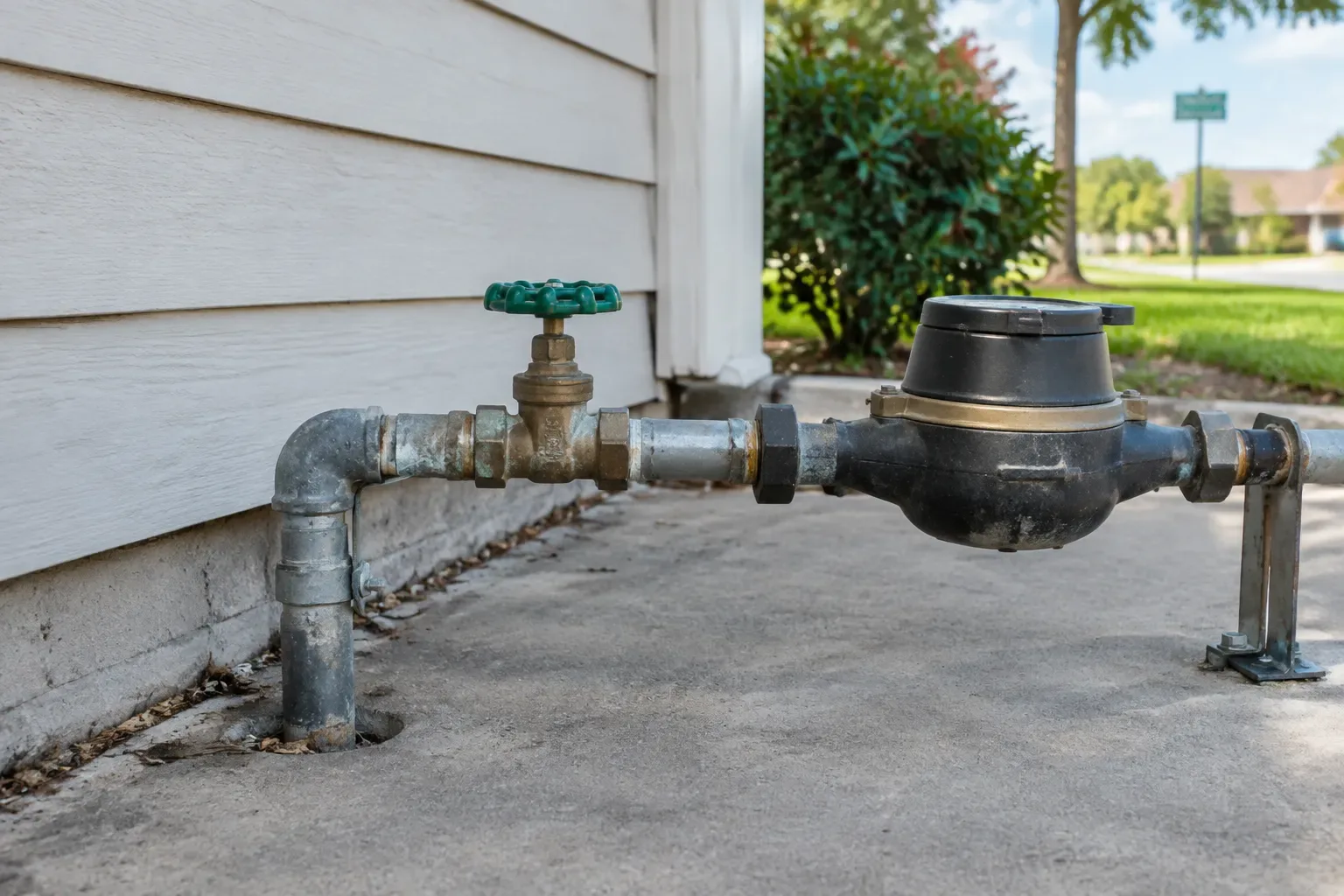
Start by noting the exact location and whether water is coming from a meter area, curb, public access point, or your property. A plumber can evaluate private plumbing and the private lateral, while the applicable water or wastewater utility may need to assess public infrastructure. Responsibility is not universal, so confirm the service boundary before excavation or repairs.
Can tree roots cause a sewer pipe to leak?
Roots can enter openings, obstruct flow, or worsen weaknesses at joints and damaged sections. However, roots visible near a wet area do not prove they caused the problem. A camera inspection is the practical way to look for root intrusion, cracks, offsets, or collapse before deciding between cleaning, repair, or replacement.
Is it safe to dig where I think the sewer line is leaking?
Do not start digging based only on a wet patch. Buried utility routes may not match assumptions, and sewage-contaminated soil is a separate concern. Request utility marking through 811 first, keep people and pets away if wastewater is suspected, and let inspection results guide any excavation. Texas wastewater systems are subject to state oversight through the Texas Commission on Environmental Quality, but site-specific responsibility still needs to be verified.
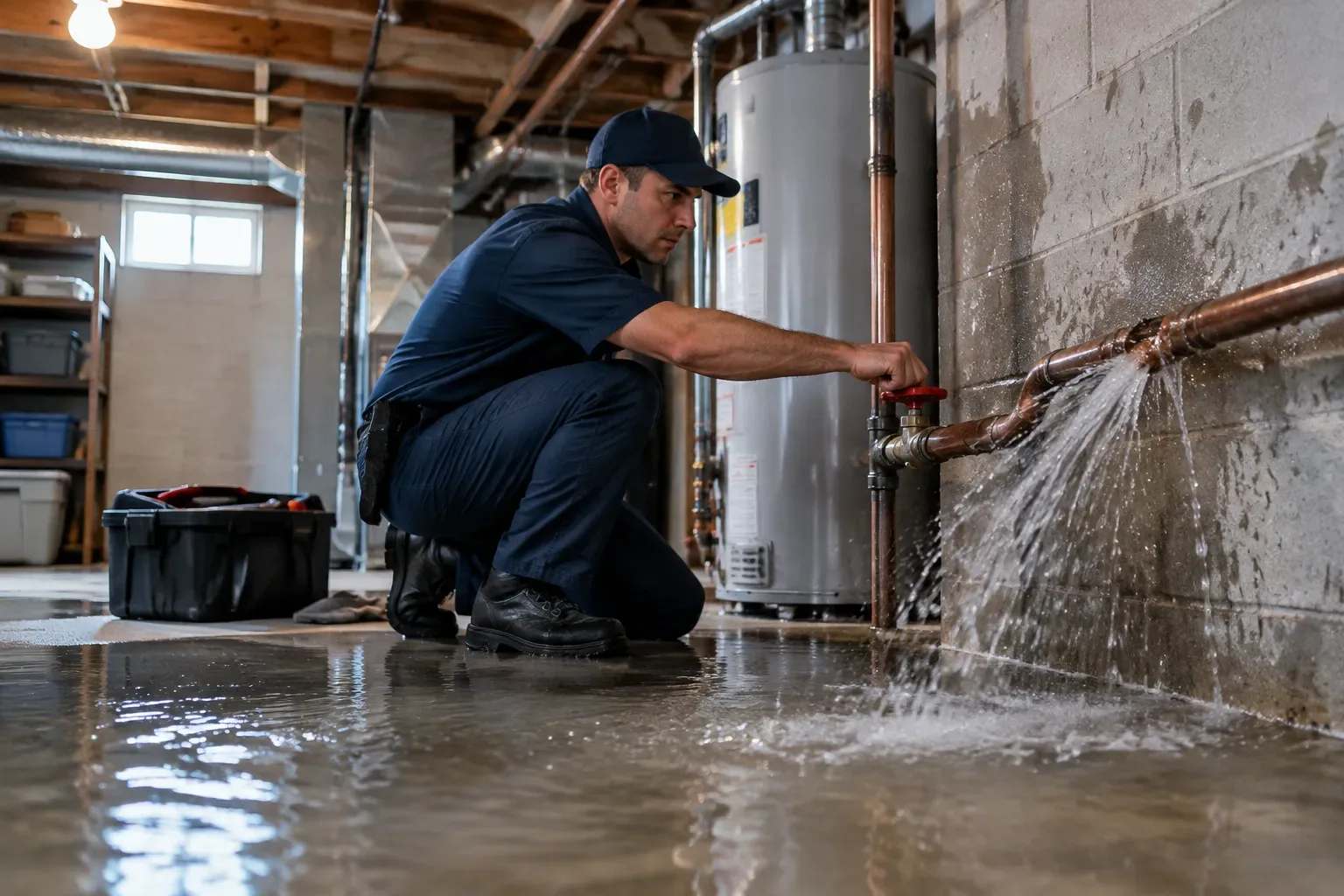
Can a water heater cause the yard to stay wet?
Usually, a water heater problem causes moisture near the unit, its drain pan, or a discharge line rather than a distant section of lawn. If a relief-valve discharge pipe or drain line terminates outdoors, it could create a localized wet area. For concerns around the appliance itself, review water heater repair and installation options.