Can Tree Roots Block Sewer Lines Near Creekbend in Braeburn Glen?
Yes. Tree roots can obstruct a sewer line when they enter through an existing opening, such as a crack, separated joint, or deteriorated seal, then expand inside the pipe and catch waste. A recurring whole-house drain problem near Creekbend in Braeburn Glen is worth investigating, but the location alone does not prove roots are the cause.
Slow drains, gurgling fixtures, sewage odors, and backups can also result from grease, wipes, a collapsed pipe, a low spot in the line, or a public-side wastewater issue. The practical next step is to identify where the restriction is and inspect the line before choosing a repair.
Quick Answer
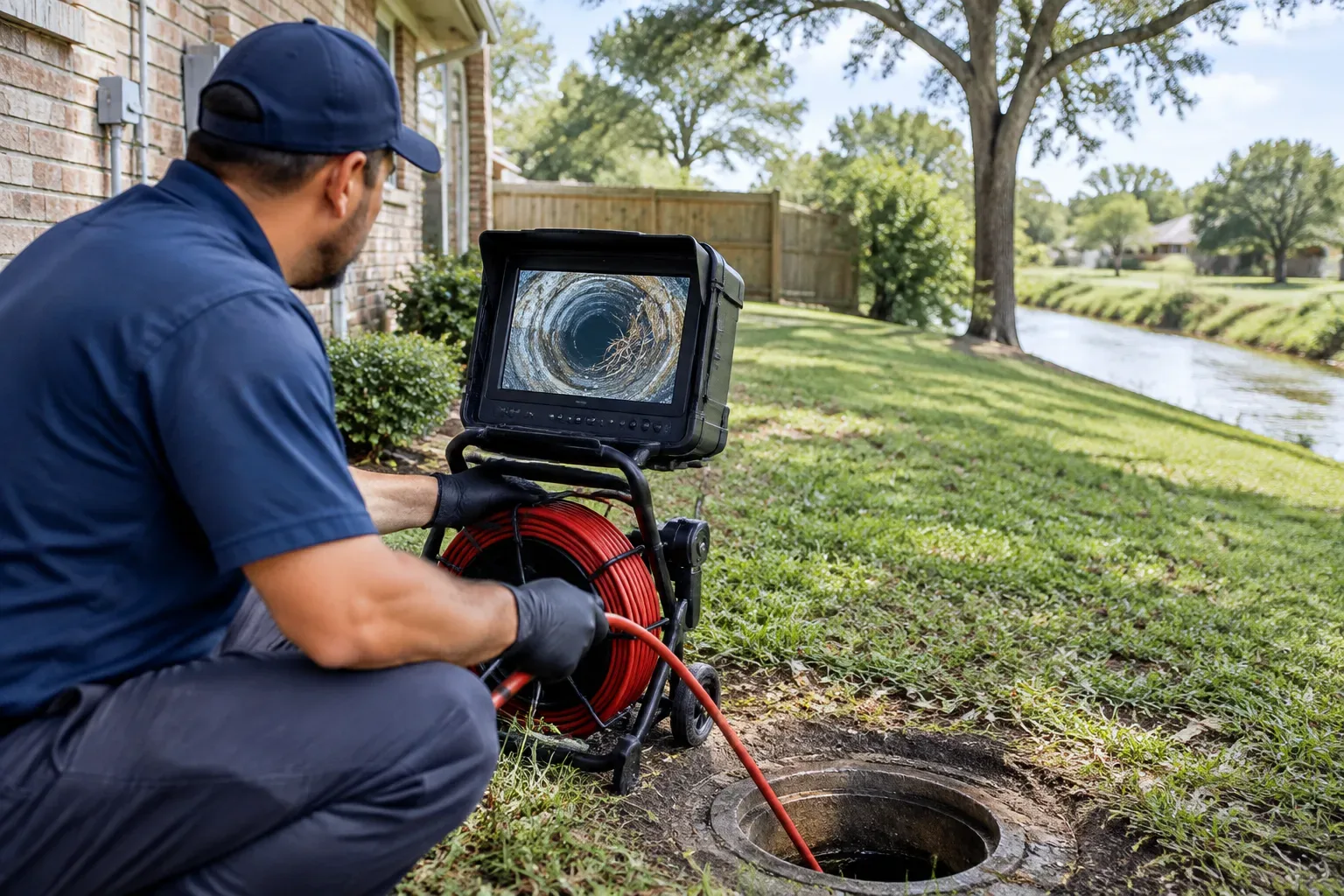
Roots do not usually force their way through an intact sewer pipe. They take advantage of openings that already exist, then grow where moisture and nutrients are available. A sewer camera inspection can confirm whether roots are present, show the pipe condition, and help distinguish a private sewer lateral problem from a possible public-main issue.
For a recurring backup or suspected sewer-line obstruction, One Plumbing Expert Houston provides local plumbing and sewer-line service in the Houston area.
How do roots get inside a sewer pipe?
A buried sewer line is designed to carry wastewater away from the building. Its joints, connections, and pipe walls can develop openings over time. Roots follow moisture, so a small leak or imperfect joint can become an entry point. Once inside, fine root strands can form a dense mass that traps paper, solids, and other debris.
That sequence matters because removing the root mass may restore flow without correcting the opening that allowed it in. If a camera later finds separated joints, cracking, or another defect, the root intrusion is a symptom of a pipe condition, not the entire repair decision.
Heavy rain can make an already marginal drainage problem more noticeable by increasing wastewater flow and allowing more water into damaged piping. It does not, by itself, diagnose root intrusion.
Which warning signs point to a possible sewer-line issue?
No single symptom proves roots are in the line. The pattern, the fixtures affected, and the inspection findings matter.
| What you notice | Possible causes | Sensible next action |
|---|---|---|
| One sink or tub drains slowly | Localized fixture clog, hair, soap buildup | Start with the affected branch drain |
| Several fixtures drain slowly or gurgle | Building sewer restriction, grease, wipes, roots, pipe damage | Arrange a professional drain and sewer evaluation |
| Toilet flushing affects a tub or shower drain | Restriction downstream of connected fixtures | Limit water use and have the line evaluated promptly |
| Backup returns after clearing | Roots, a damaged pipe, grease buildup, or an incomplete clearing | Request a camera inspection rather than repeating the same clearing |
| Sewage odor indoors or outdoors | Drain or vent issue, dry trap, damaged sewer piping, backup | Identify the source; see guidance on why a house can smell like sewage |
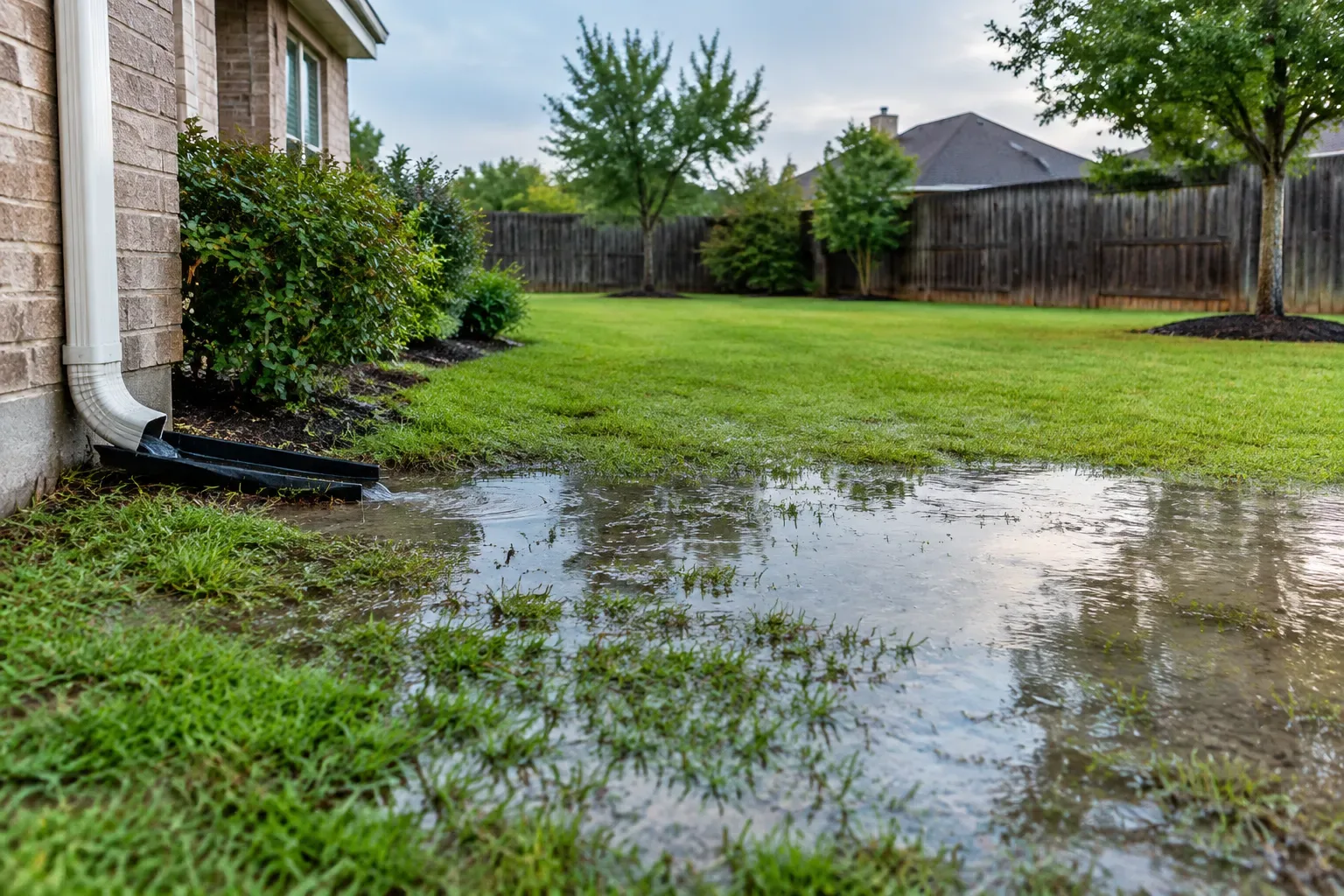
| Wet or unusually lush area in the yard | Leaking water or sewer piping, drainage issue, irrigation problem | Do not assume the cause; inspect the relevant line |
What can a sewer camera inspection actually confirm?
A camera inspection is the clearest way to move from a suspected cause to a professional finding. The camera travels through the accessible drain or sewer line and can show root material, standing water, breaks, offset joints, buildup, or a collapse. It can also help locate the problem along the pipe run.
It cannot automatically settle every responsibility question. The line must still be traced to determine whether the issue is in an interior branch drain, the building sewer, a private lateral, or farther toward public infrastructure. Houston residents should verify the applicable process with Houston Public Works' wastewater information when a public-side issue may be involved.
What should you do before a plumber arrives?
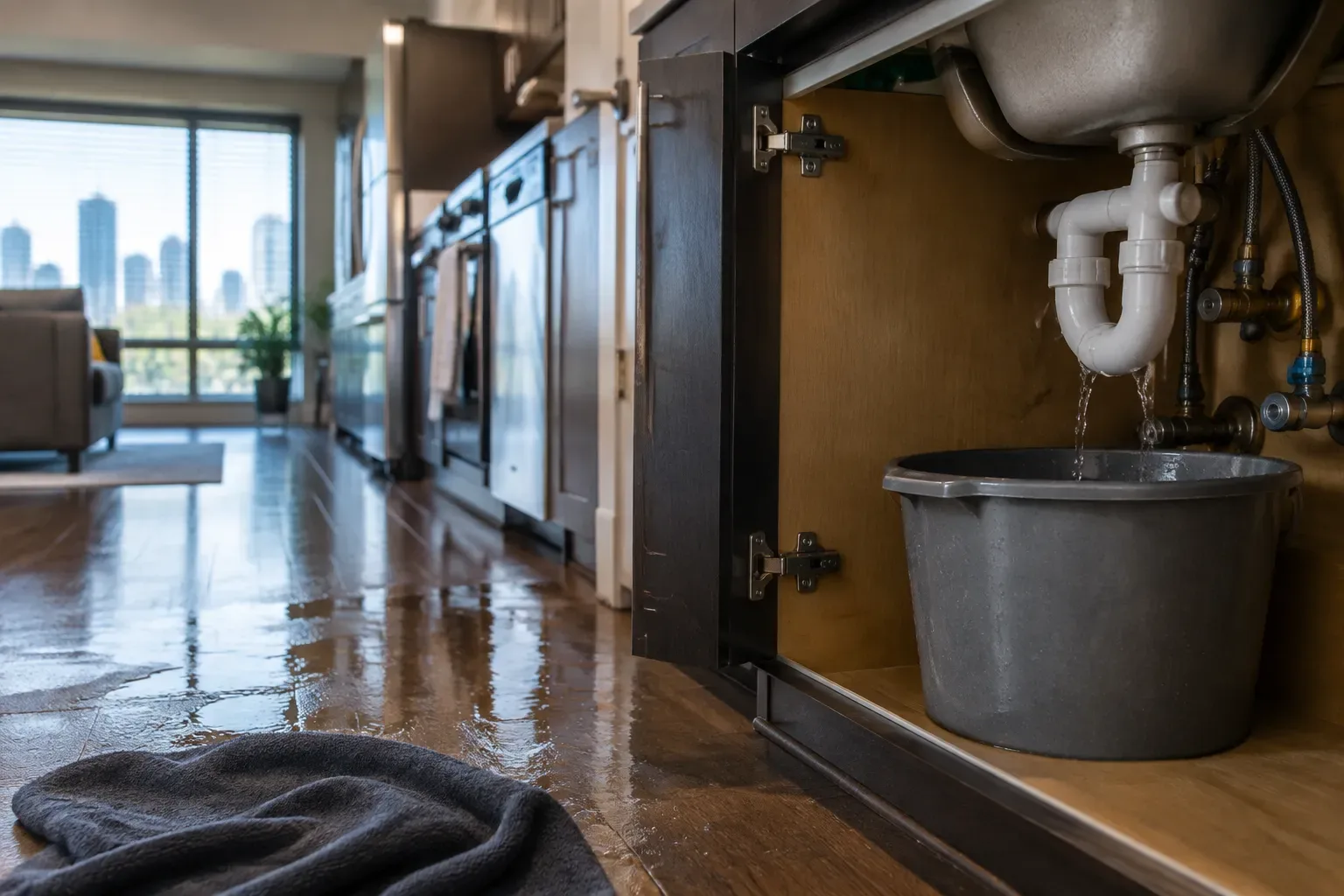
Avoid turning a manageable restriction into an indoor overflow. Do not keep testing toilets, run the dishwasher, or take long showers if multiple fixtures are draining poorly or wastewater is backing up.
- Note which fixtures are affected and whether the issue returns after plunging or prior drain clearing.
- Stop unnecessary water use if drains are gurgling, wastewater is rising, or multiple fixtures are involved.
- Do not pour unverified chemical root treatments or harsh drain cleaners into the system. They do not confirm the cause or repair a broken pipe.
- Tell the plumber whether the issue is isolated to one fixture, affects the whole building, or changes after rain or heavy water use.
- Ask for the location and condition of the obstruction before approving excavation or replacement.
A severe active backup may need emergency plumbing service. For less urgent symptoms, documenting the pattern helps the inspection begin in the right part of the drainage system.
Is drain cleaning enough to remove roots permanently?
Drain cleaning can be useful for restoring flow when roots and trapped debris are obstructing the line. It is not automatically a permanent solution. If the line has an open joint, crack, or deteriorated connection, new roots can enter after cleaning.
The common mistake is treating every repeat clog as a routine maintenance problem. Repeated clearing without checking the pipe condition can create a cycle of temporary relief and recurring backups. Professional drain cleaning may be the appropriate first response for a blockage, but a recurring issue deserves diagnosis beyond flow restoration.
The U.S. Environmental Protection Agency also advises regular inspection and maintenance of wastewater systems to identify problems before they become larger failures, including issues involving roots and damaged components. See the EPA's septic system maintenance guidance for general maintenance context.
When does a root-damaged sewer line need repair instead of cleaning?
The answer turns on the camera findings, not simply on how often a drain clogs. A single removable obstruction in an otherwise sound pipe may call for cleaning and monitoring. A persistent opening, broken section, poor alignment, or structural damage can justify a more durable repair.
Cleaning and monitoring
Best suited to a line that clears well and does not show significant structural defects. It restores flow, but follow-up is important if roots have already found an entry point.
Targeted spot repair
Useful when inspection identifies a limited damaged area that is accessible and the rest of the line appears serviceable. The goal is to correct the local opening that enables intrusion.
Rehabilitation or replacement
Considered when defects are widespread, the pipe has failed structurally, or problems recur at multiple locations. Suitability depends on access, depth, alignment, utility conflicts, and applicable requirements.
Do not remove a tree solely because a drain is blocked. Confirm the pipe defect first, then weigh plumbing repair options and, where preservation matters, seek qualified arborist input about the tree.
Who is responsible if the blockage is beyond the property?
Responsibility can depend on the exact point of failure. A private building sewer or sewer lateral may be handled differently from a blockage in public wastewater infrastructure. A camera and line location can help establish what part of the system needs attention, but they do not replace confirmation of the current utility process or property obligations.
If repair work extends into an easement, right-of-way, or another regulated area, ask the contractor and the applicable local authority what approvals are required before work begins. Avoid accepting a blanket statement that every sewer problem is either automatically private or automatically municipal.
What is the practical takeaway for Creekbend-area properties?
Treat recurring multi-fixture drainage problems as a reason to inspect, not as proof that roots are the culprit. Restoring flow matters, but finding the pipe condition and exact location of the obstruction is what prevents a temporary fix from becoming a repeat problem. For evaluation or an estimate, contact One Plumbing Expert Houston.
Ready to discuss your project?
For recurring sewer backups near Creekbend in Braeburn Glen, request an inspection to identify the obstruction and pipe condition.
FAQ
Can tree roots cause a toilet to back up into the bathtub?
They can, but that symptom does not prove roots are present. When a toilet flush affects a nearby tub or shower, the restriction is often downstream of the fixtures' shared connection. Roots are one possible cause, along with wipes, grease, buildup, pipe damage, or a low section of pipe. A sewer camera inspection can identify the obstruction and pipe condition before repair is selected.
How do I know if roots are in my sewer line or if it is just a clog?
A one-time slow drain in one fixture is more consistent with a local clog than a whole sewer-line problem. Roots become more plausible when several fixtures are affected, the issue returns after clearing, or a camera shows root strands inside the pipe. Only inspection can confirm roots. Repeated backups after cleaning are a strong reason to investigate the line rather than keep treating it as an isolated clog.
Can I use chemical root killer in my sewer line?
Do not assume a retail root-treatment product is safe, appropriate, or permanent for your plumbing system. Chemical products do not repair open joints, cracks, or failed pipe sections, and they may not address the actual cause of the blockage. If you are considering any treatment, first confirm the line condition and ask a qualified plumbing professional what approach is appropriate for the confirmed problem.
Is sewage backing up an emergency?
It can be. Wastewater rising into tubs, showers, floor drains, or occupied areas should be treated promptly because continued water use can worsen the overflow and cleanup burden. Stop unnecessary water use and arrange an assessment. For help deciding how urgent the situation is, review signs that you may need emergency plumbing service.
Can a sewer camera see a cracked pipe?
A camera can often show visible cracking, separated joints, offset connections, root masses, standing water, and collapsed areas. It also helps locate the problem for a targeted repair plan. Some conditions may require additional evaluation if visibility is limited by water, debris, or the nature of the defect. The camera finding should be explained alongside the pipe location and whether the line can be cleaned, repaired, or needs further assessment.
Does a recurring sewer clog mean I need a full sewer replacement?
No. A repeat clog can result from a localized defect that may be addressed with targeted repair, or from an obstruction that responds to cleaning. Full replacement is more likely to be considered when the pipe has widespread deterioration, repeated defects, collapse, or other structural problems. The right scope follows inspection findings, access conditions, and the condition of the full line, not a symptom alone.
Could a wet spot in my yard be related to the sewer line?
Possibly, but it is not conclusive. A wet patch can come from irrigation, drainage, a water-line leak, or damaged sewer piping. If you also have sewage odors, indoor drain issues, or recurring backups, mention all of those details during the evaluation. A separate water leak may require leak detection and repair, while a sewer inspection focuses on the wastewater line.
Are tree roots likely to be the problem near Creekbend in Braeburn Glen?
It is possible, but the place name alone is not enough to diagnose a line. Root intrusion depends on whether the individual pipe has openings and whether roots can reach them. Other causes can produce the same drain symptoms. A location-specific service visit can investigate the problem without assuming that every property near Creekbend has the same sewer condition.